Difficult to repair "Arrow Buckle Great Wall" —— Beijing gradually repaired the famous and steep section of the Great Wall

The Great Wall is the spiritual symbol of the Chinese nation and the largest and most widely distributed cultural heritage in China. Among the 15 provinces, autonomous regions and municipalities directly under the Central Government where the Great Wall is distributed in China, the Beijing section of the Great Wall is well preserved, but the maintenance is more difficult than expected.

Beijing sets up special funds every year.

  Emergency rescue and reinforcement of 10 sections of the Great Wall

  The Great Wall in Beijing was first built in the Northern Qi Dynasty and was built on a large scale in the Ming Dynasty. In history, it was well-guarded and built for guarding the capital, which is the essence of the Great Wall in China. In terms of scope, the Great Wall of Beijing covers six districts, including Pinggu District, Miyun District, Huairou District, Yanqing District, Changping District and Mentougou District, with a total length of 520.77 kilometers.

  Since 2000, nearly 100 Great Wall protection projects have been carried out in Beijing, including a demonstration protection project represented by the famous dangerous section of the Great Wall, Jiankou Great Wall. In 2019, the "Beijing Great Wall Cultural Belt Protection and Development Plan (2018-2035)" was announced, and the protection and repair of the Great Wall in Beijing was further strengthened.

  According to the plan, by 2035, by means of emergency rescue and routine maintenance, Beijing will realize that the whole line of the Great Wall itself and its carrier is free from danger. In order to achieve this goal, starting from 2019, Beijing has steadily promoted 10 Great Wall rescue and reinforcement projects every year.

  Since August this year, the rescue and reinforcement projects of the Great Wall in Beijing in 2021 have started one after another. In late October, the construction also came to an end. Among them, the construction of the Great Wall in Huairou section this year has all ended — — All four municipal projects have been completed, and the fourth phase of the Jiankou Great Wall renovation project has also completed this year’s task.

  From Jiankou Pass to Zhengbei Building

  The eastern section of Jiankou Great Wall has been penetrated.

  This year’s emergency maintenance project of the Huairou section of the Great Wall runs through the most steep part of the eastern section of the Jiankou Great Wall.

  The Great Wall of Wan Li extends east and west in the spectacular mountains north of Beijing. The Great Wall in Huairou section of Beijing is an important part of it. It is connected to Xiaoshuiyu in Miyun District in the east and Dazhuangke in Yanqing District in the west, with a total length of 65.4 kilometers. Now, every enemy building (platform) in the long section of the city has a number, which increases from No.1 to No.284 from east to west.

  The Jiankou Great Wall is a part of Huairou Great Wall, which starts from No.122 watchtower of Zhengbei Building in the east and is connected with Mutianyu Great Wall. Northwest to the "Nine Eyes Building" No.169 enemy building, bordering the Great Wall section of Yanqing District. Because of the steep terrain, the Jiankou Great Wall is considered as "one of the most dangerous sections of the Great Wall in China".

  Taking the "Jiankou Pass" between No.131 and No.132 enemy platforms as the node, the Jiankou Great Wall is divided into two parts in the maintenance project.

  Among the four municipal projects in Huairou this year, the side wall rescue and reinforcement project between No.130 and No.131 watchtowers is located in the eastern section of Jiankou Great Wall. The elevation of this section of side wall gradually rises from west to east, and the position is steep and steep.

  The focus of this construction is mainly on the severely damaged floor tiles. According to Zhang Tong, director of Huairou District Cultural Relics Institute, in order to protect the structural stability of cultural relics and prevent them from further collapse, the rescue and reinforcement project has taken measures such as laying bricks or stones to reinforce the parts that affect the structural safety, cleaning and stabilizing them.

  The construction environment is steep and the construction period is short, which increases many difficulties for emergency rescue construction. Water is needed for construction. However, due to the serious water shortage area, the construction team needs to lay a pipeline with the longest length of nearly 1,000 meters, borrow local 300-meter deep wells to lift water, use diesel to generate alpine pumps, and then lift the water to the top of the mountain through the pumping station. At the end of October every year, the temperature in mountainous areas drops sharply, and the water pipes will face the problem of freezing, so the repair work of the Great Wall will be forced to stop.

  The cold air came earlier this year. In mid-October, the temperature on the mountain has fallen below freezing point. In order to finish before this, the side wall construction has specially increased manpower. According to Cheng Yongmao, technical director of emergency engineering, the workers are working overtime, going up the mountain at 6: 30 every morning and working until about 5: 30 in the afternoon. "If you go down the mountain later, it will be dark."

  The rescue and reinforcement project between No.130 and No.131 watchtowers was completed on October 20th. This side wall is connected with the third phase repair section of Jiankou Great Wall. The completion of emergency rescue and reinforcement means that the arrow buckles the eastern section of the Great Wall — — The arrow buckle has been closed to the north building, and the emergency repair has been completed.

  The fourth phase is affected by continuous precipitation.

  At present, the clean-up work is completed.

  In synchronization with the 10 rescue and reinforcement projects of the Great Wall in Beijing this year, on August 13th, the fourth renovation project of the Jiankou Great Wall was officially started, and it is planned to be completed before ice period next year. The renovation scope starts from the well-known "Beijing Knot" (No.154 enemy tower) and goes north to No.162 enemy tower, involving a total of 8 enemy towers (towers).

  This section of the Great Wall is a masonry structure, with arrow holes on both sides of the battlements, and it is relatively well preserved as a whole. However, the whole section of the wall is overgrown with trees, some walls collapse, the ground is scattered and broken, and the watchtower collapses to varying degrees. The emergency repair mainly includes cleaning up sundries, unblocked drainage, and building collapsed sections. During the construction process, the materials will be transported by agricultural vehicles and mules, and finally they will be carried up the mountain manually.

  Since the start of construction, the rainfall in Beijing has been constant, which has added more difficulties to the construction. "The construction site is far from the material yard, the road is muddy, and the materials can’t be transported." Cheng Yongmao described it. Therefore, the fourth phase of the project has mainly completed the preliminary cleaning work, and will resume construction after thawing next spring. However, Cheng Yongmao estimates that the fourth phase of the project can be completed on time next year.

  Before the start of the fourth phase, the repair work of the Jiankou Great Wall has been completed about 3,200 meters. According to calculation, after the completion of the fourth phase of the project with a length of 1678 meters, the repair progress of the Jiankou Great Wall will be nearly half completed.

  However, the current repair work is mainly an "emergency" for dangerous situations, and it still does not have the conditions for opening to the outside world after completion.

  "minimum intervention, archaeology first"

  Respect the traces left by time

  According to experts, after years of protection and maintenance practice, people have gradually formed the concept of Great Wall protection. In 2014, after National Cultural Heritage Administration issued the Guiding Opinions on the Protection and Maintenance of the Great Wall, these protection principles were further standardized and implemented.

  In the process of this emergency repair, the construction workers always adhere to the principles of "minimum intervention" and "no change in the original state of cultural relics": in order to maintain the original style, the original old masonry should be used as much as possible for repair; In order to delay the weathering damage of the bottom brick, the vegetation that can be preserved is not easily moved. Zhang Tong said: "After the danger is removed, the structure of the Great Wall will be more stable, but the appearance of the damage caused by wind and frost will not change."

  Such rescue work has indeed stood the test of years. No.202 watchtower and No.204 gate closure are the emergency and reinforcement projects of the Great Wall in Beijing in 2019. At that time, in addition to mending and strengthening the wall, the construction workers also built an extra low wall to prevent flash floods from directly washing the wall in rainy season. In the continuous rainfall in Beijing in July this year, there was no new danger in this paragraph. Similarly, with the promotion of the renovation project of Jiankou Great Wall, the safety factor of Jiankou Great Wall, which is known as "danger", has gradually improved.

  The concept of "archaeology first" is gradually integrated into the daily work of emergency repair. In this year’s rescue and reinforcement project, a number of scattered cultural relics, such as roof ridge beasts, launching grates and the bottom of blue and white porcelain bowls, have been cleaned up one after another.

  From the second phase of the renovation project of the Jiankou Great Wall, the staff added an archaeological cleaning link before the construction, and used archaeological methods to clean up the Great Wall itself and the "one meter and one meter" on both sides to ensure that the scattered cultural relics can be more truly and completely protected. Relevant experts believe that this is an important progress in the concept of protecting the cultural heritage of the Great Wall.

  Chain connection

  Jiankou Great Wall Section

  The Great Wall section of the arrow buckle is W-shaped, shaped like a full bow, while the arrow buckle at the low point is like a buttonhole for taking an arrow, which is the origin of the name "Great Wall of the arrow buckle".

  The Jiankou Great Wall has been repaired many times. In 2006, the cultural relics department carried out emergency rescue and reinforcement for Arrow Kouguan, which was threatened by landslide. Since 2016, National Cultural Heritage Administration has successively approved four projects to repair the Great Wall with arrow buttons.

  In 2017, the first phase of the renovation project of the Jiankou Great Wall was completed, ranging from No.146 to No.150 watchtower (Taiwan), with a total of 1003 meters. From 2019 to 2020, the second and third renovation projects were completed one after another. The second phase of the project was built from No.151 to No.154 enemy building (platform), with a length of 745 meters; The third phase is from No.122 to No.130 enemy building (Taiwan), totaling 1094 meters.

  The first and second phases of the project are located on the west side of Jiankouguan, and the third phase is located on the east side of Jiankouguan. Before construction started this year, only 135 meters west of No.130 watchtower remained between Jiankou Pass and Jiankou Phase III, so this side wall was included in one of the 10 Great Wall rescue and reinforcement projects in Beijing this year.

  Extended reading

  The maintenance section is mostly located in the future open scenic area.

  Huairou District, where the Jiankou Great Wall is located, contains 284 enemy towers (platforms). Enemy platform No.154 was called "Beijing knot" by the people, and the Great Wall of Wan Li diverged from it, and journey to the south extended to Sihai Town of Yanqing. All the way west to the direction of Juyongguan in Changping.

  From the "Beijing knot", you can go north along No.154 enemy platform to No.169 enemy platform, which is the famous enemy platform Jiuyan Building at the junction with Yanqing. This section is also part of the Great Wall of Arrow Buckle. The west side of "Beijing knot" is adjacent to No.170 watchtower, one of the four municipal projects in Huairou District this year. If you continue to the west, you can find No.180 and No.185 watchtowers in turn.

  The Protection and Development Plan of Beijing Great Wall Cultural Belt (2018-2035) defines the spatial layout of Beijing Great Wall Cultural Belt as "one line, five pieces and many points". Among them, the "first line" refers to the Great Wall Line, and the "five pieces" are five core group areas used to relieve the pressure of tourists in the Great Wall Open Scenic Area. The paragraphs repaired in Huairou District this year belong to the Huanghua Road group area.

  Chain connection

  World Heritage Committee spoke highly of the Great Wall protection.

  At the 44th World Heritage Conference held this year, the World Heritage Committee spoke highly of the positive and effective measures taken by the China government in the protection of the Great Wall, so that the outstanding universal value of the heritage has been properly protected; At the same time, it appreciates the efforts and achievements made by the China Municipal Government in promoting the construction of the Great Wall National Cultural Park, promulgating and implementing the Master Plan for the Protection of the Great Wall, as well as in public communication and promotion, capacity building of heritage sites, special protection legislation, application of modern science and technology, international exchanges and cooperation, and easing the pressure of tourism.
Beijing "tightens" the department-level civil servants’ passports for going abroad and puts them in the secret cabinet.

Some districts, counties and departments in Beijing have further tightened the management policy of civil servants going abroad for personal reasons. Yesterday, the Beijing News reporter learned that at present, all the passports of cadres at the department level and below in Tongzhou District who have gone abroad for private purposes have been handed in, which are kept by the unit collectively, and the principal responsible persons of department-level institutions have to register and put on record for going abroad for private purposes. In Huairou District, the filing management of personnel in classified positions abroad has also been extended to the department level.

Some districts, counties and departments in Beijing have further tightened the management policy of civil servants going abroad for personal reasons. Yesterday, the Beijing News reporter learned that at present, all the passports of cadres at the department level and below in Tongzhou District who have gone abroad for private purposes have been handed in, which are kept by the unit collectively, and the principal responsible persons of department-level institutions have to register and put on record for going abroad for private purposes. In Huairou District, the filing management of personnel in classified positions abroad has also been extended to the department level.

Last year, after the Central Organization Department issued regulations to strengthen the management of going abroad, Beijing also tightened the management of cadres going abroad for personal reasons, but it was mainly aimed at cadres at or above the department level.

Passports of Tongzhou department-level cadres are kept in a confidential cabinet.

Recently, the Central Organization Department and the Ministry of Public Security issued a document requesting to further strengthen the supervision and management of leading cadres going abroad for personal reasons in cooperation with the international anti-corruption memorial service. Recently, Beijing’s newly-established Pursuit Office has also emphasized the control of "escape prevention", including strengthening the management of entry and exit licenses for party member and state employees.

Yesterday, the Beijing News reporter learned that at present, cadres at the department level and below in more than 90 units in Tongzhou District who have passports for going abroad for private purposes must be "handed in" and managed by their own units in a centralized and unified manner.

A civil servant in Tongzhou District said that cadres at or above the department level who hold personal passports are kept by the organization department of the district committee. If it is a newly promoted deputy director, it is required to "hand in" the passport to the organization department within 10 days. In contrast, the personal passports of cadres at the department level and below are "stored" in their own units. "If you want to travel abroad, you have to go through the approval of the top leader before you can get your passport back."

It is reported that Tongzhou District has recently issued a notice explicitly requiring all units to establish a centralized custody and internal examination and approval system for cadres at or below the department level who go abroad for private purposes.

The reporter learned that all units in Tongzhou District should arrange a special manager to manage the documents held by cadres and workers at or below the department level. These documents are required to be stored in a special "secret cabinet". According to the recent inspection by the Organization Department of Tongzhou District Committee, all personal passports have been handed in.

In addition, some municipal departments in Beijing have also put forward the requirement of handing in passports for department-level cadres in specific positions. A civil servant in a municipal department said that secret-related departments such as personnel and finance departments, as well as ordinary clerks who keep confidential documents and manage data, also need to hand in their passports.

Some district and county-level cadres must go abroad for the record.

Previously, according to the requirements of the Central Organization Department, Beijing has stipulated that leading cadres at or above the department level should register and put on record for going abroad privately. The Beijing News reporter learned that some districts and counties have also extended to some post-level cadres in response to the management policy of "filing system" for cadres going abroad for private reasons.

According to the relevant person in charge of the organization department of Huairou District Committee, for some department-level cadres in secret-related units, they also need to register for filing because they go abroad privately. "For example, the section chief and deputy section chief of some confidential departments require them to go to the entry-exit department for the record. They need to get the approval of the organization department for going abroad privately, otherwise it is impossible to release them. "

Tongzhou District clearly takes several types of personnel as the objects of registration and filing, including on-the-job district-level and department-level leading cadres, deputy directors of district-owned enterprises, and financial and confidential personnel of various units. At the same time, for the first time, the main person in charge of a department-level institution with legal person qualification was included in the scope of registration personnel.

At present, all units in Tongzhou District have received the Registration Form for State Staff. In the filing form, you will be required to fill in personal information such as the ID number of the person who went abroad for personal reasons, and the organization department will submit it to the exit-entry administration department of the public security for comparison and review when the cadres go abroad.

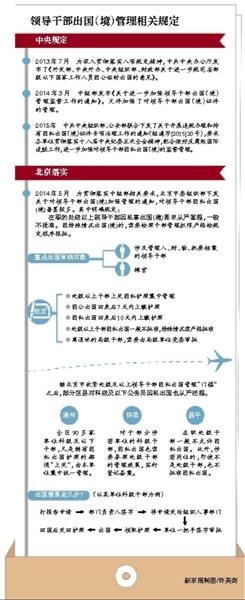
Relevant regulations on the administration of leading cadres going abroad (border)

Central regulations

In July, 2013, in order to thoroughly implement the spirit of the eight regulations, the General Office of the Central Committee of the CPC issued the Opinions of the Ministry of Foreign Affairs, the Foreign Affairs Office of the Central Committee, the Organization Department of the Central Committee and the Ministry of Finance on Further Regulating the Temporary Going Abroad for Business of State Employees below the Provincial and Ministerial Levels.

In March 2014, the Central Organization Department issued the Notice on Further Strengthening the Management and Supervision of Leading Cadres Going Abroad. The document strengthens the management of leading cadres’ certificates for going abroad.

In 2015, the Organization Department of the Central Committee of the Communist Party of China and the Ministry of Public Security jointly issued a notice (Group Tongzi [2015] No.20) on the special treatment of illegal handling and holding certificates for going abroad for personal reasons, requiring all units to implement the spirit of the Fifth Plenary Session of the 18th Central Commission for Discipline Inspection, cooperate with the international anti-corruption memorial service, and further strengthen the supervision and management of leading cadres going abroad for personal reasons.

Beijing implements

In May 2014, in order to implement the relevant requirements of the Central Organization Department, the Organization Department of the Beijing Municipal Committee issued a notice on strengthening the management of leading cadres going abroad, and more attention was paid to leading cadres going abroad for personal reasons. It clearly stipulates that:

On-the-job leading cadres at or above the division level are strictly required to go abroad (border) for private affairs, and are generally not approved. Due to special circumstances, going abroad (territory) needs to be submitted for approval in strict accordance with the prescribed procedures in accordance with the cadre management authority.

Key overseas audit targets

Leading cadres involved in the management of personnel, finance, materials and confidential files; naked official

rule

● Centralized management of private passports handed in by cadres at or above the division level.

● Turn in your passport within 7 days after you come back from going abroad on business.

● Turn in your passport within 10 days after you come back from going abroad for personal reasons.

● Cadres at or above the division level are generally not approved for going abroad privately, and special circumstances require strict approval.

● Retired bureau-level cadres need to be approved by the party committees of bureau-level units.

Following Beijing’s tightening of the "threshold" for leading cadres at department level and above to go abroad for personal reasons, some districts and counties also strictly control the civil servants at department level and below to go abroad for personal reasons.

Tongzhou

Cadres at the department level and below in more than 90 units in the whole region who have passports for going abroad on private business must be "handed in" and managed centrally by their own units.

bring under control through mollification/conciliation

For some department-level cadres in secret-related units, it is also necessary to refer to the management policies of department-level cadres when going abroad privately, and implement registration and filing.

Changping

On-the-job department-level cadres are generally not allowed to go abroad for personal reasons. In addition, those who hold classified posts, even if they are not department-level cadres, are not allowed to go abroad for personal reasons.

How many steps does it take to go abroad? (Take a department-level cadre of a unit as an example)

Report to the person in charge of the application department for signature, and submit the application to the head of the organization and personnel department for signature and approval, and return the passport after going abroad and returning home.

reveal a secret

How to approve department-level civil servants going abroad for personal reasons?

The passport can only be "borrowed" after the head of the unit has signed it for review.

The Beijing News reporter learned from a number of units yesterday that since last year, Beijing has strictly controlled the requirements for leading cadres at or above the departmental level to go abroad for private affairs, and generally does not approve them. Due to special circumstances, going abroad (territory) needs to be submitted for approval in strict accordance with the prescribed procedures in accordance with the cadre management authority.

"Department-level cadres are not allowed to go abroad for personal reasons without special circumstances, whether they are real or imaginary." A civil servant of a municipal department said that this year a newly promoted deputy-department-level cadre of the unit "grabbed" a trip abroad before publicity. "I feel that there will be no chance in the future."

A cadre in Changping District also said that in-service department-level cadres are generally not allowed to go abroad for personal reasons, unless they are visiting relatives and other special circumstances, they will not be approved. In addition, confidential positions such as password workers, even if they are not departmental cadres, are not allowed to go abroad for personal reasons.

In contrast, although some districts, counties and departments in Beijing have also strengthened the management policies for department-level civil servants to go abroad, on the whole, department-level civil servants have higher "freedom" for going abroad privately.

A chief clerk of the financial department of a unit introduced that his passport had been handed in. If he needed to travel abroad during his annual leave, he would have to write an application to the organization, and the director of the office would sign it and submit it to the personnel department for approval. In the process of examination and approval, the passport can only be "borrowed" after it is signed by the top leader of the unit.

"If you just travel, you can generally review it." The clerk said, but sometimes it will face embarrassment. For example, some tour groups require to hand in their passports immediately. At this time, the approval process of the unit will be "too late", so travel abroad must be "advanced".

He said that after traveling abroad, he must return as scheduled according to the time limit for applying for going abroad and return his passport as soon as possible. "Every time you use a passport, the specific time of lending and returning will be registered accordingly."

What should party member do if he doesn’t return home after going abroad for personal reasons?

Those who leave home for one year without reason shall be treated as leaving the Party.

According to the organization department, party member went abroad for a short time for private affairs, and his organizational relationship remained in his original unit. When party member returns to China as scheduled, he should report the situation during his departure to the Party organization of the original unit in time.

If party member returns to China after the holiday, I need to complain to the party organization about the reasons. If the reasons are justified and there is no problem after examination, he can resume his organizational life in party member. If you leave for half a year or so without reason, or make general mistakes, you can give appropriate criticism and education according to the specific situation, and give appropriate punishment when necessary.

However, for those who have returned to China for more than one year without reason, they generally cannot resume their organizational life and should be dealt with by leaving the party on their own. If serious problems are found, the situation is true after examination, and they should be dealt with seriously, and some should be expelled from the party.

background

Some provinces and cities strengthen the management of civil servants going abroad.

Gansu province requires that the information of leading cadres at or above the deputy department level in the province shall be filed in the public security organs; At the same time, the personnel departments at all levels shall be responsible for the centralized custody of all leading cadres at or above the deputy department level for going abroad (border) for personal reasons in accordance with their duties and authorities.

Nanchang strengthens the management of six categories of personnel going abroad for personal reasons, including township-level cadres managed by county and district committees and secret-related personnel in various departments and industries. These personnel will be registered and put on record, and will be handed over to centralized custody for private ordinary passports, Hong Kong, Macao and Taiwan passes, etc.

Recently, for the first time in Xining City, 3,168 "middle-level leaders of municipal units" and "leading cadres at district, county and township levels" were included in the scope of personnel who went abroad for private registration. When these people apply for going abroad for personal reasons, they must submit the opinions of their work units on the applicant’s going abroad (territory) to the exit-entry administration department of the public security organ where the household registration is located, otherwise they will not be able to apply for the documents for going abroad (territory) for personal reasons.(Reporter Wen Wei Wu Wei)

The GDP data of 31 provinces in the first half of the year were all released: 16+, 15-

  According to the news of official website, Statistics Bureau of Heilongjiang Province on July 28th, according to the unified accounting results of regional GDP, the regional GDP of Heilongjiang Province in the first and second quarters of 2020 was 525.06 billion yuan, down 4.9% year-on-year. Among them, the added value of the primary industry was 48.06 billion yuan, a year-on-year increase of 0.2%; The added value of the secondary industry was 159.57 billion yuan, a year-on-year decrease of 5.4%; The added value of the tertiary industry was 317.43 billion yuan, down 5.6% year-on-year.

  So far, the GDP of 31 provinces in China has been announced in the first half of this year.

  In terms of total amount, Guangdong’s GDP in the first half of the year was 4,923.42 billion yuan, Jiangsu 4,672.292 billion yuan and Shandong 3,302.58 billion yuan, ranking the top three in the country.

  In terms of growth rate, Tibet’s GDP increased by 5.1% year-on-year in the first half of the year, leading the country, Xinjiang increased by 3.3% year-on-year, and Guizhou and Gansu both increased by 1.5%.

  There are six provinces with a regional GDP of more than 2 trillion yuan, namely, 4,923.420 billion yuan in Guangdong, 4,672.292 billion yuan in Jiangsu, 3,302.58 billion yuan in Shandong, 2,908.7 billion yuan in Zhejiang, 2,560.846 billion yuan in Henan and 2,213.027 billion yuan in Sichuan.

  Of the remaining 25 provinces, Fujian 1990.139 billion yuan, Hunan 1902.64 billion yuan, Anhui 1755.11 billion yuan, Hubei 1748.051 billion yuan, Shanghai 1735.680 billion yuan, Hebei 1638.73 billion yuan, Beijing 1620.56 billion yuan, Shaanxi 1179492 billion yuan, Jiangxi 116911 billion yuan and Chongqing 11200. 1,020.604 billion yuan in Guangxi, 798.553 billion yuan in Guizhou, 782.164 billion yuan in Shanxi, 770.41 billion yuan in Inner Mongolia, 641.280 billion yuan in Xinjiang, 630.928 billion yuan in Tianjin, 544.192 billion yuan in Jilin, 525.06 billion yuan in Heilongjiang, 410.19 billion yuan in Gansu and 238.301 billion yuan in Hainan.

  In terms of growth rate, 16 provinces achieved positive growth in the first half of the year.

  Among them, Tibet grew by 5.1%, Xinjiang by 3.3%, Guizhou by 1.5%, Gansu by 1.5%, Hunan by 1.3%, Ningxia by 1.3%, Qinghai by 1.0%, Jiangsu by 0.9%, Jiangxi by 0.9%, Chongqing by 0.8%, Guangxi by 0.8% and Anhui by 0.8%.

The college entrance examination time is set!

May 6th

Issued by Guangdong Education Examinations Institute

Provisions of Guangdong Province on Enrollment of Colleges and Universities in 2023

(Click on the picture to view the full text of the notice)

College entrance examination in 2023

By three national unified college entrance examination subjects

And three ordinary high schools in Guangdong Province.

Subject composition of selective examination for academic level

Implement the "3+1+2" examination mode.

Art and sports candidates also need to take the corresponding professional technical examination.

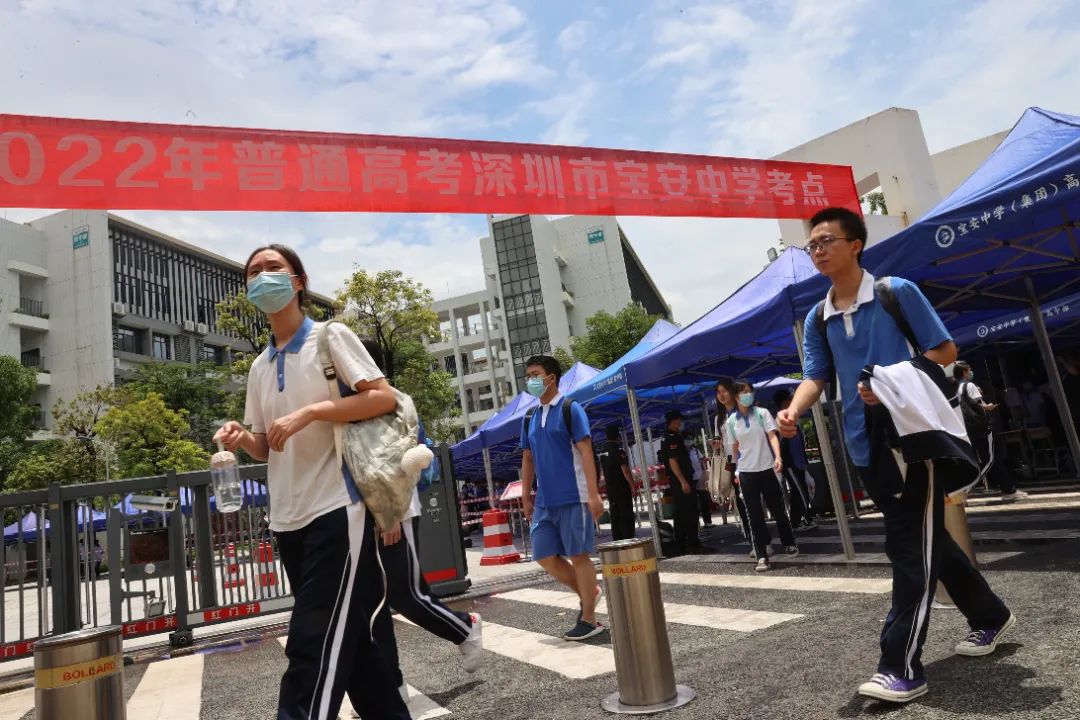
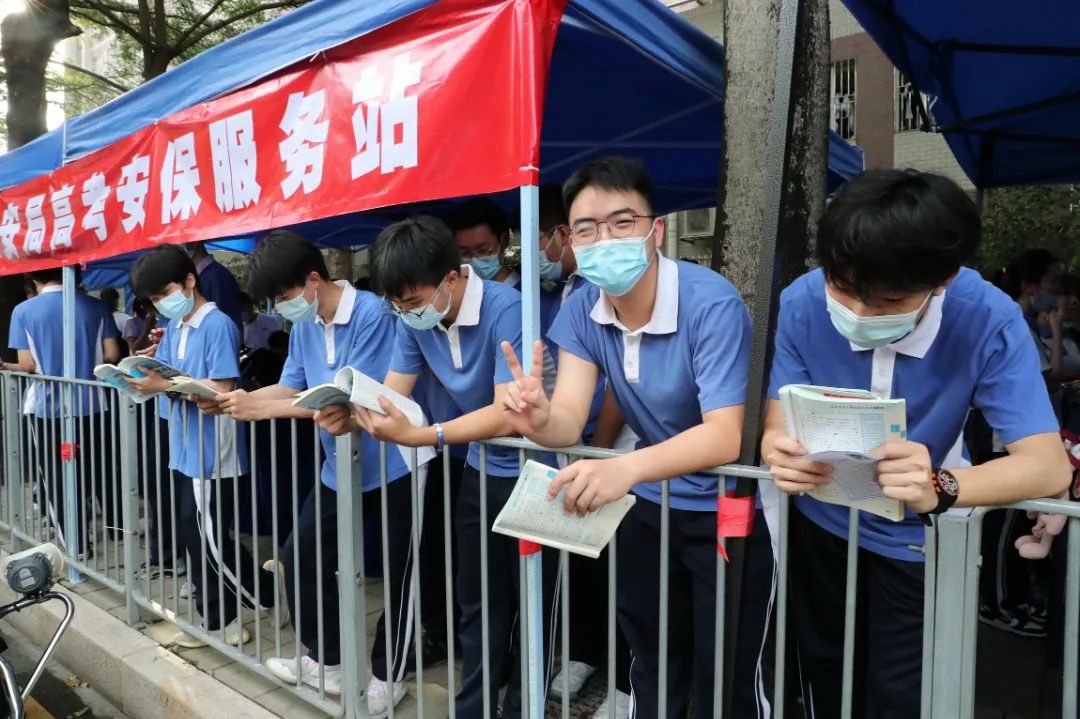
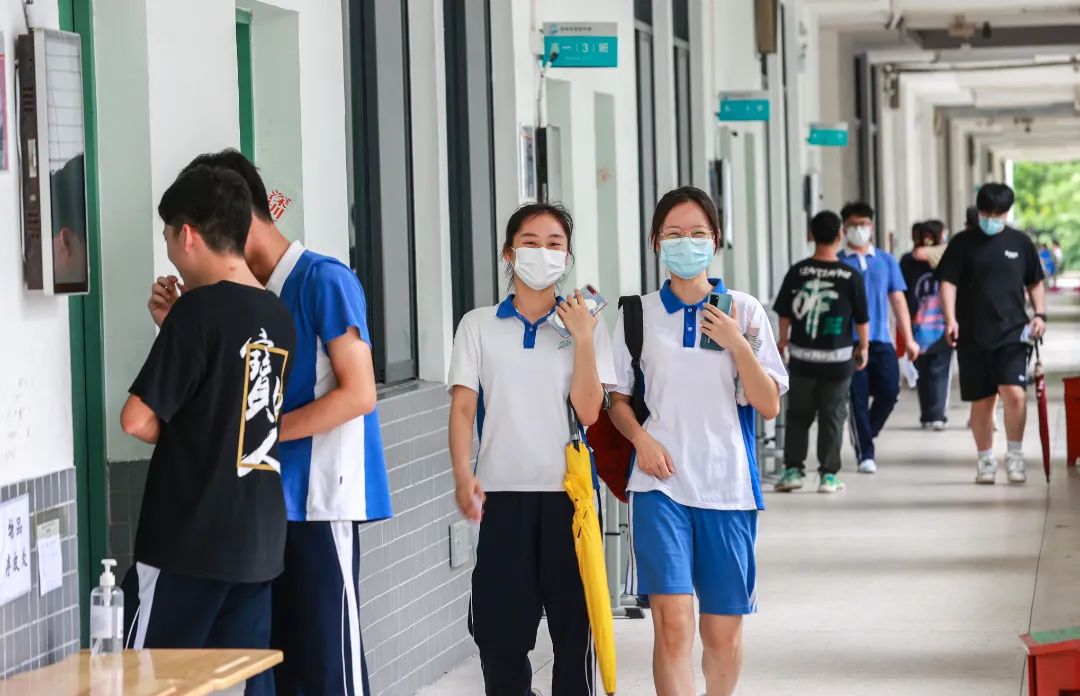
Before the exam, candidates come to step on the spot in an orderly manner and get familiar with the examination room. Shenzhen Special Zone Daily reporter He Longshe

Chinese, mathematics and foreign languages use the national volume.

The "Regulations" clarify that the subjects of the national unified college entrance examination include three subjects: Chinese, mathematics and foreign languages. The national volume is used and the proposition is unified by the Education Examinations Institute of the Ministry of Education.

The language of foreign language examination is one of English, Russian, Japanese, French, German and Spanish. Candidates whose foreign language is English must take the English listening and speaking test, which is held independently by Guangdong.

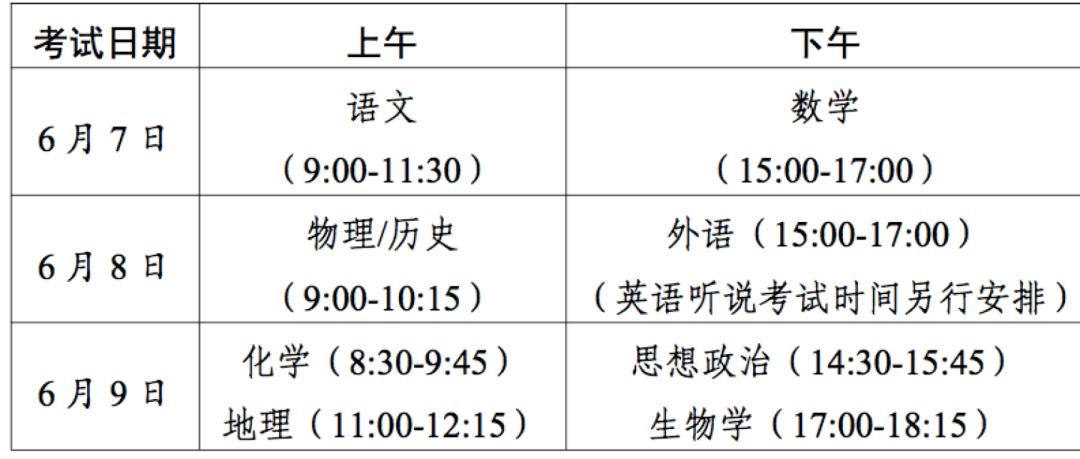
Three optional examination subjects for the academic level of senior high schools in Guangdong Province are composed of two subjects: physics and history, and two subjects: ideological and political, geography, chemistry and biology. The subjects of the selective examination of the academic level of ordinary high schools in Guangdong Province are organized by the Provincial Education Examinations Institute. The specific examination schedule is as follows:

English listening and speaking, sports, music, art, calligraphy, dance, radio and television choreography, broadcasting and hosting are subject to unified examinations throughout the province. The test paper life system and scoring reference of unified examination subjects in the province are formulated by the Provincial Education Examinations Institute.

The enrollment majors in colleges and universities are divided into general (physics), general (history) and arts and sports (including sports, music, fine arts, calligraphy, dance, radio and television editing and directing, broadcasting and hosting, and art school examinations, the same below).

The examination subjects of general (physics) candidates are Chinese, mathematics, foreign languages, physics and "two out of four".

The subjects of general (history) candidates are Chinese, mathematics, foreign languages, history and "two out of four".

The examination subjects of arts and sports candidates are professional technical subjects on the basis of general (physics) or general (history) examination subjects.

The total score of college entrance examination culture is 750 points, which is determined by the scores of candidates’ related examination subjects. Chinese, mathematics, foreign languages, each subject out of 150 points; Physics, history, ideology and politics, geography, chemistry, biology, each subject out of 100 points. Chinese, mathematics, foreign languages, physics and history are included in the total cultural score of the college entrance examination according to the examinee’s examination paper, and ideological and political, geography, chemistry and biology are included in the total cultural score of the college entrance examination according to the examinee’s grade. The full marks of sports, music, art, calligraphy, dance, radio and television choreography, broadcasting and hosting are 300 points each.

Candidates walked out of the examination room with confidence. Shenzhen Special Zone Daily reporter Gang Liu photo

Voluntary reporting implements the mode of professional group in colleges and universities

The "Regulations" make it clear that Guangdong college entrance examination volunteers should fill in the professional group mode of colleges and take the way of online filling. Candidates must carefully read the college enrollment regulations and Guangdong enrollment regulations, and choose to apply for colleges and universities, college professional groups and professional volunteers within the group. The subjects and characteristics of candidates must be consistent with the volunteer requirements of the selected college professional groups (majors).

There is a parallel volunteer group for the general classes (physics and history) of undergraduate and junior college admission batches, and there are 45 colleges and universities’ professional group volunteers respectively. Each college and university professional group has 6 professional volunteers and one is subject to the professional adjustment option. The unified examination of arts and sports has one parallel volunteer group and 20 colleges and universities’ professional groups. Each college and university’s professional group has six professional volunteers and one is subject to the professional adjustment option.

Parallel volunteer, a professional group of colleges and universities, takes the professional group of colleges and universities as the investment unit, and implements one-time investment according to the principle of "giving priority to scores and following volunteers".

When parallel volunteer files, the candidates are sorted from high score to low score, and the college professional group volunteers filled in by the candidates are retrieved in turn. As long as the college professional group volunteers reported by the candidates are found to meet the requirements for filing, they will file with the college professional group.

After the filing, the professional groups of other colleges and universities will be invalid. If there is no college professional group that meets the requirements for filing, it cannot be filed.

After the above process is completed, regardless of whether the file is submitted or not, it is deemed that the candidate has enjoyed the opportunity to file in this batch of parallel volunteer. If the candidates’ files are filed in a professional group of an institution and are withdrawn for some reason, they will not be re-submitted to the professional groups of other institutions in parallel volunteer.

Candidates must fill in and confirm the volunteer information in the online volunteer reporting system of Guangdong Admissions Office. Once the volunteer information is confirmed online, no one can change it. Candidates must log on to the "Sunshine College Entrance Examination Information Open Platform" of the Ministry of Education or the designated website of colleges and universities to inquire about the detailed contents of the enrollment regulations of colleges and universities, and pay attention to the conditions for limiting the enrollment of colleges and universities, professional groups of colleges and universities and majors within the group. Candidates are responsible for the consequences caused by failing to check the enrollment regulations of colleges and universities.

When ordinary high school fresh-year candidates fill in their volunteers, the scores of the qualified test subjects corresponding to the three optional test subjects included in the total score of the college entrance examination must be qualified before they can file. Otherwise, it is invalid to fill in college volunteers.

In the determination of admission scores, the general categories are divided into physical and historical categories; Art and sports categories, regardless of physics and history, are uniformly underlined according to the planned categories.

Candidates are confident waiting for the exam outside the examination room. Shenzhen Special Zone Daily reporter Cheng Haikun photo

Strengthen the governance of examination-related training consulting institutions

Guangdong Education Examinations Institute proposed that the reform of college entrance examination enrollment should be steadily promoted, and all local schools should implement teaching in strict accordance with the curriculum standards. From the second year of high school, courses should be selected according to the subjects selected by students, and it is strictly forbidden to organize students to choose subjects in advance to prepare for the exam. It is necessary to strengthen students’ career planning education and subject selection guidance, and guide students to choose subjects according to the needs of national development and their own interests.

At the same time, we should vigorously promote the fairness of admission opportunities. We should continue to implement the special plan of key universities for rural areas and poverty-stricken areas. Strict application conditions, strengthen qualification examination, and promote the implementation of preferential policies for special plans. From 2023 onwards, candidates who gave up their admission qualifications or dropped out of school after being admitted to the special program in previous years will no longer be eligible for the special program.

Guangdong Education Examinations Institute proposed that we should conscientiously implement the policy of taking the college entrance examination for the children who move with them in Guangdong. It is necessary to compact the responsibility of high school, strictly regulate the management of student status, and strictly investigate violations such as empty student status, separation of nationality, and false student status. We must severely crack down on "college entrance examination immigrants."

Strictly regulate the examination enrollment management, and standardize the release of college entrance examination results. It is strictly forbidden to publish, publicize, speculate or speculate in disguised form in any way, such as "No.1 in the College Entrance Examination", "Good News in the College Entrance Examination", "High Score Candidates" and "Online Rate".

At the same time, strengthen the governance of training and consulting institutions involved in the examination. Schools shall not allow educational consulting institutions, off-campus training institutions or individuals to enter the school to carry out training and consulting activities related to the examination, or provide venues for relevant institutions or individuals to carry out related activities; Strengthen the standardized governance of social training institutions or individuals to carry out training and consultation related to exams, and severely crack down on illegal activities involving false propaganda, price fraud, cheating in organizing or participating in exams, and interfering with the order of enrollment in exams.

Original title: "The college entrance examination time is fixed! 》

Read the original text