Improving the quality of rural education Qiongzhong County attracts more than 3,000 primary and secondary school students to return.

  The picture shows the teachers and students of Wanling School taking basketball elective courses. Information picture

  Core reading

  Some rural schools in Qiongzhong Li and Miao Autonomous County of Hainan Province once faced hollowing out: weak teachers and loss of students.

  In recent years, Qiongzhong County has improved the conditions for running schools, introduced excellent teachers, and done a good job in controlling dropouts … … With the improvement of teaching quality, Qiongzhong County has attracted more than 3,000 primary and secondary school students to return.

  The geographical boundary is partial, the teachers are weak, and there are few students — — At one time, Qiongzhong Li and Miao Autonomous County in Hainan Province faced the problem of hollowing out rural schools, and many students went to school outside the county. Qiongzhong County, which withdrew from the poverty-stricken counties in 2019, now has another scene.

  Since 2015, more than 3,000 primary and middle school students have returned to Qiongzhong County from outside the county, accounting for 60% of the growth of students in the basic education stage of the county. At the same time, the comprehensive evaluation index of the senior high school entrance examination in Qiongzhong County jumped from the bottom of the province in 2009 to the top eight in the province in recent four years.

  Introduce backbone teachers and reform assessment methods.

  Wanling School in Qiongzhong County was once a school facing the merger, ranking last in the comprehensive evaluation of the senior high school entrance examination in the county. In 2016, Wanling School introduced a principal and 11 key teachers. The arrival of excellent teachers and the gradual improvement of hardware have quietly changed this school.

  "When I first came, this village school was in the hearts of local people ‘ Can’t save lives ’ School. " Bao Rui became the principal of Wanling School through competition in 2016. He remembers that when he first came, there were only 81 students in the middle school, and often half of them were not in class.

  Fu Yongdong, director of the Education Bureau of Qiongzhong County, clearly remembers that before he went to a rural school for investigation and looked at a class’s physics test paper, almost all the scores of more than 40 people in the class were 30 to 40 points. "Teachers are very important to the level of education. It is difficult to improve the level of local teachers in a short time, and children can’t afford it. " Fu Yongdong said.

  Since 2015, Hainan Province has successively implemented the introduction project of "good principals and good teachers" and the introduction project of "one city (county), two schools and one park" for high-quality educational resources, and provincial-level financial special subsidies have been given to cities and counties to run basic education well.

  Taking this opportunity, since 2015, Qiongzhong County has introduced 24 outstanding principals and 133 key teachers from more than 20 provinces across the country, and the number of key teachers in the county has doubled. At the same time, priority is given to financial expenditure to ensure basic education. Since 2015, the county has invested more than 600 million yuan to improve school conditions.

  More crucially, there is the reform of teachers’ assessment methods. Qiongzhong County eliminated the principals from the bottom of nine comprehensive evaluations in the school year, which widened the performance pay gap of teachers, and broke the situation of "teaching well and teaching poorly, with little difference".

  In August, 2020, Wang Leilei was admitted to the post of rural backbone teacher in Qiongzhong County, but she missed the employment inspection because of her father’s sudden illness. Two months later, when her father was discharged from the hospital, Wang Leilei told Qiongzhong County Education Bureau that she still wanted to teach. Although the position was not full, the relevant departments of the county refused the request of the Education Bureau to make up the record according to the recruitment procedure. Fu Yongdong was in a hurry and went directly to the county leaders. Finally, through the decision of the county government executive meeting, Wang Leilei was re-recorded.

  "I can’t think of making up a teacher, and I can put it on the county government executive meeting." Wang Leilei lamented Qiongzhong’s courage in introducing talents.

  Perfecting the competitive employment system and stimulating teaching motivation

  According to the new assessment method of Qiongzhong County Education Bureau, Wanling School has established an assessment mechanism with workload and teaching quality as the main standards. In the first semester of implementation, the performance pay that teachers got was up to more than 7,000 yuan. Some teachers couldn’t accept the gap for a while and found Bao Rui to complain.

  "Controversy is not a bad thing, forcing schools to further revise and improve rules and regulations." Fu Yongdong said. Qiongzhong county began to plan how to make local teachers and imported teachers better form a joint force in this reform.

  Qiongzhong County has broken the school boundaries, established 129 discipline regional teaching and research groups, combined more than 2,200 teachers in the county in each discipline regional teaching and research group, and arranged the imported discipline backbone teachers and local excellent teachers as the discipline regional teaching and research team leaders, so that teachers can communicate and integrate in teaching and research practice regardless of local or foreign.

  The introduction of teachers does not account for the number of local teachers’ professional titles, and local teachers do not have to worry that the growth space will be squeezed. In addition, Qiongzhong tilted the financial subsidy funds to remote rural teachers and distributed rural teacher subsidies, from which more than 500 local teachers in the county benefited.

  In 2018, Qiongzhong County began to implement the equal competition mechanism between local teachers and imported teachers. Successful local teachers can get a one-time educational talent award. During the employment period, they will be assessed equally with the imported educational talents and enjoy the annual assessment subsidy.

  Wang Bo, a local teacher, was hired as the headmaster of a village. He said, "Years of tempering and learning from the introduction of key teachers have made me confident to stand on the competition platform and compete with everyone." In the past two years, there have been 15 outstanding local teachers like Wang Bo.

  Gradually, the system has been straightened out, and more teachers have devoted themselves to teaching. Local teachers are actively preparing lessons and competing with imported teachers to attend open classes. There are even teachers in Wanling School who have been invited to the province to take part in marking the senior high school entrance examination.

  Clear the number of dropouts and care for left-behind children

  In Wanling School, Bao Rui is not only the principal, but also the "surrogate parents" of the students. In 2016, Qiongzhong included more than 6,000 poor students and left-behind children in the county into the "four ones" care system. More than 2,000 teachers, as "acting parents" of students in charge, "meet once a day, talk once a week, visit once a month, and evaluate the help effect once a semester".

  "There are especially many single-parent left-behind children in rural areas here. Some classes have more than forty children, and only a few are not single-parent left-behind children. Schools and teachers have to take good care of them." Bao Rui said. “‘ Four ones ’ The operation of the care system makes teachers want to manage, dare to manage, and manage, and find ways to ensure that every student can complete the nine-year compulsory education. " Deng Shizhi, president of Wushi School in Wanling Town, said. Controlling dropping out of school has always been one of the key tasks of education in Qiongzhong County. After years of efforts, the number of dropouts in Qiongzhong County has been cleared.

  The change of educational atmosphere and the improvement of teaching quality have brought about the progress of students’ grades. In 2020, there were 432 undergraduate college entrance examinations in Qiongzhong County, 102 more than in 2019. What makes Fu Yongdong even more gratified is that in the senior high school entrance examination in 2020, 75 of the top 100 students in Qiongzhong County chose to stay in Qiongzhong County to attend high school.

  Over the years, depending on the relevant policies of the state and the province, Wanling School has received nearly 30 million yuan in financial support, which has comprehensively improved the campus hardware facilities. At present, the school has more than 130 teachers. The teaching building is clean and bright, with computer room, library, laboratory, etc. The plastic track, basketball court and swimming pool are fully equipped, and the multimedia teaching equipment of Banbantong covers all classes. At present, there are 1105 students in school, including more than 400 students returning from surrounding cities and counties.

  "Frankly speaking, we are still making up the historical debts and getting back the confidence of teachers and the trust of parents." Fu Yongdong said that in order to make every child learn at home, educators in the county are taking a step forward in a down-to-earth manner.

  Wanling Street, which was once lonely, became lively again, accompanied by the sound of books and laughter from the school. "Running a school well can change a village. The change of Wanling school is the weak school in Hainan rural areas ‘ Counterattack ’ Typical, but it has not yet reached the best appearance of rural schools in my mind, and I will continue to work hard to realize this dream. " Bao Rui said.

Read the blockchain in 50 minutes, fertile soil and forbidden area of new technology | Nuggets Lecture Hall

Source: Overseas Nuggets
◎ Author Li Peicai
Copyright statement: This article was first published in overseas Nuggets (ID: GOLD 1849), and it is an original work. When other WeChat official account reprints this article, the author’s name and source should be put in front of the text, and the QR code at the end of the article should be reproduced at the same time, otherwise it will be regarded as infringement.
First of all, let me introduce myself to you briefly. My name is Li Peicai, and I am the co-founder of Shanghai Digyi. I graduated from Fudan University with a bachelor’s degree, then studied for a master’s degree in Chinese Academy of Sciences. After graduation, I worked as a civil servant for exit inspection and quarantine for six years. After October 2013, I first got to know and contacted digital currency. At that time, together with my college classmates and our only partner, I started with four mining machines. After almost five or six years, at present, Digyi Company has more than 30,000 self-sustaining bitcoin mining machines, more than 60,000 Wright mining machines and 150,000 entrusted mining machines.
I think part of the reason why we can achieve this result is that we have made some correct judgments and investments, but on the other hand, it is mainly due to the fact that the market scale of the whole digital currency or the whole blockchain has increased many times, which is more important than our efforts.
What is a blockchain?
Many people know the blockchain, in fact, it originated from Bitcoin. In 2008, Satoshi Nakamoto published a famous paper: Bitcoin, a peer-to-peer electronic cash system. In the paper, he introduced the blockchain for the first time. Simply put, blockchain is a technology used to realize point-to-point value transmission, and it is a distributed ledger technology.
Literally, it is also very vivid. Blockchain is actually a chain of many blocks. What is a block? Block is a very important concept in the whole digital currency system.
In fact, you can understand it as a page of the ledger. As we all know, a single transaction is an integral unit of the account book foundation, and many transactions together form a block. In the Bitcoin or digital currency system, all the blocks will eventually form a chain. And these chains are interrelated, and the block head of the next block is calculated from the block tail of the previous block.
What benefits will this bring? The entire blockchain chain cannot be tampered with. Once a transaction is added to a block, and then another block is linked, the transaction cannot be tampered with. If anything in the transaction is changed, the end of the second block calculated by this transaction will not match. It is no longer consistent with the previous block, and at this time, the entire blockchain is no longer effective.
If you want to change the previous transaction, you have to change all the subsequent transactions. Once there are five or six blocks, it will become very difficult to change. In fact, he used a technology to ensure the whole block, and he could only move forward in one direction. Once confirmed, he could not be tampered with, realizing such a feature.
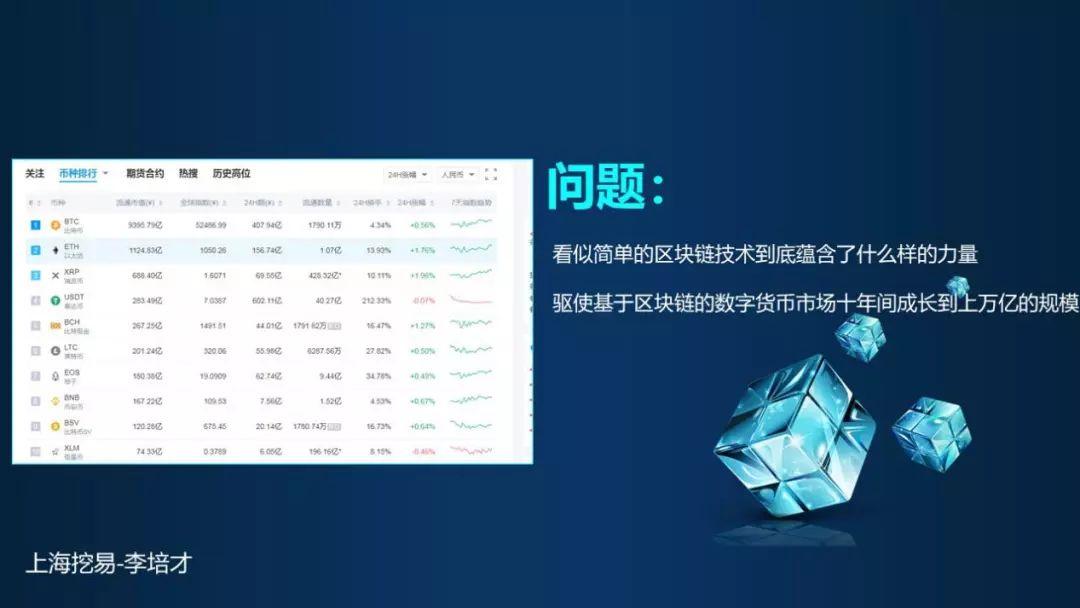
Since I’m not actually a technology major, I don’t want to explain the blockchain to you too much technically. I’d rather tell you what kind of power I have seen in the seemingly simple blockchain technology, which has driven the digital currency market based on blockchain to grow to trillions in ten years.
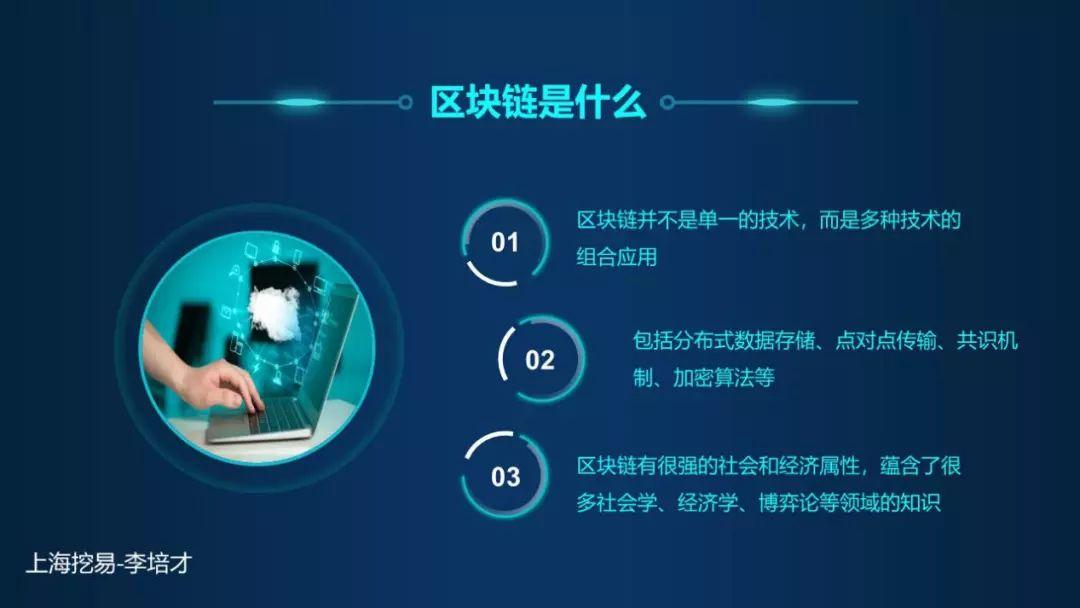
In fact, blockchain is not a single technology, it is a combination of many technologies, including distributed data storage, point-to-point transmission, consensus mechanism, encryption algorithm and so on. But this is not the most important aspect. It is far from enough for you to understand the blockchain technically. It also has strong sociological and economic attributes.
If you want to fully understand the blockchain, you must master a lot of knowledge of sociology, economics and game theory, so that you can truly understand the blockchain technology.
For example, if you want to understand what money is, I dare not say that I know enough now, but at least I don’t think I will think that money is not money as before. What is there to understand about money? I won’t think so again.
Why is the concept of blockchain very difficult to understand?
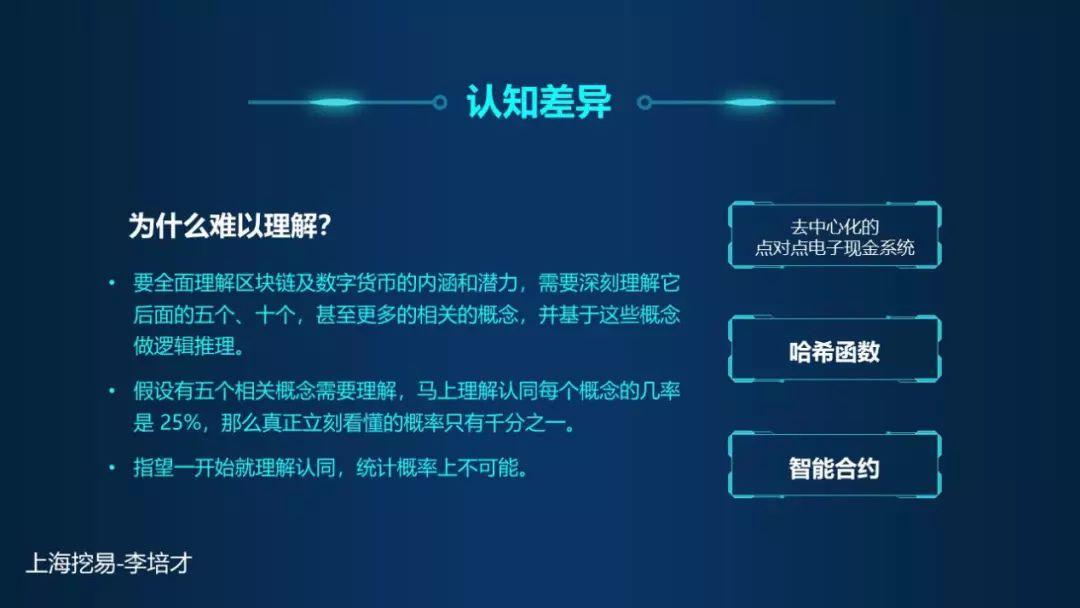
If you want to fully understand the blockchain and the connotation and potential of digital currency derived from it, you need to deeply understand the five, ten or more related concepts behind it, and you need to make logical reasoning based on these concepts.
Suppose there are five related concepts to understand, and the probability of understanding and agreeing with each concept immediately is 25%, then the probability of really understanding them immediately is very, very low, less than one thousandth. At the beginning, it is impossible for most people to understand and agree with the concept of blockchain from the statistical probability.
This has also caused a phenomenon. Many people have very different views on the blockchain. Some people see digital currency as a scam, a pyramid scheme or a bubble, and it is worthless. There is also another part that sees digital currency as the opposite. He is a value network, an irreversible development, a major innovation in the whole human organizational structure and a major change in the currency issuance mechanism.
Which is right, I prefer my second one.
The value of blockchain
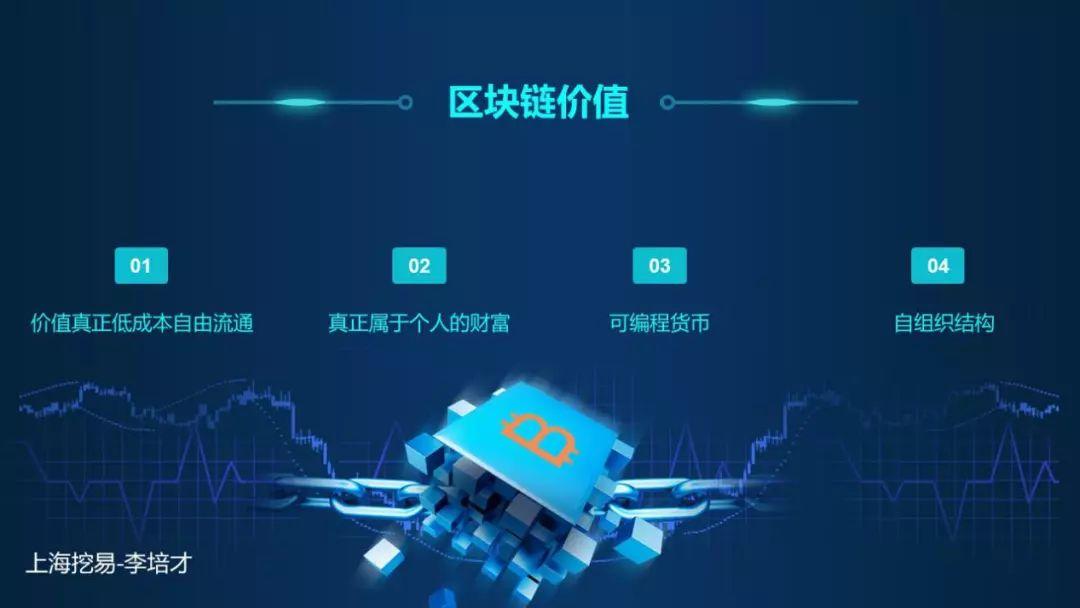
The blockchain value I saw, I understand mainly from the following four levels.
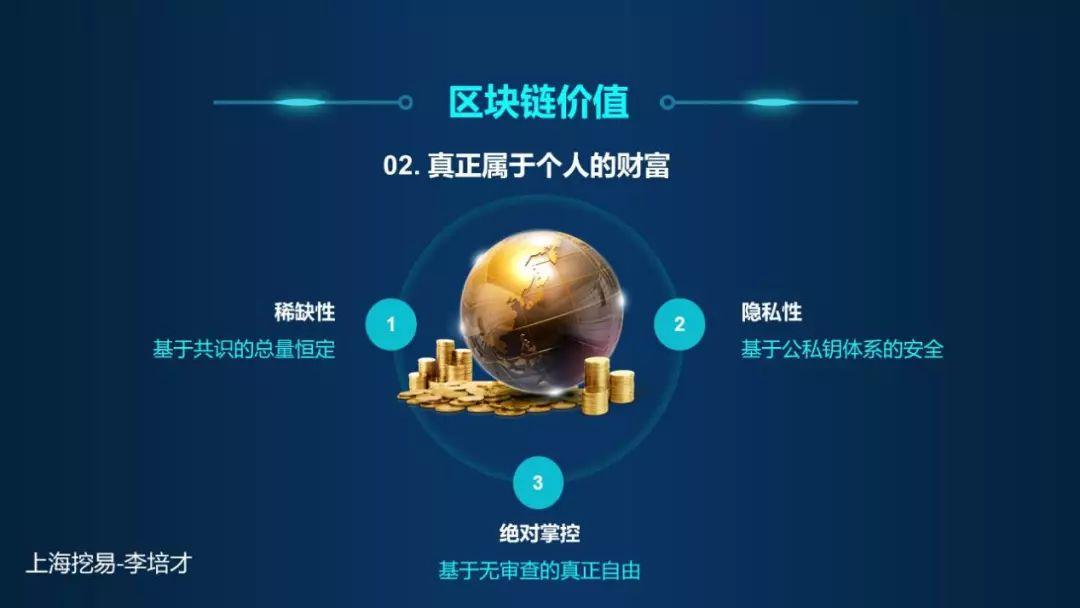
First, the blockchain allows value to truly circulate freely at low cost; The second is that digital currency created based on blockchain technology is the wealth that truly belongs to individuals; The third is that this computer-based algorithm and programming currency system can create more and richer trading scenarios, and it is a truly programmable currency; The fourth is that it will make a social organization form such as self-organization structure more valuable and more vital.
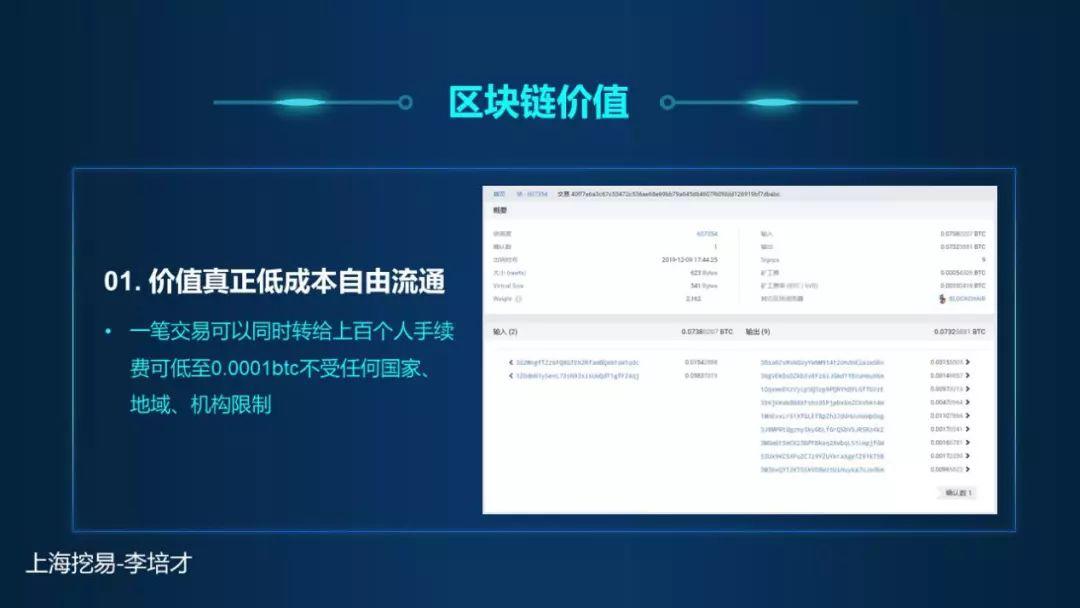
Let’s talk about the first point first, why do you say that blockchain really allows value to flow freely at low cost? You can see that the screenshot in the ppt above is a very common bitcoin transaction. At this stage, a transaction has two inputs and eight outputs, which means that you can transfer the value of this transaction to hundreds of people at the same time, and the handling fee is only as low as one ten thousandth of bitcoin, and it is not restricted by any country, region or institution. Therefore, I said that the blockchain has evolved the Internet from the information Internet to the value Internet.
Why do you say that? We all know that the emergence of the Internet has made the transmission of information between any two individuals in the world unimpeded. No matter where you are, as long as you have access to the Internet, you can receive information at near zero cost. Or you can send information to anyone in the world who has access to the internet, and there is almost no cost.
However, there was no way to transmit the value so efficiently before the appearance of blockchain digital currency, but the appearance of blockchain made it possible.
The second meaning is that it creates real personal wealth. Why is it really personal wealth? Because it has three characteristics, the first characteristic is that its scarcity is based on algorithm and consensus; The second characteristic is that its security and privacy are based on the public and private key system. Digital currency For an individual, you have absolute control and absolute freedom.
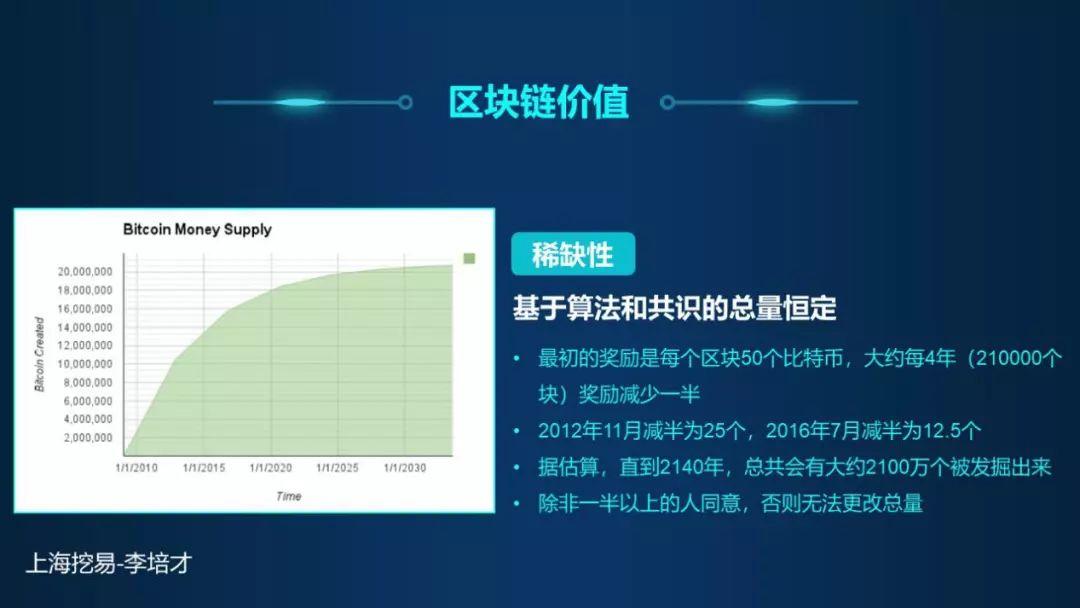
Then why is its scarcity based on algorithms and consensus? Take Bitcoin as an example. It has so many degrees. It is a mathematical algorithm and is written in its program. No one can tamper with it.
In other words, if you want to change, you have to make half the people in the whole network agree with this change, but it is very difficult, because if you change its total amount, it is equivalent to diluting all the chains, then I believe this thing is very, very difficult to achieve.
Its privacy is based on the public and private key system, which provides it with very good privacy. You can create your own public key, that is, bitcoin address, while completely exposing your identity information. By keeping the public key anonymous, the public can only see that someone sent a certain amount of money to others, but there is no way to link the transaction to the people behind it.
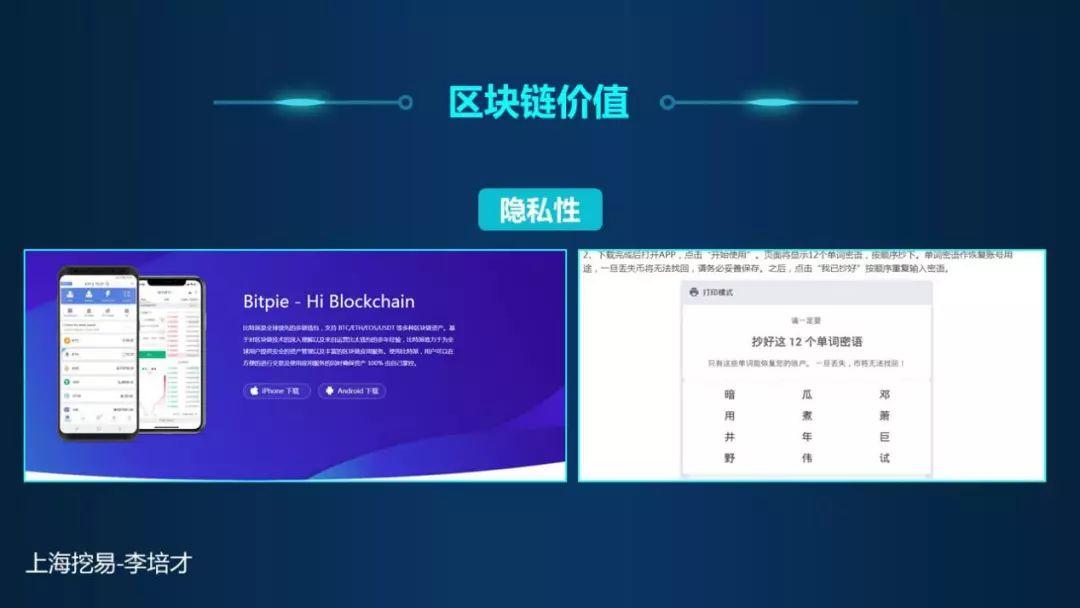
This one shows how you can get your own address. It’s a very simple two-step process. The first step is to download a bitcoin wallet from a public website. The second step is to get your wallet and generate your own private key.
You can even do it when the network is disconnected, and you can receive your own private key without surfing the Internet. This private key absolutely keeps your privacy for others, and you can generate it without surfing the Internet at all.
In other words, no one can know your private key except yourself if you don’t want to reveal it. Therefore, it has caused privacy. Blockchain, a technology, uses this characteristic of public and private keys to create wealth that truly belongs to individuals.
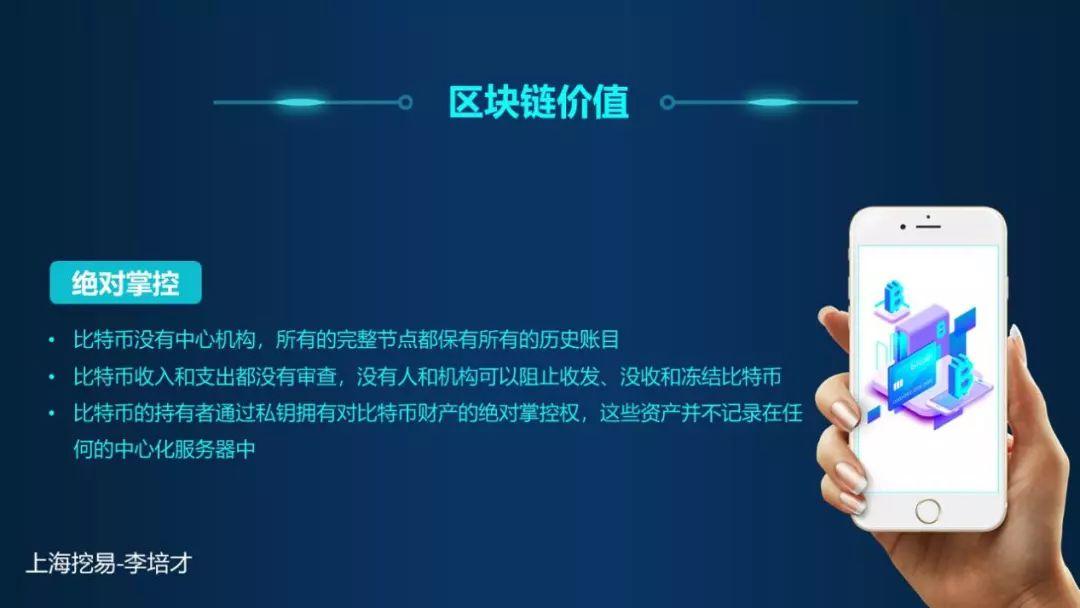
You have absolute control over wealth. There is no centralized organization. All complete nodes keep all historical accounts. There is no review of the income and expenditure of Bitcoin. No one or organization can stop sending and receiving, freezing and confiscating Bitcoin.
As long as you use this bitcoin private key, you have absolute control over the bitcoin in the public key. It can be said that others can’t get your assets through fraud or coercion.
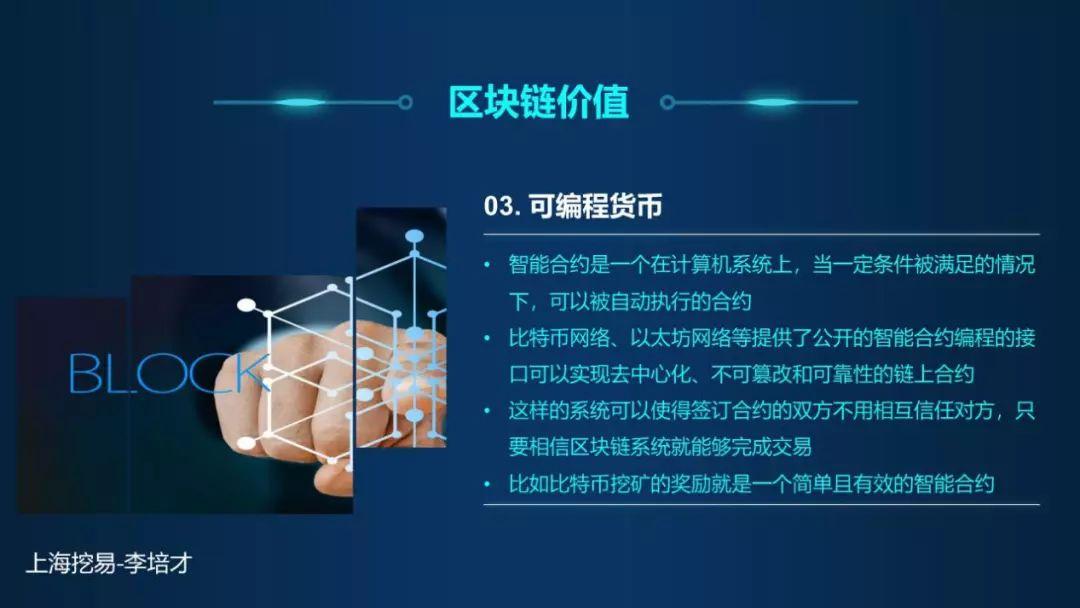
The third source of blockchain value is the currency created by computer technology, so it is naturally closely integrated with programming, which is what we usually call the concept of smart contract.
Intelligent contract refers to a contract that can be automatically executed on a computer system when certain conditions are met. Bitcoin network and Ethereum network provide an open interface for intelligent contract programming, which can realize decentralized, tamper-proof and reliable chain contracts.
Such a system enables both parties to sign a contract to complete the transaction without trusting each other, as long as they believe in the blockchain system. For example, the mining reward of Bitcoin is a simple and effective smart contract.
If you want to dig bitcoin, you don’t need to ask anyone’s permission, you just have to follow the instructions of the system. Then, as long as you can mine according to the bitcoin system and calculate such a value, you can get the reward of bitcoin. You don’t need to submit this award to any organization for review. You can trust the system. You don’t have to trust anyone.
The fourth value of the blockchain I see comes from its self-organizing structure. Everyone has heard a saying that artificial intelligence and AI can help improve productivity, and blockchain may change loose relationships. In fact, I think it is more because it makes the social organization form such as self-organization structure more vital.
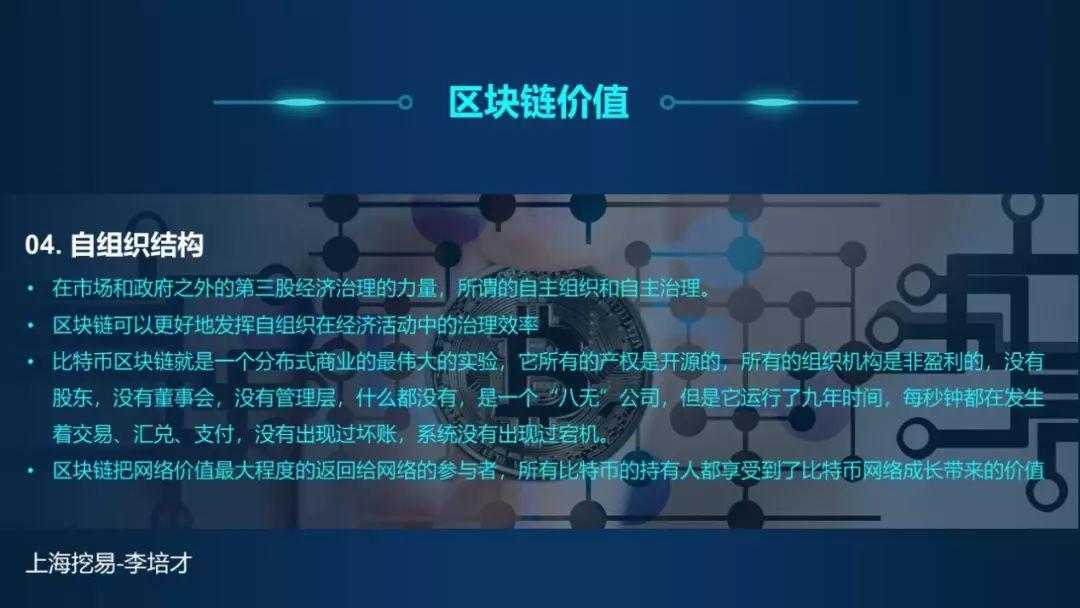
Then, the so-called self-organization structure is the third economic governance force outside the market and the government, and the blockchain can better play the governance efficiency of self-organization in economic activities.
For example, the community of Bitcoin is the greatest experiment of self-organized distributed commerce. All its property rights are open source, all its organizations are non-profit, with no shareholders, no board of directors, no management, and nothing. It is a "eight-nothing" company, but it has been running for nearly ten years, and transactions and remittances are happening every second, but it has never had bad debts.
Moreover, the blockchain can return the value brought by the self-organizing structure to the participants to the greatest extent. For example, the better the bitcoin payment network becomes, all bitcoin holders enjoy the value brought by the growth of bitcoin network. But in the past, many network values were taken away by the company that invented and controlled it.
For example, WeChat, we know that WeChat is a very valuable network, but each of us, as a participant in WeChat network, actually didn’t get much value, and the value of the whole network was taken away by Tencent.
How should individual investors participate?
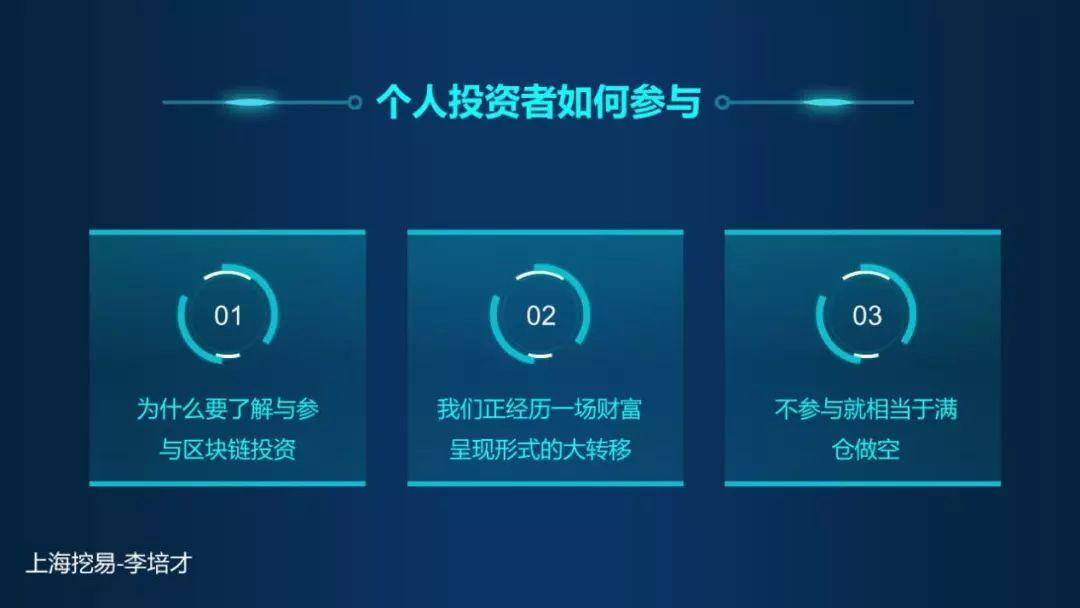
Next, let’s discuss the next topic, how individual investors should participate. I will talk about it in two levels. The first is why individual investors must also understand and participate in the blockchain. The second is if I want to participate, what kind of participation is better.
Why should individual investors participate? Because whether you participate or not, you are in the tide.
At present, we are experiencing a great shift in the form of wealth presentation. If you don’t participate, you are equivalent to shorting in Man Cang, and you are equivalent to standing on the other side of the trend. Why do you say that? On the one hand, I think that the progress of artificial intelligence and intelligent manufacturing will make the prices of your daily necessities and even some industrial products lower and lower.
……
Reporting/feedback

The northern town changed by "eyelashes": 50,000 people brush their eyelashes thousands of times a day, and brush out billions a year.

Text/Cui Hengyu

Editor/question

Lucy in Shanghai went to the eyelash shop to graft eyelashes, and her flickering eyes became more agile. She felt that the cost of nearly 1,000 yuan was worth the money. Susan in Beijing spends half a quarter of an hour making up every day, and sticking false eyelashes is the most critical part; Madonna, the goddess of youth, once spent $10,000 to customize a pair of false eyelashes made of mink hair and set with diamonds …

To some extent, false eyelashes have become a sense of ritual for women who love beauty. What few people know is that behind this little sense of ceremony, there is a hidden name-Qingdao Pingdu.

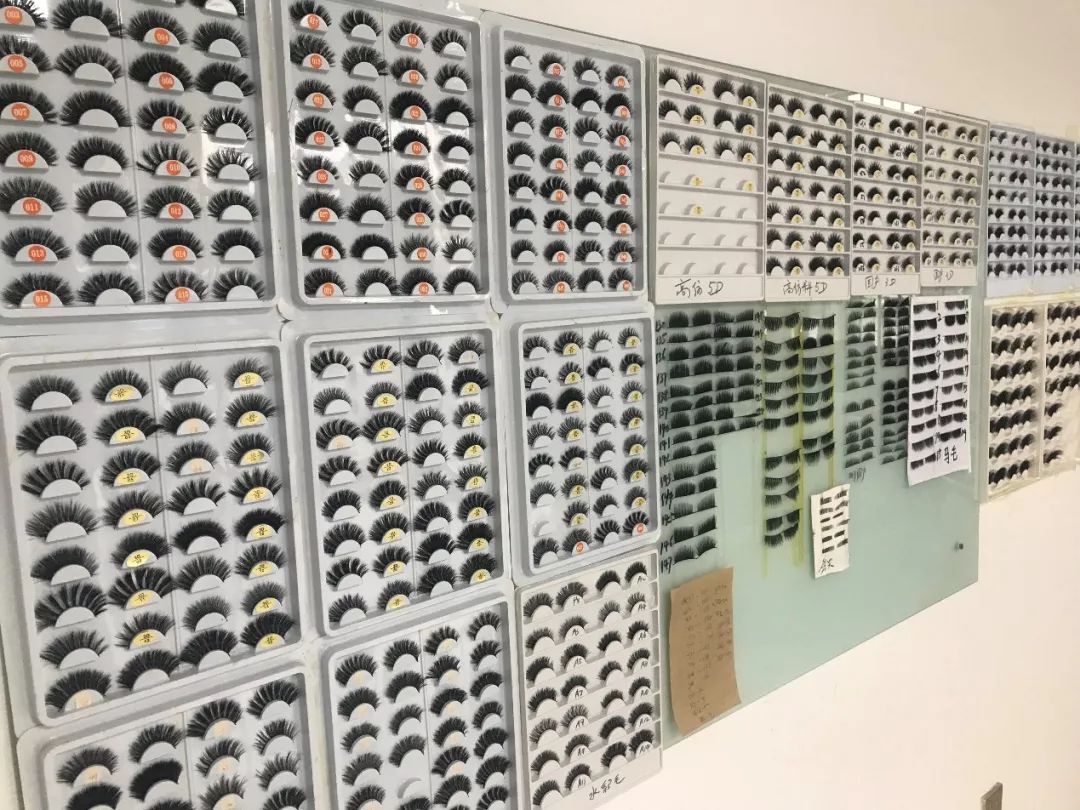
This magical town in the north of China produces false eyelashes with an output value of several billion yuan. Different materials, styles, lengths, curls and colors are all creating superimposed value for the eyelash industry. At present, Pingdu supplies 70% false eyelashes in the national market and exports them to Europe, America, Southeast Asia and other markets.

If you leave Shanghai for Pingdu, you have to take the high-speed train for at least 7 hours to reach Qingdao first, and then drive along the expressway to the northwest for more than 100 kilometers.

The distance between this industrial town and the international city is not beautiful, but in the past year or two, the expressway of the Internet has reduced this distance to zero, and with the sinking of traffic, the development of this small town has already jumped out of the shackles of space and the world has become flat.

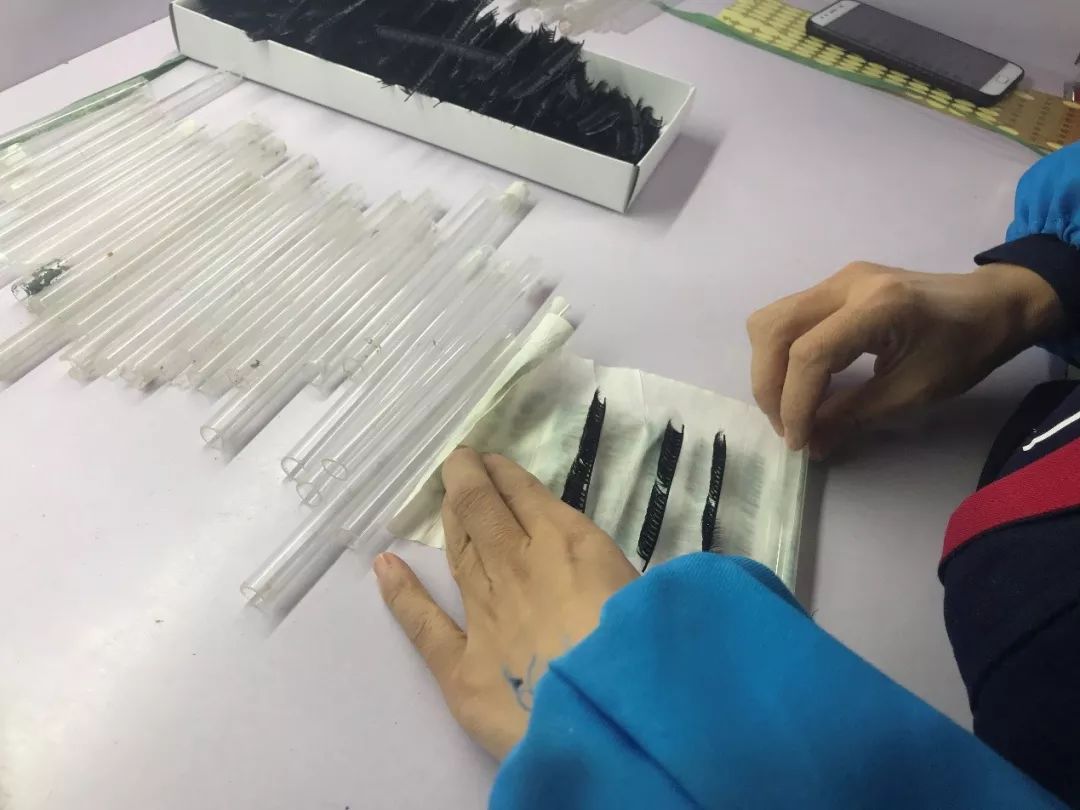
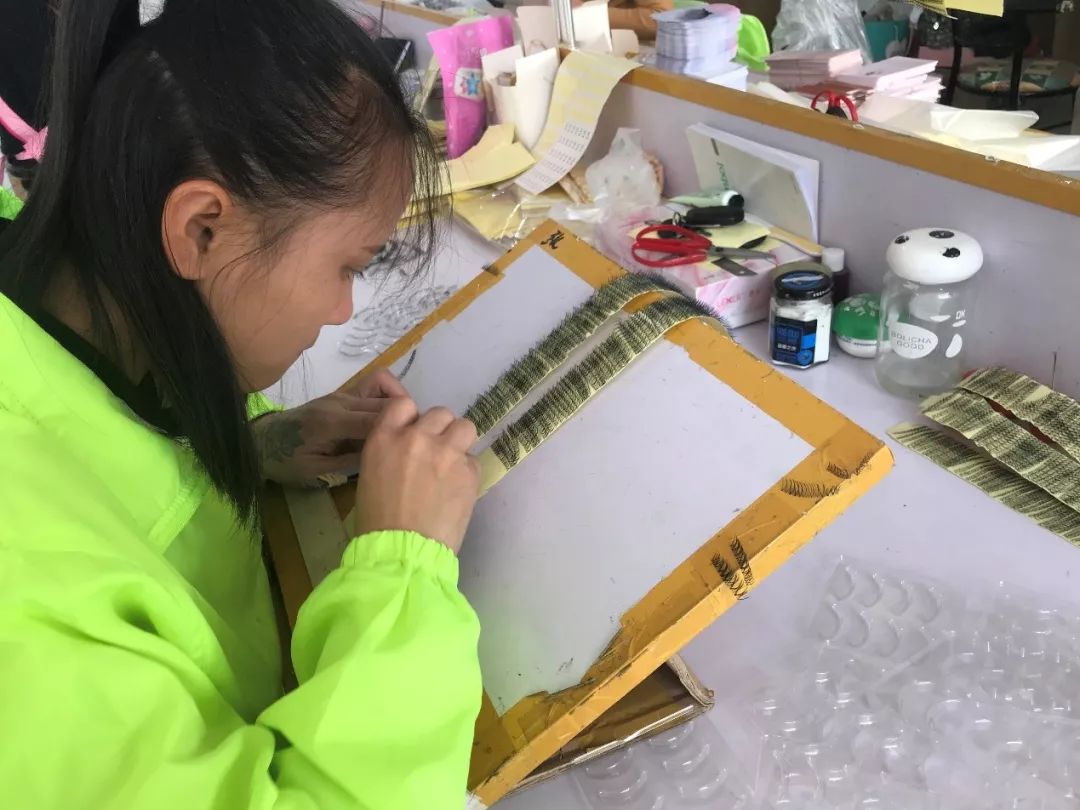
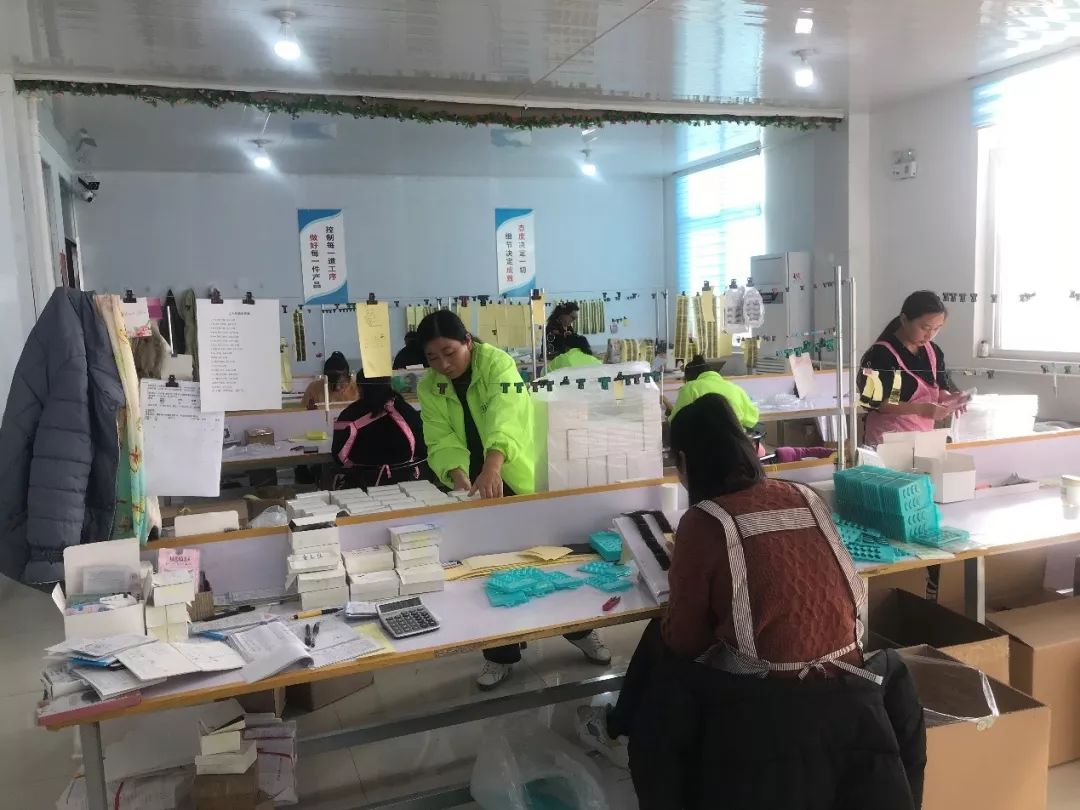
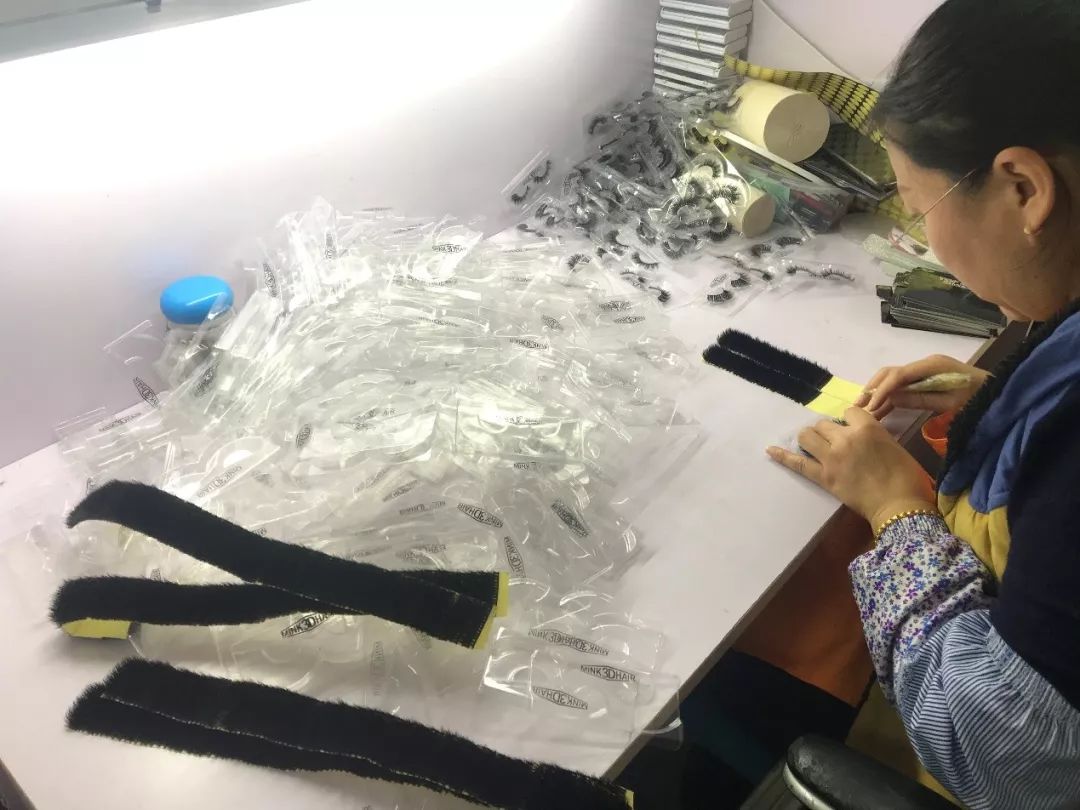
In Pingdu, Qingdao, there are about 50,000 female workers engaged in false eyelashes. Tweezers, scissors and glue are almost all their tools. They roll and shape the semi-finished false eyelashes with their hands, brush the glue and hold them, and repeat this action more than 1000 times a day.

Subsequently, these false eyelashes flow to nerve endings such as eyelash shops, shopping malls and online shopping carts through platforms such as 1688 and Taobao. In the process, the value of this "small manual work" was multiplied.

"In Pingdu, especially in Changle Town, almost every household is doing false eyelashes business." Cui Defei, the head of Dream Shirley Eyelash Factory, told E-commerce Online. Under the strong consumer demand, the productive forces of stars are clustered together on the soil of more than 3000 square kilometers in Pingdu.

Under the false eyelash industry, this northern county seems to be an arena, where different stakeholders cut on the same cake; But at the same time, they are also working together to make this cake bigger. Whether it is to capture more customers through 1688, to supply Taobao merchants, or to cooperate with foreign trade companies, false eyelashes are a living water in Pingdu.

Fiery eyelash economy

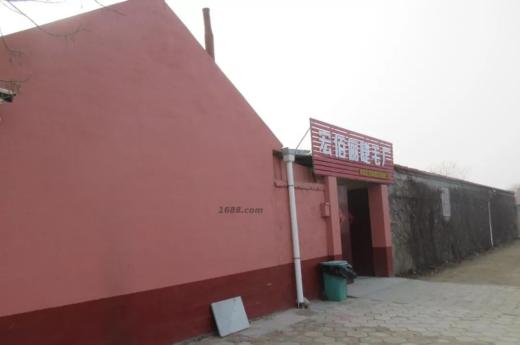
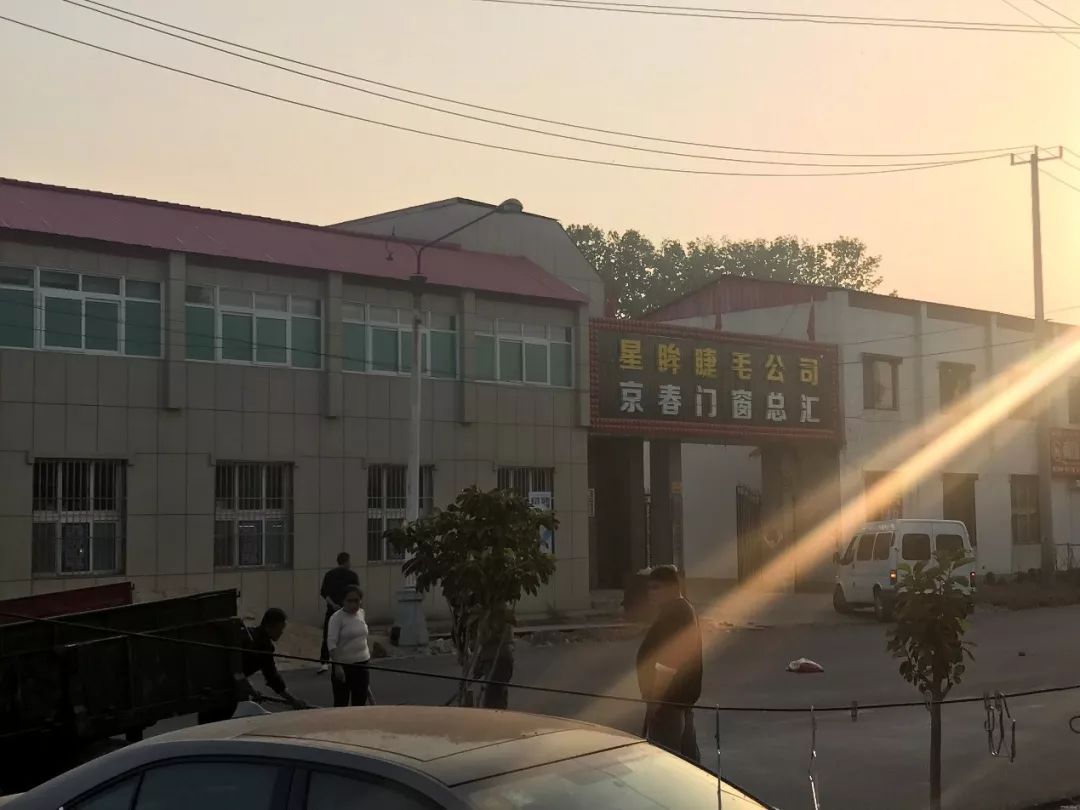
Chen Lin painted the exterior wall of his Hongbaili eyelash factory dark pink, which can be seen from a distance on Hongqi Road.

Three years ago, this factory was still a pig farm. Because the qualification of environmental protection was revoked, Chen Lin set it down and built his own false eyelash processing factory.

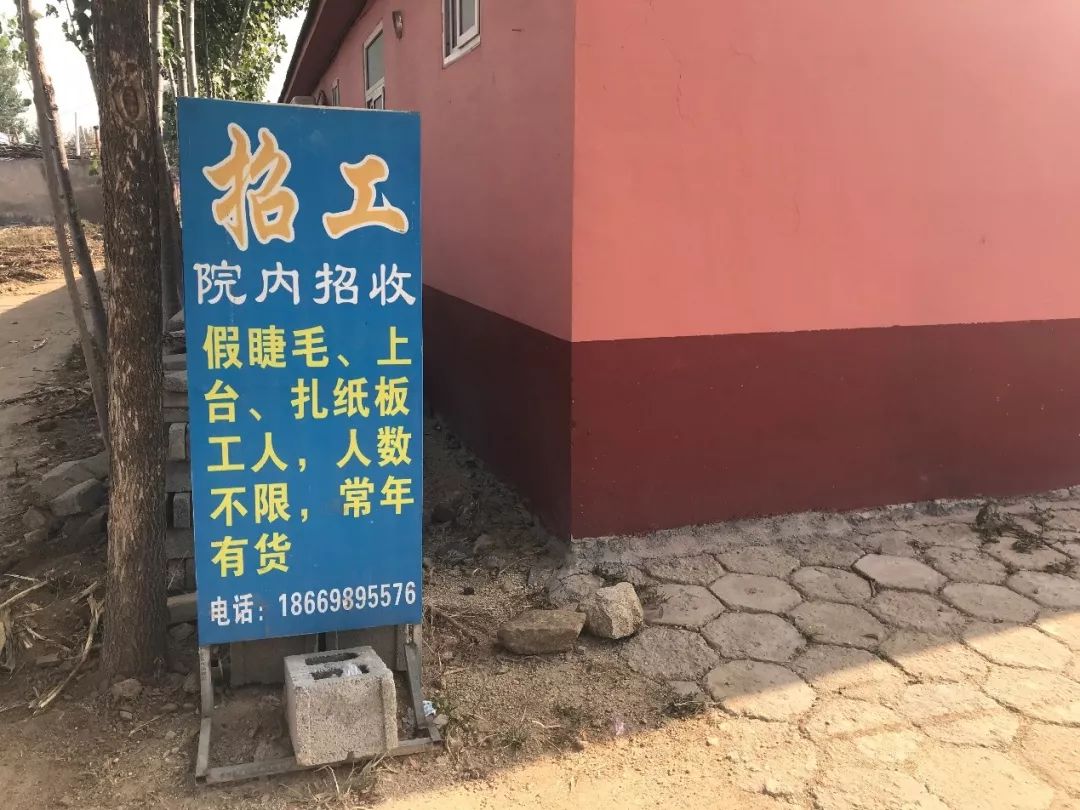
"Recruit false eyelashes workers, the number is not limited, and they are available all the year round." The "recruitment" notice posted in front of the factory for a long time shows the confidence of the local eyelash economy.

It took Chen Lin three or four years from recruiting to having stable customers, and now it can receive at least 120 million orders for false eyelashes every year.

Processing workshop, raw material warehouse, finished product warehouse, office, and simple regional division circulate the business of Hongbaili Eyelash Factory.

At the same time, the invisible "circulation" is also going on in 1688. "The factory opened a shop in 1688 and didn’t need to run its own customers." Since 2017, more than 50% of Chen Lin’s orders have come from online.

However, the main customers are still offline, and many foreign trade companies are still used to going to Pingdu for a walk and to the factory compound in Chen Lin to carefully compare the production line and order-making ability of the local false eyelashes factory.

"There are thousands of eyelash’ processing factories’ in Pingdu, but there are only a few hundred large-scale and organized factories, and more are still in the mode of family workshops." Chen Lin told me that Hongbaili is located in the middle and upper reaches, and its order size constitutes the confidence of "unlimited number of employees, with goods available all the year round".

Through foreign trade customers, the false eyelashes processed by Hongbaili have crossed the ocean and entered Europe, Southeast Asia and other countries. On Taobao, the brand of false eyelashes in China has begun to take shape, and the sales of some explosive items can exceed 30,000 to 40,000 in a single month. Take "Princess Moon" as an example, a "Princess Moon flagship store" was opened on Tmall before double 11, and the monthly sales volume of one eyelash has exceeded 20,000 boxes.

Princess Moon’s processing factory, Meijiaoyuan Eyelash Factory, is only 10 minutes’ drive from Hongbaili Eyelash Factory. In addition to processing for its own brands, Meijiaoyuan Eyelash Factory also processes false eyelashes for many brands such as Menglu and Oukena.

With the arrival of Tmall double 11, many local eyelash factories have already entered a "combat state".

"Since July this year, our semi-finished factory has begun to prepare the goods of Tmall double 11. According to our production capacity, we can make about 3 million pairs in one month, but there is still a gap after three months this year." Pu Aru, the head of the operation of Princess Moon, told E-commerce Online.

"This is something that has never happened in previous years." Pualu added.

At present, more than 120 workers in Meijiaoyuan Eyelash Factory are working overtime for Tmall double 11’s orders. "Orders that can be completed with a little overtime last year are more staffed and more efficient this year, and overtime has already started. There are still many brands that are not timely in delivery. Some brands are in a hurry to get goods, and they can cry on the phone. " Pualu said, "This is really no joke."

Take Meijiaoyuan Eyelash Factory as an example. This year, Tmall double 11 has brought it 30-40% order growth. Even if it ships 20,000 boxes of false eyelashes every day, it still can’t keep up with the market demand. This is also the reason why more and more Pingdu people join the battlefield of false eyelashes, but few people are out.

In addition to the excitement in double 11, the eyelash shops distributed all over the country are also the main customers of Pingdu Industrial Belt. According to the incomplete statistics of "E-commerce Online", there are over 30,000 eyelash-related stores in the north, Guangzhou and Guangzhou alone, and almost all of them are in Pingdu. Through the eyelash shops, the false eyelashes on the hands of female workers are implanted into the eyelids of women who love beauty one by one.

False eyelashes business in magic town

Strictly speaking, Pingdu is not the main raw material base for false eyelashes, and the rich local mineral resources have created a number of stone factories. The trend in the past two years is that more entrepreneurs choose the former under the contrast between the two industries.

In fact, since around 1930, false eyelashes have been popular in the United States, and even with a strong glue, "eyelash grafting" can be realized, and the consumer groups have gradually moved from movie stars to ordinary people. By the 1960s, the sales of false eyelashes had reached 20 million pairs.

Until 1976, this "craft" began to sprout in the depths of Daze Mountain in Pingdu. "I heard that at that time, our boss still twisted the fibers one by one on the fishing line by hand, and only later did he have a machine to do it." Pualu introduced.

But the first wave of Pingdu people got together and entered the false eyelashes industry at the end of the 20th century. Chen Lin told me that there is a popular trend in the local people’s "career". After making leather bags, planting trees, raising chickens and opening restaurants, false eyelashes can be regarded as an industry with more and more entrants and longer vitality in the past 20 years, and this business is being passed down to the next generation.

Most eyelash factories in Pingdu don’t have to start with raw materials themselves. They purchase raw materials and semi-finished products of false eyelashes from North Korea, which not only saves money but also saves labor. Large-scale factories directly open raw material processing factories in North Korea.

After getting the semi-finished products of false eyelashes, Pingdu female workers will do further cutting, gluing, supporting and packaging, and some eyelashes with unformed curl need one more step of curling and shaping.

Stable upstream supply of raw materials, customers and markets accumulated by the previous generation, and online markets such as 1688 and Taobao, now Pingdu’s false eyelashes business is not difficult to do.

In the conventional sense, false eyelashes pay attention to material and shape, which are generally divided into types such as opposite hair, close arrangement and multiple hairs, and are suitable for daily makeup and grafting according to their functions. Chen Lin has repeatedly mentioned that this is an industry with a low threshold, and it is also the reason why local families do it.

"False eyelashes have not changed much in the past few decades, such as the popular 3D and messy effects. In fact, such products were already available four or five years ago. We all regarded these as abandoned products at that time, but who knows that they will be popular in Europe and America a few years later." Chen Lin said.

On the one hand, eyelash entrepreneurship, on the other hand, eyelash employment has solved the livelihood of many local women. In several false eyelash factories I visited, all of them were female workers.

People’s Daily reported in 2016 that only in Dazeshan, Pingdu, the false eyelash processing base radiated to 26 surrounding villages, and more than 150 small and micro enterprises and self-employed households were developed, driving more than 500 family processing points. Today, the eyelash industry has driven the employment of 50,000 local people.

Under normal circumstances, female workers in eyelash factory can get a salary of 4000-5000 yuan per month. "Some people who are willing to endure hardships can endure more than ten hours a day and earn more than 10,000 yuan a month." Pualu said.

In Pingdu, women aged 20-40 mostly concentrate on supermarket salespeople, farming and so on, and their income is lower than that of false eyelashes processing. Wang Fang has been working on false eyelashes for 20 years, and her proximity to home, light work and good income have become the reasons for her persistence for more than 20 years.

At the same time, more and more post-80s and post-90s "second generation of eyelashes" have entered the industry, and they are using Internet tools to pry open areas that their parents dare not try.

Chen Lin was born after 1985. In his impression, many relatives were already doing eyelash business in high school, and the topics discussed at the dinner table were also related industries. "Every village is doing false eyelash business, but there are hundreds of decent factories."

After graduating from college, Chen Lin worked as a salesman in Qingdao for several years, but the idea of "going home to do eyelash business" kept appearing in his mind. My parents don’t support it. Since I have already gone to Qingdao, I don’t want to go back to work in the county. It is a good way to go out and run to a big city.

What they didn’t say was a deeper reason. The eyelash business of my parents still has the shadow of traditional business. "At that time, credit and goods were very serious in the industry. On holidays, we urged these credits just like urging the project."

Chen Lin chose another path, never accepting credit for online business, and the second generation of eyelashes had a healthier cash flow.

After entering the society in 1990s, Pualu did a lot of work, but eventually false eyelashes became his favorite and most energetic job.

Every day, boxes of false eyelashes are transported from the warehouse to all parts of the country, and Pualu enjoys this scene.

Uncover the secret

Once, false eyelashes were the secret of flatness. The earliest core technology was only mastered by a few people and only told to the closest people.

After "quietly" making the products, I went to the market with boxes of false eyelashes on my back. The stalls in Yiwu and Guangzhou were all touched by the last generation of Pingdu people. At that time, they had to use the most primitive way to win more customers for their business.

According to media reports, even a female worker in an eyelash factory can earn 6,000 yuan if she goes out with a pack of false eyelashes on her back.

As the eyelash industry was slowly enlarged, the secret began to be untenable; At the same time, when eyelashes gradually become a "panacea" for women’s makeup, the eyelash market also has more and more space.

Different from the previous generation, the second generation of eyelashes began to pursue better quality.

From the earliest opening of eyelash shop on Taobao to the self-built factory running through the upstream and downstream of the entire industrial chain, Cui Defei spent a full six years. This experience also made him explore the new life door of this business-quality.

"We started from the Taobao store at the beginning, which means that we have higher requirements for products." Cui Defei cited an example. In the past, in the wholesale of false eyelashes, the phenomenon of replacing B products with A products occurred from time to time. However, for emerging brands that open stores for consumers, every product sold must pass the inspection and feedback of consumers.

At present, 60% of transactions in Cui Defei’s Dream Shirley Eyelash Factory are online. The same is true of Meijiaoyuan Eyelash Factory, and online consumers are becoming a continuous source of hematopoiesis.

But objectively speaking, from the perspective of the whole beauty industry, the eyelash industry in China is not developed. The industrial chains of false eyelashes of international beauty brands such as L ‘Oreal, Shu Uemura, MAC and Make Up For Ever are more concentrated in Java, Indonesia. In Indonesia, women workers are engaged in similar jobs as women workers in Pingdu. They can only earn 8 pence (about 0.8 yuan RMB) for each pair of false eyelashes, but the brand can finally sell 5.95 pounds (about 50 yuan RMB) in the market.

In addition to the production cost and distribution cost, more value of false eyelashes is reflected in the brand premium. However, in the development of China false eyelashes market for more than 20 years, there are not many brands widely known by the public. Apart from Princess Moon and Dream Deer, there are few false eyelashes brands in China.

In the interview, Cui Defei recommended a kind of "flat-haired" false eyelashes to me, which is a kind of false eyelashes that Dream Shirley Factory has been focusing on since July this year. Different from its processing brand, this kind of false eyelashes is printed with the name of "MONSHEERY Dream Shirley" and has become a product that Dream Shirley will soon launch under its own brand.

The second generation of eyelashes in Pingdu, Qingdao, has gone from making and selling eyelashes to the Internet era of eyelash business, and then into the 3.0 era of making eyelash brands.

(Wang Fang is a pseudonym in the text)

# Live 2019 double 11 # From 1: 30 pm on November 10th to 1: 30 am on November 12th, "Wish 11 Come True-2019 double 11 Headline Network" is coming! Kunyang, a partner of Alibaba Group and president of Ali Local Life Service Company, will talk about how the Ali economy contracted consumers to eat, drink and have fun in the future, and even sent out more than 10,000 massive gifts, new 5G mobile phones and password red envelopes for 36 hours. Click on the link.

https://market.m.taobao.com/app/qn/toutiao-live-new/index-pc.html#! /interview/10607065, hurry to collect the live room!

Original title: "Northern town changed by" eyelashes ":50,000 people brush their eyelashes thousands of times a day, and brush out billions a year"

The peninsula investigates the current situation of riders’ survival: it is a bit difficult to be chased by the "algorithm" and earn more than 10,000 yuan a month.

Wen/Tu Peninsula All Media Chief Reporter Zhong Yingxue

"A few years ago, running hard really earned over 10,000 yuan a month. Now it is a bit difficult. Most riders earn between 4,000 and 7,000 yuan a month." A colleague of takeaway rider Liu Dong (a pseudonym) told reporters that riders who can now spend more than 10,000 yuan account for 3%-5%, but fortunately, customers are more and more tolerant of them.

Industries such as car rental, express delivery, take-out and live broadcast have become the choice of many people for flexible employment. According to relevant data, the online take-away market has exceeded 1.1 trillion yuan, accounting for 25.4% of the national catering industry’s income. As a result, the group of take-away riders has expanded rapidly, and the take-away industry has gradually begun to "roll in", with the single quantity reduced and the unit price reduced. What do these "people in a hurry" think of their industry?

The rider is waiting for the order in the business circle.

An irresistible "algorithm"

At 12 o’clock noon on August 21st, the reporter came to the food street of Laoshan Lida Shopping Center, and found that 11 dark-skinned cyclists were gathered in the passage before the peak of lunch delivery. It was the time to deliver the order, but everyone was waiting for the order.

"You help me go up to the sixth floor, and I’ll help you get the coffee downstairs." Some riders are also taking meals and delivering meals, and their clothes are basically soaked with sweat. When two of the riders meet, they exchange orders and help each other. Most of the takeaways bury their heads in their mobile phones to check their positions. When they are on their way, if they meet each other, they will spit out or share their orders with each other. In the food street where people come and go, their figures are fleeting.

The rider is waiting for the order in the business circle.

"I used to be busy for two and a half hours during the afternoon rush hour, but now it’s an hour and a half!" After interviewing a number of take-away riders, the reporter found that due to the increase of newcomers and summer part-time riders, the order volume of old riders dropped by 10% to 30%.

"I used to run for seven or eight hours to get to the early 10 thousand, and now the same time is seven or eight thousand." Lao Lu (a pseudonym), a 38-year-old delivery clerk, told reporters that he has been delivering food for four years. Now, in order to increase his income, he can only increase the delivery time, but it is difficult to even the total income before running for 12 hours a day. In addition, if it is overtime, a certain percentage of delivery fee will be deducted, and the deducted fee will increase according to the overtime. Now there are more and more rules on the take-away platform, which shortens the delivery time by more than ten minutes. As long as it is overtime, it will be deducted, and there has been a simple dependence on subsidies and low-price competition.

The delivery clerk in the food delivery exchanges order information.

"There are many people and few orders, and there are all kinds of running orders." Lao Lu told reporters that the major platforms will also adjust the distribution rules, assess the effective online time, the punctuality rate of food delivery, the completeness of food products and the effective order quantity, and make corresponding penalties and adjust the unit price according to different situations.

"The delivery of Shangchao is the most tiring, especially a pack of heavy objects. It’s okay to have an elevator. Without an elevator, you have to climb the stairs and go upstairs. On such a hot day, you are so tired that you are sweating." Lao Lu introduced that because some platforms send orders far away, no matter how much they weigh, they are all settled according to the distance, which is not only cheap, but also reduces the delivery time. The most difficult thing is to take seven or eight orders at once, and the location is concentrated well, so I am afraid that the locations will be scattered, which will easily lead to overtime. In addition, some orders that are not on the way or have lower delivery fees can be refused by riders without quantity requirements. But now, after a certain number of orders are rejected, riders need to accept all orders assigned by the platform. For this reason, even riders have no choice but to let customers blacken their own methods to avoid using orders to deal with the so-called "algorithmic oppression".

"The current models have their own advantages and disadvantages." The reporter learned through the rider’s reflection that the operation modes of various take-away platforms are different, and the platforms are mainly divided into various forms such as special delivery, crowdsourcing, smooth running and happy running. Some platforms are characterized by "flexible working system", which allows riders to arrange working hours flexibly; However, some platforms have sufficient quantity but low unit price; Some platforms require riders to go online during fixed working hours; Some platforms specify distribution in the region, and the payment of wages is also different in the settlement cycle, which is divided into next-day cash withdrawal, settlement every Wednesday, monthly settlement and so on. The rider chooses the food delivery platform according to his personal situation, and many riders have changed multiple platforms.

"On average, it is 200 to 300 yuan, and up to 500 yuan a day, but there are only a few days in a month." Liu Dong (a pseudonym), a 25-year-old rider, told reporters that he started to deliver takeout in early 2023, and he needed to run to more than 50 orders every day to achieve a maximum monthly income of 9,000 yuan. In the last three months, due to the influence of the tourism market, his order volume has only increased.

Three dollars and eighty cents, four dollars and seven dollars … According to Liu Dong’s running list, the delivery unit price varies according to the distance.

The take-away riders around Liu Dong generally told reporters that the income has begun to show a downward trend. The proportion of riders who can exceed 10,000 yuan is only 3%-5%, and the price reduction per order is between 50 cents and one piece, resulting in a decline in income due to changes in unit price.

"Last year was basically three or four hundred dollars a day, and now it is two or three hundred dollars. Because there is no loan pressure, I don’t have to run so hard. " Liu Dong showed reporters the task time and odd number on the mobile phone platform. From 10: 00 am to 1: 00 pm, he ran 16 food deliveries, earning 107 yuan. At 1: 30 pm, Liu Dong had time to talk to reporters in detail.

Judging from the activities and tasks of the platform on the same day, during the three time periods of noon peak, afternoon tea and evening peak, the platform requires the rider to run for at least 6 hours, and Liu Dong’s task on that day has not yet reached the standard.

At first, because he didn’t understand the business circle and the route of the community, Liu Dong spent a month getting familiar with the surrounding geographical location and route. In May of this year, Liu Dong took a leave of absence and went back to his hometown to rest for half a month. After returning to Qingdao, he changed to another platform in July to continue to run takeout because he felt that the previous platform rules were cumbersome and difficult to run.

Liu Dong is equipped with a large bottle of mineral water and spare tires.

Busy until 9: 50 pm

"I often see new faces and I am very mobile." Previously, there were more than 100 riders at the site where Liu Dong worked. Basically, one or two new riders could be recruited every day, young and old, ranging from 18 to 40 years old. Anyway, they have been recruiting people. Because the food delivery efficiency of new riders can’t be compared with that of old riders, it doesn’t matter if there are many old riders, but if there are few old riders, more new riders will affect the working efficiency of the platform.

Liu Dong said that it is more difficult to earn more money by running take-out part-time at present, and basically most of them are full-time riders now. Although the income difference between part-time and full-time riders is basically one yuan, the system gives priority to full-time riders, which affects the orders of part-time riders, so the income is unstable.

"There are many cars during the peak hours, and it has become a normal thing for riders to grab time and bump into each other." In this case, the rider has a lot of helplessness. There is no single faction on the line, and the address can be found without a single one. The insurance of three yuan at their own expense every day has become the "bottom" in their eyes. In order to catch up with the time, in addition to the original electric vehicles, more and more riders bought unicycles or two-wheeled vehicles themselves, accounting for 60%. Liu Dong bought a two-wheeled bike first, and then he spent money on a single-wheeled bike to ensure that he could run for one day. After all, he could only run more when the order was limited.

Liu Dong knocked on the door and delivered it by courier.

"The eldest brother around me earns up to 14,500 yuan a month, about 60 bills a day, and the highest can reach 70 or 80 bills, but he runs for at least 12 or 3 hours, basically non-stop from morning till night." Speaking of the old rider who can run around, Liu Dong is also admired. From 6 am to 9 pm, he has been sending it all the time. Eating is also waiting for the store to eat, or simply buying it on the road.

Liu Dong prepares to deliver the meal after taking it.

At 2 o’clock in the afternoon, Liu Dong returned to the rental house to rest after eating. At 3: 30, he needed to go online on time and then run.

Liu Dong’s classmate is also a rider. The house shared by the two people costs 1,000 yuan per person per month, plus the cost of eating, battery and mobile phone, which costs 3,000 yuan per month. Liu Dong saved 60,000 yuan a year.

The lowest unit price is 4.6 yuan and the highest is 9.6 yuan … At 9: 50 pm on August 21, the reporter followed Liu Dong to finish the last meal delivery of the day. From the platform, Liu Dong ran for seven hours, totaling 41 orders, with a total income of 297.4 yuan.

At night, Liu Dong was driving on the way to take delivery.

The number of complaints decreased and the number of female riders increased.

Losing meals and spilling soup … Liu Dong said that as a rider, the first reaction after a fall is to see if the takeaway is spilled, and the shadow will not affect the normal distribution. In the past year, he didn’t receive many complaint orders, but once or twice a year. In this case, the rider usually compensates the customer for the meal.

"Customers are urging orders and complaining that complaints are obviously less than before, at least by half." Timely and efficient delivery is the responsibility of the "takeaway", but no one can guarantee that there will be no accidents, so previous grievances and misunderstandings are common. However, in recent years, the society’s tolerance for the working time limit of take-away workers has improved. The take-away workers that the reporter asked generally reported that the number of complaint orders was reduced by 20% to 30% compared with the previous two years. Even if you encounter some special circumstances to communicate with customers, you can basically solve them satisfactorily and reduce your own losses.

"Yellow chicken, sauce bones, milk tea drinks account for the bulk", Liu Dong told reporters that the delivery of take-away food for one year and eight months also witnessed the "involution" of catering, and more people who order food consider the unit price to be affordable.

Due to the hot weather and excessive physical exertion, the reporter saw that during the break, the takeaway staff would hold water cups, or iced black tea, functional drinks and coffee to replenish energy.

"Just drinking cold mineral water also hurts your stomach, and you may even feel like vomiting." Liu Dong said that he occasionally buys a drink to supplement sugar, but considering that drinking a lot of cold mineral water hurts his stomach, he occasionally brings an insulated kettle and receives a bucket of hot water from the mall.

The female rider (first from left) is waiting for her meal.

On the afternoon of August 23, the reporter came to Shangchao again, during the afternoon tea time, and saw that the riders took the most meals with milk tea and coffee. The reporter found that more and more female riders appeared in the take-away team.

"I have only been in business for less than half a year, and I have seen many riders stop running." Li Li (a pseudonym), a 35-year-old female rider who is waiting for a meal, told the reporter that before entering this business, delivery seemed simple, but I didn’t know the cumbersome platform rules and super timeliness. While ensuring the flexibility of time, more and more treasure moms join the rider team, but their daily income is generally around 200 yuan, and their hourly income is around 20 yuan, and they post their daily life on social platforms to earn traffic.

Neither spilling meals, but also the fastest speed, also makes the profession of takeaway more and more contradictory. Sometimes, the store is slow to serve meals, but the customers are too busy to cope with her, and the takeaway industry has high requirements for physical fitness. Li Li already wants to "retreat".

Sending takeout brought Liu Dong fatigue, satisfaction and pain, and he was more nervous and confused about career planning. Liu Dong’s heart is still burning with unwillingness. He also wants to try from the direction of the media. He has shot short videos, but the traffic is too low. Liu Dong also analyzed that the regular delivery video has nothing to watch and cannot attract people.

Coming from other places, Liu Dong has little social interaction. Basically, he is either running alone or resting and sleeping. In the repeated work day after day, it is easy to lose himself. All the local friends in his hometown are married and have children, and his parents will urge him to get married, but he doesn’t want to go back to his hometown, because the takeaway can only earn money if it is in the office area and in the bustling business district.

"Takeaway riders are essentially a transitional industry, and it is estimated that no one wants to send a lifetime takeaway." In the interview, most riders said that it is hard to send takeout food, but fortunately they can earn some money, and they want to find a way out and learn a skill in the future. In particular, some young people who are new to the workplace not only want to improve their working environment and living conditions, but also want to obtain stable social security. They run forward hard in the torrent of time every day, not for poetry and distance, but for the truest life.

Study and implement the spirit of the 19th National Congress and hold high the ideological torch leading the new era.

  Commentator of this newspaper

  Socialism with Chinese characteristics Thought of the Supreme Leader in the New Era is a scientific truth that has been proved by practice, the crystallization of the practical experience and collective wisdom of the Party and the people, the latest achievement of Marxism in China, and a historic leap of Socialism with Chinese characteristics Theory. The 19th National Congress of the Communist Party of China established Socialism with Chinese characteristics Thought, the supreme leader in the new era, as the guiding ideology that the Party must adhere to for a long time and wrote it into party constitution, which has great political, theoretical and practical significance. Standing at the starting point of the new journey, the urgent task is to thoroughly study and understand the supreme leader’s Socialism with Chinese characteristics Thought in the new era, arm his mind, guide practice, implement it in the whole process of socialist modernization and embody it in all aspects of party building, and provide a strong ideological guarantee and spiritual strength for winning the victory of building a well-off society in an all-round way and winning the great victory of Socialism with Chinese characteristics in the new era.

  During the historic period of change, at the crucial juncture of winning the career, the Communist Party of China (CPC) people can always assess the situation, make scientific judgments on the situation and give profound answers to the propositions of the times, and condense into great ideas that guide the future development direction. Especially since the 18th National Congress of the Communist Party of China, in the face of profound changes in the world, the people of the Communist Party of China (CPC), with the Supreme Leader as the main representative, complied with the development of the times, systematically answered the important issues of what kind of Socialism with Chinese characteristics and how to uphold and develop Socialism with Chinese characteristics in the new era from the combination of theory and practice, created the Socialism with Chinese characteristics Thought of the Supreme Leader in the new era, and realized the Party’s guiding ideology to keep pace with the times again.

  Great thoughts stem from great practice. In the past five years, the CPC Central Committee with the Supreme Leader as the core has made innovations and faced difficulties, kept the quasi-social pulse in finding problems, understood the development law in solving problems, constantly broke through the difficulties of reform and development, and successfully responded to various risk challenges. From promoting the overall layout of "five in one" as a whole, to coordinating the promotion of "four comprehensive" strategic layout, and then to implementing five new development concepts … … A series of new ideas, new ideas and new strategies put forward in economic construction, political construction, cultural construction, social construction and ecological civilization construction have formed a closely linked and interconnected system of ideological theories and policies, which have gradually sublimated into Socialism with Chinese characteristics Thought of the Supreme Leader in the new era, leading the whole party and people throughout the country to achieve a series of major historical achievements and changes.

  Great ideas come from great innovation. Closely combine the basic principles of Marxism with the reality of contemporary China and the characteristics of the times; Deepen the understanding of communist party’s ruling law, socialist construction law and human social development law with a new vision … … Through arduous theoretical exploration and practical innovation again and again, Socialism with Chinese characteristics Thought, the supreme leader in the new era, has answered a series of basic questions of adhering to and developing Socialism with Chinese characteristics in the new era with "eight explicits", and formed the basic strategy of adhering to and developing Socialism with Chinese characteristics in the new era with "fourteen adherences", inheriting and developing Marxism–Leninism, Mao Zedong Thought, Deng Xiaoping Theory, Theory of Three Represents and Scientific Outlook on Development, and opening up a new realm of Chinese Marxism development in the 21st century.

  The new journey of the new era cannot be separated from the correct guidance of scientific theory for a moment. Socialism with Chinese characteristics Thought of the Supreme Leader in the New Era is the ideological torch leading the new era and the beacon guiding the correct direction. From now until 2020, it is the decisive period for building a well-off society in an all-round way; From the 19th National Congress to the 20th National Congress, it is the historical intersection of the goal of "two hundred years". Our generation has a long way to go to strive for the long March in the new era. At present, an extremely important task is to study, publicize and implement the Supreme Leader’s Socialism with Chinese characteristics Thought in the new era, never relax and strengthen the theoretical arm, and enhance the consciousness and firmness of studying, publicizing and implementing it. We should not only deeply study the background, theoretical origin, practical foundation and rich connotation of the important thought, but also apply the Marxist standpoint and method contained in it to all the work and links of reform, development and stability, so as to do great things, solve difficult problems and open up new opportunities, better uphold, defend and develop Socialism with Chinese characteristics, make concerted efforts to carry out great struggles, build great projects, advance great undertakings and realize great dreams, and strive to create new victories and dreams in the new era.

On the advantages and disadvantages of Chinese by comparing languages of different countries

Computer keyboards have 26 English letters, and the preferred language for computer software and website development and operation is English. The popularity of the Internet has further consolidated the status of English as an international common language, which makes other languages feel pressure. Although Chinese has the largest population, it has a low degree of internationalization, and there are far fewer countries that use Chinese and use it as a second language than English-speaking countries. There are many sayings about the backwardness of Chinese and the alphabetization of Chinese characters. It seems that the foundation of our China culture is dying.

This is a superficial understanding of China’s backwardness and beatings in modern times. A comprehensive comparison of languages in various countries will show that Chinese is not only backward, but also the best language in the world: Chinese characters are standardized and beautiful, with many elements of word formation, many ways of word formation, flexible word formation and word formation, rich syllables, large language capacity, simple grammar and fast and clear expression.

According to Wikipedia’s statistics on the major languages in the world, this paper takes Google Translation as an example: "Why don’t they speak X?" Look at the glyphs of the characters in major languages, analyze the composition of the characters, and analyze the phonetic syllables to compare the major languages, so as to identify the advantages and disadvantages of Chinese:

The number of native speakers in countries with phonetic syllables composed of language examples

Chinese Jane: Why don’t they speak Chinese?

Why don’t they speak Chinese? Nearly 200 pictographs and more than 800 phonemes can be combined into words, and words can express meanings. 23 initials ×33 finals =759 ×4 tones =3036 syllables, and the actual number of syllables with tones is 1315. Sino-Tibetan Language Department, China, Singapore and Malaysia, 1.1 billion.

Why can’t they just speak English? 26 letters, only the left and right structures can be combined to form a word meaning, but not the upper and lower ones. phonography has 28 consonants and 20 vowels, with a maximum of 560 syllables, and actually uses about 400 syllables. Indo-European languages, Britain, the United States, Canada, Australia and India, etc., with 330 million, are the most widely used international lingua franca.

Spanish ?Cómo que no hablan espa?ol? 29 letters, only left and right one-dimensional combination, phonography is clumsy in meaning. New words are frequent and have poor stability. 24 consonants, 5 vowels, up to 120 syllables, Indo-European family, Spain, Latin America, 300 million, the second international lingua franca.

Indy/Urdu has 44 letters, which can only be combined left and right in one dimension. The font is irregular, ugly and difficult to write and recognize. There are 11 vowels and 43 consonants with a maximum of 473 syllables, so it is not bad to use half the syllables actually. Austronesian family, India, Pakistan, United Arab Emirates, Bahrain, 500 million, low degree of internationalization.

There are 28 letters in Arabic, which can only be combined in one dimension, and the font is irregular, which is ugly and difficult to write and recognize. There are 28 consonants and 12 meta-phonetic symbols, with a maximum of 236 syllables, and the actual use will not reach 236. Non-Asian languages, 200 million people in the Middle East and North Africa.

Bengali is not displayed. Look at the picture:

51 letters, only left and right one-dimensional combination, irregular font, ugly and difficult to write and recognize. 11 vowels, 40 consonants, with a maximum of 440 syllables. austronesian family, Bangladeshi and Indian 185 million.

Portuguese porqueeles no falam portuguê s? 23 letters, can only be combined left and right, can’t combine five vowels up and down, namely a,e,i,o,u, and there are 18 consonants, with a maximum of 90 syllables in Indo-European languages, Portugal, Brazil, Angola and Mozambique, 160 million.

Russian почемуониеговорятна?. 33 letters can only be combined in one dimension. phonography is easy to read, but clumsy in meaning. Among them, there are 10 vowels, 21 consonants and 2 silent symbols, with a maximum of 210 syllables. Indo-European Slavic Language Family, Russia, Belarus and other Russian Federation countries, 160 million.

Japanese なぜらはがせなぃのですか? Square Chinese characters are mixed with cursive scripts of hiragana and katakana, and there are 50 hiragana and katakana, which are neither fish nor fowl, and the syllables used are more than 100 Altaic languages, with 125 million in Japan.

German warum sprechen sienicht einfach Deutsch? 30 letters can only be combined in one dimension. phonography is easy to read but clumsy in meaning. There are 11 vowels and 23 consonants, with a maximum of 253 syllables, and fewer syllables are actually used. Indo-European language family, Germany, Austria, Belgium, Italy and Switzerland, 100 million

French pourquoi, tout simple, neparlent-ils pas franais? 26 letters, only left and right one-dimensional combination, phonography ideographic clumsy. 7 vowels, 20 consonants, up to 140 syllables. Indo-European language family, France, Canada, Belgium, Switzerland and Haiti, 75 million.

Korean? 40 letters, two-dimensional combination, phonography is clumsy in meaning. 21 vowels and 19 consonants, with a maximum of 399 syllables. Altaic language family, South Korea and North Korea, 60 million.

Thai? 76 letters, only left and right one-dimensional combination, ugly and difficult to write and recognize. There are 44 consonants, 32 vowels and 5 tones. There are 7040 syllables, and the pronunciation is simple. South Asian language family, Thailand, 50 million, low degree of internationalization.

Advantages: 1. Chinese characters are regular and easy to recognize. The glyphs of English, Spanish, Portuguese, Russian, German and other alphabet languages are mostly round, with few strokes but difficult to recognize. The English, Spanish, Portuguese, Russian, German and other alphabet symbols lack the function of pictographic meaning, and their semantic symbols-words are a combination of a few letters, which are prone to alexia. The glyphs of Chinese characters are square characters, and the glyphs have the function of pictographic meaning. The number of alexia patients in Chinese is the lowest in the world.

Indi-Urdu, Arabic, Bengali

The characters of languages such as Thai and Thai are very irregular, ugly and difficult to write and recognize, and their inherent defects greatly hinder the interest in learning these languages. In the wave of language internationalization, these languages will be eliminated and marginalized more and more.

Korean characters are also square characters, but they belong to phonography. Like English and other alphabet languages, phonography is easy to read and clumsy to express meaning, and Korean characters are difficult to recognize, and many people suffer from Korean alexia.

Japanese is a mixture of square Chinese characters, Hiragana with Chinese strokes and Katakana with Chinese cursive script, which is quite a mixture of block letters, running script and cursive script. It is neither fish nor fowl. If it is not the reason of Japan’s developed economy, there are not many people who are interested in learning Japanese.

In typesetting, letters and characters can only be arranged horizontally but not vertically, which is not as flexible as Chinese typesetting.

Advantages 2. Chinese characters have many elements and ways of word formation, flexible word formation and word formation, large language capacity and good stability.

The radicals of Chinese characters are equivalent to letters, and a single Chinese character is equivalent to words. A Chinese character takes up less space than a word, and there are more than 1,000 Chinese character-building parts, including 200 beside the shape of meaning and 800 beside the sound of sound (the "List of Parts of Modern Chinese Commonly Used Characters" published by the State Language Committee has 512 parts, but this list does not exhaust all Chinese character parts). In other languages, there are few word-forming elements: 26 English letters, 26 French letters, 29 Spanish letters, 23 Portuguese letters, 29 German letters, 44 Hindi letters, 28 Arabic letters, 33 Russian letters and 40 Korean letters … How can such few letters compare with the word-forming elements of Chinese characters?

There are more word-formation ways of Chinese characters than alphabetic languages. Alphabetic languages such as English, Spanish, Portuguese, Russian, German, French, Arabic and Indian can only form ideographic symbols-words with left and right structures, but not with upper and lower structures, and the number of word-formation letters is small, which will inevitably lead to long words. In addition to left and right word-formation, Chinese characters can also form words with up and down, up and down, left and right sets of up and down. Chinese characters can be easily combined into 200 * 800 * 2 = 320,000 Chinese characters by four ways: left and right, up and down, up and down, left and right, and up and down. In fact, in order to avoid confusion, Chinese characters are rarely combined with repeated radicals, and only one of them is selected for combination once. If you have nothing to do with composing Chinese characters, you will find that a large number of radical combinations are not used, which leaves a broad space for the transformation of Chinese characters. If the number of English letters increases by five times to 130, the number of English vocabulary combinations will be five times larger, and the thickness of English dictionary will be much smaller. Even so, compared with more than 1,000 radicals and two-dimensional combinations in Chinese, English is still far behind, and other alphabet languages are similar. Chinese has a large capacity, and there is a lot of room for transformation and upgrading, so there is no need to overthrow it.

Alphabetic language is one-dimensional boring password information, Chinese characters are two-dimensional pattern information with integrated form and sound, and the expressive function of English letters is very weak. English letter combination is coding, while reading English is decoding. Although the alphabet language is easy to learn at first, it is not easy to learn fine because of its huge word system.

Two-dimensional Chinese makes the best use of plane space. Many Chinese characters are just a picture. Who can read the information from the picture faster than the information from the password? In Anglo-American society, patients suffering from "alexia" can’t read and write English, which is ultimately caused by the one-dimensional cryptology of English, but there is no "alexia" in the Chinese world. The expressive force of Chinese characters makes reading very convenient, so we can capture its characteristics and map its meaning at a glance. One-dimensional string cipher pinyin characters can’t do this anyway.

Pinyin has sacrificed its ideographic ability, resulting in its non-intuition. Alphabetic language is a symbol of sound, a low-level form of words, and a one-dimensional password. Two-dimensional Chinese characters are 80% pictophonetic characters, and pictophonetic characters express sounds and meanings. This combination has the greatest expressive power that plane space (paper) can give, which is undoubtedly superior in information expression. The two-dimensional nature of Chinese characters determines the diversity and flexibility of their input methods, which is far more inspiring than the "one-dimensional" password-based pinyin language, while the foundation of alphabetic language is not good, and it is difficult to improve it without completely reinventing it.

In the face of knowledge explosion, Chinese can cope with it easily, while English and other alphabetic languages are tired of it. English, Spanish, Portuguese, Russian, German, French, Japanese and Korean languages should constantly invent new words to adapt to new things, such as Rockets, Computers, Cinema, etc., but Chinese does not need to invent new words, just need to combine words into new words. Isn’t "rocket" an arrow driven by "fire" and "computer" a human brain that uses electricity? The "cinema" is just a "courtyard" where "electricity" is used to cast "shadows". But English can’t be combined like this, otherwise it will be "too long". For example, the rocket group will become "Fire-Driven-Arrow", the computer will become "Computational-Machine" and the cinema "hall-where-to-see-shade-projected-by-electivity" and so on. If you have to combine words to achieve your goal without increasing the length, you can only rely on abbreviations, such as taking the prefix HWTSSPBE to represent the above-mentioned cinema phrase. There are a lot of incredible abbreviations in English. People’s perspective is limited, and too long words will reduce the readability of the article and the reader’s understanding ability.

Chinese can easily deal with similar things, but English coinage is often a new and unrelated symbol, such as pork pork, mutton mutton, beef beef, lard lard lard, sheep oil suet and butter talon. This is how hundreds of thousands of words in English come from. The English dictionary is much bigger and thicker than the Chinese dictionary, and the English vocabulary has exceeded 400,000. It is expected that the spread will exceed 1 million in the middle of the next century, and the 11,200 Chinese characters in Xinhua Dictionary will be used for thousands of years.

The stability and continuity of Chinese characters are incomparable to English and other alphabetic languages. Today, it is not difficult for us to read Laozi’s Tao Te Ching. Nowadays, it is difficult for people to read Shakespeare’s original works, not to mention the poems of Chaucer, an English poet 400 years ago.

Advantages 3. Chinese phonetics are richer than alphabetic languages, and the expression is faster, clearer and more powerful. Chinese characters can express meaning with one sound, while words in other languages often have multiple sounds to express meaning. Chinese has more syllables than English.

There are 23 Chinese initials: b p m f d t n l g k h j q x zh ch sh r z c s y w;

There are 33 Chinese vowels: a an ao ai ang o ong ou e en er ei eng i ia iu ie in ing iao ian iang ong u un ua uo ue ui ü n uai uan uang.

23*33=759 syllables. According to the Chinese Pinyin scheme, some initials and finals cannot be combined, but there are actually 415 syllables. If four tones are added, there are 4*415=1660 syllables with tones, and the actual standard pronunciation with tones is 1315.

English has 28 consonants (equivalent to Chinese initials) and 20 vowels (equivalent to Chinese vowels, English long vowels and short vowels are really unnecessary):

English has 560 syllables in theory, but only 400 syllables are actually used. English words need polysyllables to express their meanings (monosyllabic words are rare), while Chinese words only need monosyllables to express their meanings. There are more vowels in Chinese than in English, and English consonants and vowels are more similar and laborious than Chinese initials and vowels. Therefore, Chinese pronunciation is clearer and louder than English. In the simultaneous translation of languages, Chinese is often finished and English is not finished.

Why do the more kinds of sounds, the faster the speed of thinking and expression? Suppose a person can only pronounce two sounds, A and B. If there are only 400 things to be expressed in the world, then the 400 sounds of English correspond to 400 things one by one, and the person who can only pronounce two sounds will have to express one of the 400 things with nine pronunciations, because the nine times of two are only more than 400. For example, the British use’ I’ for’ I’, while people who only have two voices may use abbababba for the concept of’ I’. It takes about 0.25 seconds for an average person to pronounce a sound, and it takes 2.25 seconds for a person who only knows two sounds. This shows that the fewer syllables, the harder and slower the expression. The 400 syllables in English are only one-third of the 1315 syllables in Chinese, which is the reason why Chinese is faster than English and other alphabetic languages. Japanese uses 100 different sounds, while Chinese uses 1315 sounds, so many Chinese characters have to be expressed in two or three sounds when Japanese people read them. We assume that all words in Japanese are expressed by two sounds, that is to say, in the same time, the information that Japanese people hear is only half that of Chinese.

In the comparison table of major languages, only Thai has more syllables than Chinese, and the pronunciation of other alphabet languages does not exceed that of Chinese. Although Thai is rich in pronunciation, it is ugly and difficult to write, which is the congenital defect of Thai, which makes it unable to compare with Chinese. So it seems that it is great for our ancestors to create Chinese characters.

Advantage 4: Chinese grammar is simpler than alphabetic language. Verbs in English, Spanish, Portuguese, Russian, German and French are tense, nouns are plural, such as English. After verbs, we add ing to indicate progressive tense and ed to indicate past tense, which changes the spelling and reading methods of words. Chinese is not so clumsy, and the tense problem is easily solved by using the word "positive" in the progressive and "le" in the past. Chinese nouns don’t have plural numbers, which is not as troublesome as adding an S after nouns in English, and changing F into V when it ends in F, etc.

Some people say that Chinese grammar is simple and phrases and sentences are flexible, which shows that Chinese’s thinking is not rigorous. On the other hand, why make the language so troublesome and rigid? Language is first and foremost a tool, which is powerful, flexible and simple to use. Isn’t it the characteristics that an excellent language should have?

Disadvantages of Chinese

Although Chinese has many innate advantages, it also has shortcomings. The disadvantages of Chinese are as follows:

Disadvantages 1. Chinese is recognized as the most difficult language to learn.

This is the most difficult language ranking in the world according to the statistics of the United Nations Department of Science, Education, Culture and Health:

1- Chinese 2- Greek 3- Arabic 4- Icelandic 5- Japanese

6- Finnish 7- German 8- Norwegian 9- Danish 10- French

Chinese is difficult to learn for foreigners whose mother tongue is alphabetic language. The biggest problem in learning Chinese is the difficulty in getting started. There are more than 200 phonetic symbols and more than 800 phonetic symbols in Chinese, which is much more difficult than getting started in languages with only dozens of letters. Although it is difficult to get started in Chinese, it is easier to learn general knowledge than alphabetic language. The literacy standard of Chinese characters is 1500 words, and college students in science and engineering generally master 2000 Chinese characters. With these 2000 words, everyone can read books, newspapers and engage in scientific research. But in the English-speaking world, you can’t read newspapers without mastering 20,000 words, and you can’t read Time magazine smoothly without 30,000 words. Professionals who graduated from college 10 years ago generally know 80,000 words.

Chinese is more difficult to learn than people with alphabetic languages. In today’s world, most countries are one-dimensional alphabetic languages, and polysyllabic words with less than 50 words are used to express meanings. They have not learned Chinese that can express meanings by two-dimensional combination of single sounds, so it is difficult to learn because the system of complete Chinese is completely unfamiliar. Generally speaking, there are few elements in a thing, and it is easy to get started, but its function is not strong. These are two sides of the same thing. Chinese has the advantages of large information capacity, concise and rapid expression, clear pronunciation and fast expression, which are characterized by many elements, many ways, flexible word formation and word formation, and rich syllables. However, this feature must have its weakness that it is difficult to get started. English and other alphabetic languages have few words. Although it is easy to start, there are a lot of shortcomings behind it. Once they learn Chinese, the accuracy and efficiency of Chinese are more attractive than other languages.

The difficulty of learning Chinese is mainly reflected in:

Chinese characters emphasize meaning over pronunciation, and the pronunciation rules of Chinese characters are destroyed too much. Learning mainly depends on rote memorization. There are too many hidden rules in Chinese, and polyphonic words and transliteration words (pictophonetic words used for different pronunciations by one sound) destroy the pronunciation rules too much, just like there are as many hidden rules in China society. Learning Chinese characters mainly depends on time-consuming and laborious rote memorization, which greatly delays the time of learning Chinese and discourages the enthusiasm of learning Chinese. It takes foreigners several times as long as other languages to learn Chinese well. Letters-based languages are mostly phonetic languages. It is easy for foreigners to learn similar languages, but the rules of Chinese are too broken. It is not only difficult for foreigners to learn Chinese, but it is also difficult for Chinese to learn Chinese well.

The main culprits that break the rules of Chinese pronunciation are polyphonic characters and transliteration characters, which aggravate the complexity of Chinese characters. There are 250 polyphonic characters in common use, so there are more transliteration characters. Transmutation characters are used by a phonetic side for many words with different pronunciations: for example, "yao yao", "jiao Dong" and "rao Rao" all use them, but their pronunciations are different, just like "Yao Yao". Polysyllabic characters and transliteration characters can be eliminated by reforming Chinese characters, so that one character has one sound, and pictophonetic characters have the same pronunciation as phonetic characters. The disadvantages of Chinese rote memorization are also found in alphabetic languages.

Homophones and homonyms are a headache, and the tone is often bad for foreigners. Homonyms can be reduced, but homonyms can’t be eliminated, because there are fewer syllables in Chinese characters, 3,500 commonly used Chinese characters, and 1,100 commonly used Chinese syllables, with an average pronunciation of 3.18 Chinese characters. There is no guarantee that one word can be pronounced, but homonyms can be reduced. The tone of Chinese characters is worried about foreigners, so there is no way. There is no way to change the four tones, so we have to learn to adapt.

Chinese characters are complicated in word formation and have many strokes, which makes it difficult for foreigners who are used to the alphabetic language to write. Some Chinese characters have bloated strokes and even we in Chinese don’t like them, such as:

The cancer-ridden whip is beside the thin Tibetan food, and the pot is filled with a cry, a cry, a cry, a cry, a cry, a cry, a sauce, a cry, a cry, a cry, and a cry.

The structure of these Chinese characters is either upper, middle and lower, left, middle and right, or the left and right structures are nested with upper and lower structures, and the strokes are bloated and repetitive, so it is very necessary to simplify them in the system transformation of Chinese characters.

Disadvantages 2. The degree of internationalization of Chinese is not high. This is the ranking of the number of second language users made by linguist George Weber in 1997:

French (190 million) English (150 million) Russian (125 million) Portuguese (28 million)

Arabic (21 million) Spanish (20 million) Chinese (20 million)

German (09 million) Japanese (08 million)

Chinese is a sad reminder. Only 20 million people regard Chinese as a second foreign language. In the ranking of the number of language-using countries, Chinese is not prominent either:

English (115) French (35) Arabic (24) Spanish (20) Russian (16) German (9)

Mandarin (5) Portuguese (5) Hindi/Urdu (2) Bengali (1) Japanese (1)

Comprehensive influence of major languages:

Chinese has not achieved the corresponding international status at all. One of the reasons is that China’s international influence is far less than that of English-speaking countries, which is the result of long-term despotism in China and China, and the other is that foreigners who have their own system of Chinese find it difficult to learn.

The scripts of China’s neighboring countries, such as Korean and Vietnamese, have been established and standardized in the past 200 years. They are deeply influenced by Chinese, but it is very short-sighted to imitate English and other one-dimensional alphabet languages without exception. When China is developed, will these countries take pleasure in imitating Chinese?

Disadvantage 3. The simplification and simplification of Chinese characters have not been unified, which is caused by historical reasons. Traditional Chinese is used in Taiwan, Hong Kong, Macao and overseas Chinese, and simplified Chinese is used in Chinese mainland. This problem is not too big, and there are similar problems in Spanish. In the near future, after the democratic reunification of Hong Kong, Macao and Taiwan with the mainland, the simplified and traditional Chinese characters will be unified, and a comprehensive reform of Chinese characters will be ushered in, so that the problem of difficult Chinese learning will be alleviated and the internationalization of Chinese characters will be improved.
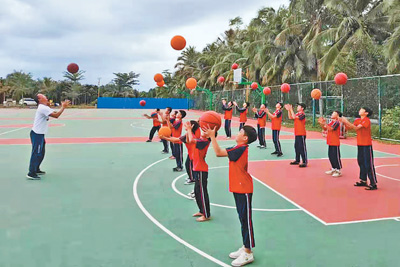
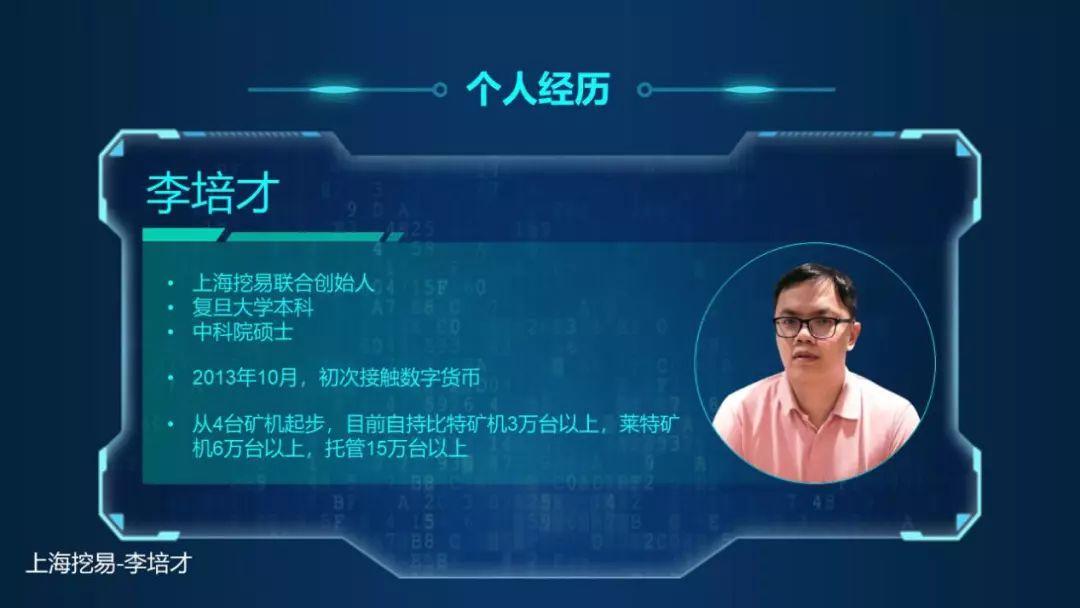
From fighting the epidemic to fighting the flood, he charged ahead!

Wu Guang is on the Kaotian River levee. Zhang Yifei

It is difficult to interview Wu Guang. On the Kaotianhe levee in Zhuogang Town, Huangmei County, Hubei Province, every time the reporter found him during the break of the officers and men, he always waved his hand shyly and said, "Go interview my comrades-in-arms, they did a great job!"

After several unsuccessful interviews with Wu Guang, the reporter got such a brief introduction from the accompanying cadres: Wu Guang, deputy brigade commander of a pontoon brigade of the Central Theater Army, joined the army for 27 years and participated in ’ Major tasks such as flood fighting in 1998, the rescue of the sunken ship of "Oriental Star", the inspection exercise of "Crossing the Yangtze River -2018" project support, and the support for the opening and closing ceremonies of the 7th military world games.

Yang Jun, the instructor of the Fourth Battalion of this brigade, knows Wu Guang very well. "He usually doesn’t talk much, he is very pragmatic, and his work is resolute." Yang Jun told reporters, "With him, we are very practical."

On the morning of July 8, a pontoon brigade of the Central Theater Army was ordered to go to Huangmei County, Hubei Province to participate in flood fighting and rescue. At this time, the Kaotian reach has exceeded the warning water level, and many places are in danger, and nearby villages are affected.

More than 300 officers and men rushed to help. On the way, Wu Guang kept in touch with local cadres in Huangmei County while organizing a procession, and always paid attention to the development of flood.

"The grievances were severe, and I really had no bottom at that time." Recalling the scene at that time, Gong Jintao, instructor of the 12 th Company of the 4 th Battalion, said frankly. After arriving at the mission site, the scene in front of him made him feel a little worried when he participated in the flood fighting and rescue for the first time: Kaotian River has become a suspended river, the flood has overflowed the dam, there are many piping nearby, Guiba Village is flooded, and the villagers are anxiously waiting for rescue … …

"All assault boats are urgently launched, save people first!" Wu Guang decisively gave the order, and more than 10 assault boats immediately sped away to Guiba Village. Subsequently, according to each person’s professional expertise and carrying equipment, he divided the remaining personnel into two groups, one group was responsible for blocking the piping and the other group was responsible for dealing with the danger of overflow. Wu Guang carefully inspected the riverbank to ensure that he knew all aspects of the rescue.

This patrol doesn’t matter, he found a bigger danger — — A dike with a length of more than 300 meters has a group of piping, and nearly one third of the piping is in muddy water. This means that the river bank is in danger of collapse at any time!

"Hurry up, hurry up!" The local government urgently dispatched sand and gravel, steel pipes, wooden stakes and other materials. According to the site conditions, Wu Guang organized officers and men to take emergency rescue measures such as mechanical piling, construction of anti-filtration wells, and rushing to build sub-dikes. After more than 10 hours of continuous fighting, the danger was finally controlled, and at the same time, all the trapped people were safely transferred.

From the emergency rescue on July 8th to the completion of the rescue mission on August 7th, Wu Guang led the officers and men to fight around the clock in the front line of flood control, handling more than 10 dangerous situations and loading and handling 110,000 bags of sandbags. The flood control works they built were praised by local water conservancy experts as "benchmarks like textbooks".

Wu Guang’s pontoon brigade is on duty all the year round along the Yangtze River. It was awarded the honorary title of "Model Brigade for Flood Control and Emergency Rescue" by the Central Military Commission, and it is a national professional force for flood control and emergency rescue. Over the years, Wu Guang insisted on regularly recording the water level information of the Yangtze River and lakes near the station, conducted in-depth research on flood control issues, and participated in the improvement of emergency rescue plans for many times. Whenever there is an urgent and dangerous task, he actively challenges and strives to be a pioneer.

Just a few months ago, at the critical moment of Wuhan’s fight against the COVID-19 epidemic, Wu Guang led a motorcade to join the transport support team of troops stationed in Hubei to fight against the epidemic for 68 days continuously, achieving zero infection of personnel, zero accidents of vehicles and zero mistakes in tasks, which provided a powerful transport support guarantee for winning the Hubei and Wuhan defense wars.

From fighting epidemic to fighting floods, from the cold winter to the hot summer, from the streets of Wuhan to the mountains and rivers of Huangmei, no matter what kind of difficult challenges he faced, Wu Guang rushed ahead and used "retrograde" expeditions again and again to hold the interests of the people high above his head.

Difficult to repair "Arrow Buckle Great Wall" —— Beijing gradually repaired the famous and steep section of the Great Wall

The Great Wall is the spiritual symbol of the Chinese nation and the largest and most widely distributed cultural heritage in China. Among the 15 provinces, autonomous regions and municipalities directly under the Central Government where the Great Wall is distributed in China, the Beijing section of the Great Wall is well preserved, but the maintenance is more difficult than expected.

Beijing sets up special funds every year.

  Emergency rescue and reinforcement of 10 sections of the Great Wall

  The Great Wall in Beijing was first built in the Northern Qi Dynasty and was built on a large scale in the Ming Dynasty. In history, it was well-guarded and built for guarding the capital, which is the essence of the Great Wall in China. In terms of scope, the Great Wall of Beijing covers six districts, including Pinggu District, Miyun District, Huairou District, Yanqing District, Changping District and Mentougou District, with a total length of 520.77 kilometers.

  Since 2000, nearly 100 Great Wall protection projects have been carried out in Beijing, including a demonstration protection project represented by the famous dangerous section of the Great Wall, Jiankou Great Wall. In 2019, the "Beijing Great Wall Cultural Belt Protection and Development Plan (2018-2035)" was announced, and the protection and repair of the Great Wall in Beijing was further strengthened.

  According to the plan, by 2035, by means of emergency rescue and routine maintenance, Beijing will realize that the whole line of the Great Wall itself and its carrier is free from danger. In order to achieve this goal, starting from 2019, Beijing has steadily promoted 10 Great Wall rescue and reinforcement projects every year.

  Since August this year, the rescue and reinforcement projects of the Great Wall in Beijing in 2021 have started one after another. In late October, the construction also came to an end. Among them, the construction of the Great Wall in Huairou section this year has all ended — — All four municipal projects have been completed, and the fourth phase of the Jiankou Great Wall renovation project has also completed this year’s task.

  From Jiankou Pass to Zhengbei Building

  The eastern section of Jiankou Great Wall has been penetrated.

  This year’s emergency maintenance project of the Huairou section of the Great Wall runs through the most steep part of the eastern section of the Jiankou Great Wall.

  The Great Wall of Wan Li extends east and west in the spectacular mountains north of Beijing. The Great Wall in Huairou section of Beijing is an important part of it. It is connected to Xiaoshuiyu in Miyun District in the east and Dazhuangke in Yanqing District in the west, with a total length of 65.4 kilometers. Now, every enemy building (platform) in the long section of the city has a number, which increases from No.1 to No.284 from east to west.

  The Jiankou Great Wall is a part of Huairou Great Wall, which starts from No.122 watchtower of Zhengbei Building in the east and is connected with Mutianyu Great Wall. Northwest to the "Nine Eyes Building" No.169 enemy building, bordering the Great Wall section of Yanqing District. Because of the steep terrain, the Jiankou Great Wall is considered as "one of the most dangerous sections of the Great Wall in China".

  Taking the "Jiankou Pass" between No.131 and No.132 enemy platforms as the node, the Jiankou Great Wall is divided into two parts in the maintenance project.

  Among the four municipal projects in Huairou this year, the side wall rescue and reinforcement project between No.130 and No.131 watchtowers is located in the eastern section of Jiankou Great Wall. The elevation of this section of side wall gradually rises from west to east, and the position is steep and steep.

  The focus of this construction is mainly on the severely damaged floor tiles. According to Zhang Tong, director of Huairou District Cultural Relics Institute, in order to protect the structural stability of cultural relics and prevent them from further collapse, the rescue and reinforcement project has taken measures such as laying bricks or stones to reinforce the parts that affect the structural safety, cleaning and stabilizing them.

  The construction environment is steep and the construction period is short, which increases many difficulties for emergency rescue construction. Water is needed for construction. However, due to the serious water shortage area, the construction team needs to lay a pipeline with the longest length of nearly 1,000 meters, borrow local 300-meter deep wells to lift water, use diesel to generate alpine pumps, and then lift the water to the top of the mountain through the pumping station. At the end of October every year, the temperature in mountainous areas drops sharply, and the water pipes will face the problem of freezing, so the repair work of the Great Wall will be forced to stop.

  The cold air came earlier this year. In mid-October, the temperature on the mountain has fallen below freezing point. In order to finish before this, the side wall construction has specially increased manpower. According to Cheng Yongmao, technical director of emergency engineering, the workers are working overtime, going up the mountain at 6: 30 every morning and working until about 5: 30 in the afternoon. "If you go down the mountain later, it will be dark."

  The rescue and reinforcement project between No.130 and No.131 watchtowers was completed on October 20th. This side wall is connected with the third phase repair section of Jiankou Great Wall. The completion of emergency rescue and reinforcement means that the arrow buckles the eastern section of the Great Wall — — The arrow buckle has been closed to the north building, and the emergency repair has been completed.

  The fourth phase is affected by continuous precipitation.

  At present, the clean-up work is completed.

  In synchronization with the 10 rescue and reinforcement projects of the Great Wall in Beijing this year, on August 13th, the fourth renovation project of the Jiankou Great Wall was officially started, and it is planned to be completed before ice period next year. The renovation scope starts from the well-known "Beijing Knot" (No.154 enemy tower) and goes north to No.162 enemy tower, involving a total of 8 enemy towers (towers).

  This section of the Great Wall is a masonry structure, with arrow holes on both sides of the battlements, and it is relatively well preserved as a whole. However, the whole section of the wall is overgrown with trees, some walls collapse, the ground is scattered and broken, and the watchtower collapses to varying degrees. The emergency repair mainly includes cleaning up sundries, unblocked drainage, and building collapsed sections. During the construction process, the materials will be transported by agricultural vehicles and mules, and finally they will be carried up the mountain manually.

  Since the start of construction, the rainfall in Beijing has been constant, which has added more difficulties to the construction. "The construction site is far from the material yard, the road is muddy, and the materials can’t be transported." Cheng Yongmao described it. Therefore, the fourth phase of the project has mainly completed the preliminary cleaning work, and will resume construction after thawing next spring. However, Cheng Yongmao estimates that the fourth phase of the project can be completed on time next year.

  Before the start of the fourth phase, the repair work of the Jiankou Great Wall has been completed about 3,200 meters. According to calculation, after the completion of the fourth phase of the project with a length of 1678 meters, the repair progress of the Jiankou Great Wall will be nearly half completed.

  However, the current repair work is mainly an "emergency" for dangerous situations, and it still does not have the conditions for opening to the outside world after completion.

  "minimum intervention, archaeology first"

  Respect the traces left by time

  According to experts, after years of protection and maintenance practice, people have gradually formed the concept of Great Wall protection. In 2014, after National Cultural Heritage Administration issued the Guiding Opinions on the Protection and Maintenance of the Great Wall, these protection principles were further standardized and implemented.

  In the process of this emergency repair, the construction workers always adhere to the principles of "minimum intervention" and "no change in the original state of cultural relics": in order to maintain the original style, the original old masonry should be used as much as possible for repair; In order to delay the weathering damage of the bottom brick, the vegetation that can be preserved is not easily moved. Zhang Tong said: "After the danger is removed, the structure of the Great Wall will be more stable, but the appearance of the damage caused by wind and frost will not change."

  Such rescue work has indeed stood the test of years. No.202 watchtower and No.204 gate closure are the emergency and reinforcement projects of the Great Wall in Beijing in 2019. At that time, in addition to mending and strengthening the wall, the construction workers also built an extra low wall to prevent flash floods from directly washing the wall in rainy season. In the continuous rainfall in Beijing in July this year, there was no new danger in this paragraph. Similarly, with the promotion of the renovation project of Jiankou Great Wall, the safety factor of Jiankou Great Wall, which is known as "danger", has gradually improved.
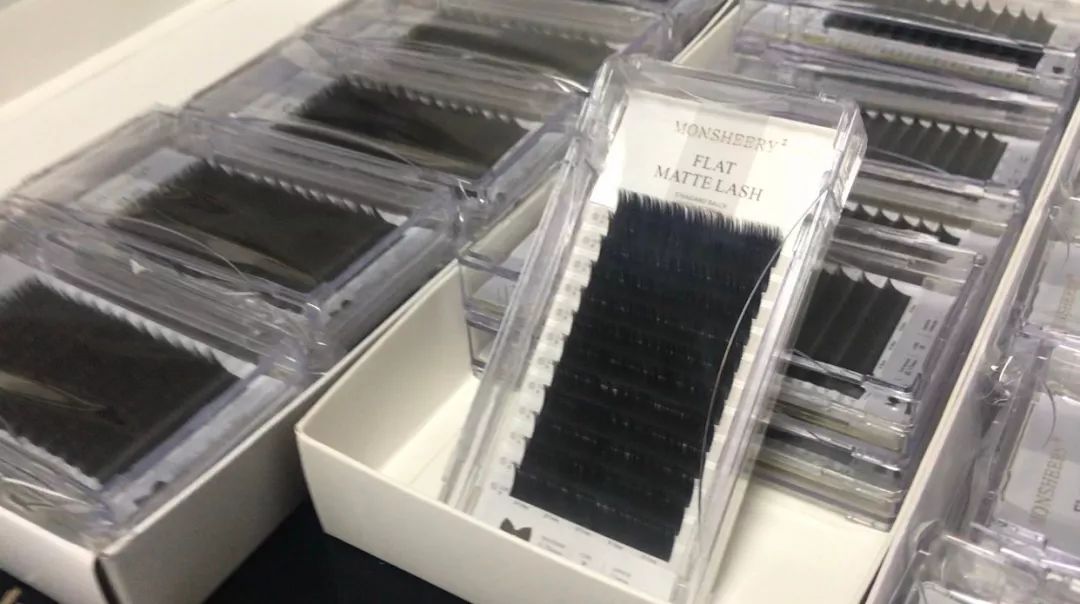
  The concept of "archaeology first" is gradually integrated into the daily work of emergency repair. In this year’s rescue and reinforcement project, a number of scattered cultural relics, such as roof ridge beasts, launching grates and the bottom of blue and white porcelain bowls, have been cleaned up one after another.

  From the second phase of the renovation project of the Jiankou Great Wall, the staff added an archaeological cleaning link before the construction, and used archaeological methods to clean up the Great Wall itself and the "one meter and one meter" on both sides to ensure that the scattered cultural relics can be more truly and completely protected. Relevant experts believe that this is an important progress in the concept of protecting the cultural heritage of the Great Wall.

  Chain connection

  Jiankou Great Wall Section

  The Great Wall section of the arrow buckle is W-shaped, shaped like a full bow, while the arrow buckle at the low point is like a buttonhole for taking an arrow, which is the origin of the name "Great Wall of the arrow buckle".

  The Jiankou Great Wall has been repaired many times. In 2006, the cultural relics department carried out emergency rescue and reinforcement for Arrow Kouguan, which was threatened by landslide. Since 2016, National Cultural Heritage Administration has successively approved four projects to repair the Great Wall with arrow buttons.

  In 2017, the first phase of the renovation project of the Jiankou Great Wall was completed, ranging from No.146 to No.150 watchtower (Taiwan), with a total of 1003 meters. From 2019 to 2020, the second and third renovation projects were completed one after another. The second phase of the project was built from No.151 to No.154 enemy building (platform), with a length of 745 meters; The third phase is from No.122 to No.130 enemy building (Taiwan), totaling 1094 meters.

  The first and second phases of the project are located on the west side of Jiankouguan, and the third phase is located on the east side of Jiankouguan. Before construction started this year, only 135 meters west of No.130 watchtower remained between Jiankou Pass and Jiankou Phase III, so this side wall was included in one of the 10 Great Wall rescue and reinforcement projects in Beijing this year.

  Extended reading

  The maintenance section is mostly located in the future open scenic area.

  Huairou District, where the Jiankou Great Wall is located, contains 284 enemy towers (platforms). Enemy platform No.154 was called "Beijing knot" by the people, and the Great Wall of Wan Li diverged from it, and journey to the south extended to Sihai Town of Yanqing. All the way west to the direction of Juyongguan in Changping.

  From the "Beijing knot", you can go north along No.154 enemy platform to No.169 enemy platform, which is the famous enemy platform Jiuyan Building at the junction with Yanqing. This section is also part of the Great Wall of Arrow Buckle. The west side of "Beijing knot" is adjacent to No.170 watchtower, one of the four municipal projects in Huairou District this year. If you continue to the west, you can find No.180 and No.185 watchtowers in turn.

  The Protection and Development Plan of Beijing Great Wall Cultural Belt (2018-2035) defines the spatial layout of Beijing Great Wall Cultural Belt as "one line, five pieces and many points". Among them, the "first line" refers to the Great Wall Line, and the "five pieces" are five core group areas used to relieve the pressure of tourists in the Great Wall Open Scenic Area. The paragraphs repaired in Huairou District this year belong to the Huanghua Road group area.

  Chain connection

  World Heritage Committee spoke highly of the Great Wall protection.

  At the 44th World Heritage Conference held this year, the World Heritage Committee spoke highly of the positive and effective measures taken by the China government in the protection of the Great Wall, so that the outstanding universal value of the heritage has been properly protected; At the same time, it appreciates the efforts and achievements made by the China Municipal Government in promoting the construction of the Great Wall National Cultural Park, promulgating and implementing the Master Plan for the Protection of the Great Wall, as well as in public communication and promotion, capacity building of heritage sites, special protection legislation, application of modern science and technology, international exchanges and cooperation, and easing the pressure of tourism.

Beijing "tightens" the department-level civil servants’ passports for going abroad and puts them in the secret cabinet.

Some districts, counties and departments in Beijing have further tightened the management policy of civil servants going abroad for personal reasons. Yesterday, the Beijing News reporter learned that at present, all the passports of cadres at the department level and below in Tongzhou District who have gone abroad for private purposes have been handed in, which are kept by the unit collectively, and the principal responsible persons of department-level institutions have to register and put on record for going abroad for private purposes. In Huairou District, the filing management of personnel in classified positions abroad has also been extended to the department level.

Some districts, counties and departments in Beijing have further tightened the management policy of civil servants going abroad for personal reasons. Yesterday, the Beijing News reporter learned that at present, all the passports of cadres at the department level and below in Tongzhou District who have gone abroad for private purposes have been handed in, which are kept by the unit collectively, and the principal responsible persons of department-level institutions have to register and put on record for going abroad for private purposes. In Huairou District, the filing management of personnel in classified positions abroad has also been extended to the department level.

Last year, after the Central Organization Department issued regulations to strengthen the management of going abroad, Beijing also tightened the management of cadres going abroad for personal reasons, but it was mainly aimed at cadres at or above the department level.

Passports of Tongzhou department-level cadres are kept in a confidential cabinet.

Recently, the Central Organization Department and the Ministry of Public Security issued a document requesting to further strengthen the supervision and management of leading cadres going abroad for personal reasons in cooperation with the international anti-corruption memorial service. Recently, Beijing’s newly-established Pursuit Office has also emphasized the control of "escape prevention", including strengthening the management of entry and exit licenses for party member and state employees.

Yesterday, the Beijing News reporter learned that at present, cadres at the department level and below in more than 90 units in Tongzhou District who have passports for going abroad for private purposes must be "handed in" and managed by their own units in a centralized and unified manner.

A civil servant in Tongzhou District said that cadres at or above the department level who hold personal passports are kept by the organization department of the district committee. If it is a newly promoted deputy director, it is required to "hand in" the passport to the organization department within 10 days. In contrast, the personal passports of cadres at the department level and below are "stored" in their own units. "If you want to travel abroad, you have to go through the approval of the top leader before you can get your passport back."

It is reported that Tongzhou District has recently issued a notice explicitly requiring all units to establish a centralized custody and internal examination and approval system for cadres at or below the department level who go abroad for private purposes.

The reporter learned that all units in Tongzhou District should arrange a special manager to manage the documents held by cadres and workers at or below the department level. These documents are required to be stored in a special "secret cabinet". According to the recent inspection by the Organization Department of Tongzhou District Committee, all personal passports have been handed in.

In addition, some municipal departments in Beijing have also put forward the requirement of handing in passports for department-level cadres in specific positions. A civil servant in a municipal department said that secret-related departments such as personnel and finance departments, as well as ordinary clerks who keep confidential documents and manage data, also need to hand in their passports.

Some district and county-level cadres must go abroad for the record.

Previously, according to the requirements of the Central Organization Department, Beijing has stipulated that leading cadres at or above the department level should register and put on record for going abroad privately. The Beijing News reporter learned that some districts and counties have also extended to some post-level cadres in response to the management policy of "filing system" for cadres going abroad for private reasons.

According to the relevant person in charge of the organization department of Huairou District Committee, for some department-level cadres in secret-related units, they also need to register for filing because they go abroad privately. "For example, the section chief and deputy section chief of some confidential departments require them to go to the entry-exit department for the record. They need to get the approval of the organization department for going abroad privately, otherwise it is impossible to release them. "

Tongzhou District clearly takes several types of personnel as the objects of registration and filing, including on-the-job district-level and department-level leading cadres, deputy directors of district-owned enterprises, and financial and confidential personnel of various units. At the same time, for the first time, the main person in charge of a department-level institution with legal person qualification was included in the scope of registration personnel.

At present, all units in Tongzhou District have received the Registration Form for State Staff. In the filing form, you will be required to fill in personal information such as the ID number of the person who went abroad for personal reasons, and the organization department will submit it to the exit-entry administration department of the public security for comparison and review when the cadres go abroad.

Relevant regulations on the administration of leading cadres going abroad (border)

Central regulations

In July, 2013, in order to thoroughly implement the spirit of the eight regulations, the General Office of the Central Committee of the CPC issued the Opinions of the Ministry of Foreign Affairs, the Foreign Affairs Office of the Central Committee, the Organization Department of the Central Committee and the Ministry of Finance on Further Regulating the Temporary Going Abroad for Business of State Employees below the Provincial and Ministerial Levels.

In March 2014, the Central Organization Department issued the Notice on Further Strengthening the Management and Supervision of Leading Cadres Going Abroad. The document strengthens the management of leading cadres’ certificates for going abroad.

In 2015, the Organization Department of the Central Committee of the Communist Party of China and the Ministry of Public Security jointly issued a notice (Group Tongzi [2015] No.20) on the special treatment of illegal handling and holding certificates for going abroad for personal reasons, requiring all units to implement the spirit of the Fifth Plenary Session of the 18th Central Commission for Discipline Inspection, cooperate with the international anti-corruption memorial service, and further strengthen the supervision and management of leading cadres going abroad for personal reasons.

Beijing implements

In May 2014, in order to implement the relevant requirements of the Central Organization Department, the Organization Department of the Beijing Municipal Committee issued a notice on strengthening the management of leading cadres going abroad, and more attention was paid to leading cadres going abroad for personal reasons. It clearly stipulates that:

On-the-job leading cadres at or above the division level are strictly required to go abroad (border) for private affairs, and are generally not approved. Due to special circumstances, going abroad (territory) needs to be submitted for approval in strict accordance with the prescribed procedures in accordance with the cadre management authority.

Key overseas audit targets

Leading cadres involved in the management of personnel, finance, materials and confidential files; naked official

rule

● Centralized management of private passports handed in by cadres at or above the division level.

● Turn in your passport within 7 days after you come back from going abroad on business.

● Turn in your passport within 10 days after you come back from going abroad for personal reasons.

● Cadres at or above the division level are generally not approved for going abroad privately, and special circumstances require strict approval.

● Retired bureau-level cadres need to be approved by the party committees of bureau-level units.

Following Beijing’s tightening of the "threshold" for leading cadres at department level and above to go abroad for personal reasons, some districts and counties also strictly control the civil servants at department level and below to go abroad for personal reasons.

Tongzhou

Cadres at the department level and below in more than 90 units in the whole region who have passports for going abroad on private business must be "handed in" and managed centrally by their own units.

bring under control through mollification/conciliation

For some department-level cadres in secret-related units, it is also necessary to refer to the management policies of department-level cadres when going abroad privately, and implement registration and filing.

Changping

On-the-job department-level cadres are generally not allowed to go abroad for personal reasons. In addition, those who hold classified posts, even if they are not department-level cadres, are not allowed to go abroad for personal reasons.

How many steps does it take to go abroad? (Take a department-level cadre of a unit as an example)

Report to the person in charge of the application department for signature, and submit the application to the head of the organization and personnel department for signature and approval, and return the passport after going abroad and returning home.

reveal a secret

How to approve department-level civil servants going abroad for personal reasons?

The passport can only be "borrowed" after the head of the unit has signed it for review.

The Beijing News reporter learned from a number of units yesterday that since last year, Beijing has strictly controlled the requirements for leading cadres at or above the departmental level to go abroad for private affairs, and generally does not approve them. Due to special circumstances, going abroad (territory) needs to be submitted for approval in strict accordance with the prescribed procedures in accordance with the cadre management authority.

"Department-level cadres are not allowed to go abroad for personal reasons without special circumstances, whether they are real or imaginary." A civil servant of a municipal department said that this year a newly promoted deputy-department-level cadre of the unit "grabbed" a trip abroad before publicity. "I feel that there will be no chance in the future."

A cadre in Changping District also said that in-service department-level cadres are generally not allowed to go abroad for personal reasons, unless they are visiting relatives and other special circumstances, they will not be approved. In addition, confidential positions such as password workers, even if they are not departmental cadres, are not allowed to go abroad for personal reasons.
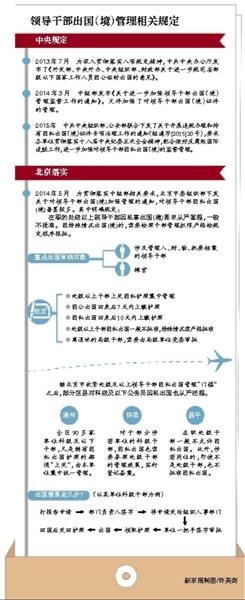
In contrast, although some districts, counties and departments in Beijing have also strengthened the management policies for department-level civil servants to go abroad, on the whole, department-level civil servants have higher "freedom" for going abroad privately.

A chief clerk of the financial department of a unit introduced that his passport had been handed in. If he needed to travel abroad during his annual leave, he would have to write an application to the organization, and the director of the office would sign it and submit it to the personnel department for approval. In the process of examination and approval, the passport can only be "borrowed" after it is signed by the top leader of the unit.

"If you just travel, you can generally review it." The clerk said, but sometimes it will face embarrassment. For example, some tour groups require to hand in their passports immediately. At this time, the approval process of the unit will be "too late", so travel abroad must be "advanced".

He said that after traveling abroad, he must return as scheduled according to the time limit for applying for going abroad and return his passport as soon as possible. "Every time you use a passport, the specific time of lending and returning will be registered accordingly."

What should party member do if he doesn’t return home after going abroad for personal reasons?

Those who leave home for one year without reason shall be treated as leaving the Party.

According to the organization department, party member went abroad for a short time for private affairs, and his organizational relationship remained in his original unit. When party member returns to China as scheduled, he should report the situation during his departure to the Party organization of the original unit in time.

If party member returns to China after the holiday, I need to complain to the party organization about the reasons. If the reasons are justified and there is no problem after examination, he can resume his organizational life in party member. If you leave for half a year or so without reason, or make general mistakes, you can give appropriate criticism and education according to the specific situation, and give appropriate punishment when necessary.

However, for those who have returned to China for more than one year without reason, they generally cannot resume their organizational life and should be dealt with by leaving the party on their own. If serious problems are found, the situation is true after examination, and they should be dealt with seriously, and some should be expelled from the party.

background

Some provinces and cities strengthen the management of civil servants going abroad.

Gansu province requires that the information of leading cadres at or above the deputy department level in the province shall be filed in the public security organs; At the same time, the personnel departments at all levels shall be responsible for the centralized custody of all leading cadres at or above the deputy department level for going abroad (border) for personal reasons in accordance with their duties and authorities.

Nanchang strengthens the management of six categories of personnel going abroad for personal reasons, including township-level cadres managed by county and district committees and secret-related personnel in various departments and industries. These personnel will be registered and put on record, and will be handed over to centralized custody for private ordinary passports, Hong Kong, Macao and Taiwan passes, etc.

Recently, for the first time in Xining City, 3,168 "middle-level leaders of municipal units" and "leading cadres at district, county and township levels" were included in the scope of personnel who went abroad for private registration. When these people apply for going abroad for personal reasons, they must submit the opinions of their work units on the applicant’s going abroad (territory) to the exit-entry administration department of the public security organ where the household registration is located, otherwise they will not be able to apply for the documents for going abroad (territory) for personal reasons.(Reporter Wen Wei Wu Wei)

The GDP data of 31 provinces in the first half of the year were all released: 16+, 15-

  According to the news of official website, Statistics Bureau of Heilongjiang Province on July 28th, according to the unified accounting results of regional GDP, the regional GDP of Heilongjiang Province in the first and second quarters of 2020 was 525.06 billion yuan, down 4.9% year-on-year. Among them, the added value of the primary industry was 48.06 billion yuan, a year-on-year increase of 0.2%; The added value of the secondary industry was 159.57 billion yuan, a year-on-year decrease of 5.4%; The added value of the tertiary industry was 317.43 billion yuan, down 5.6% year-on-year.

  So far, the GDP of 31 provinces in China has been announced in the first half of this year.

  In terms of total amount, Guangdong’s GDP in the first half of the year was 4,923.42 billion yuan, Jiangsu 4,672.292 billion yuan and Shandong 3,302.58 billion yuan, ranking the top three in the country.

  In terms of growth rate, Tibet’s GDP increased by 5.1% year-on-year in the first half of the year, leading the country, Xinjiang increased by 3.3% year-on-year, and Guizhou and Gansu both increased by 1.5%.

  There are six provinces with a regional GDP of more than 2 trillion yuan, namely, 4,923.420 billion yuan in Guangdong, 4,672.292 billion yuan in Jiangsu, 3,302.58 billion yuan in Shandong, 2,908.7 billion yuan in Zhejiang, 2,560.846 billion yuan in Henan and 2,213.027 billion yuan in Sichuan.

  Of the remaining 25 provinces, Fujian 1990.139 billion yuan, Hunan 1902.64 billion yuan, Anhui 1755.11 billion yuan, Hubei 1748.051 billion yuan, Shanghai 1735.680 billion yuan, Hebei 1638.73 billion yuan, Beijing 1620.56 billion yuan, Shaanxi 1179492 billion yuan, Jiangxi 116911 billion yuan and Chongqing 11200. 1,020.604 billion yuan in Guangxi, 798.553 billion yuan in Guizhou, 782.164 billion yuan in Shanxi, 770.41 billion yuan in Inner Mongolia, 641.280 billion yuan in Xinjiang, 630.928 billion yuan in Tianjin, 544.192 billion yuan in Jilin, 525.06 billion yuan in Heilongjiang, 410.19 billion yuan in Gansu and 238.301 billion yuan in Hainan.

  In terms of growth rate, 16 provinces achieved positive growth in the first half of the year.

  Among them, Tibet grew by 5.1%, Xinjiang by 3.3%, Guizhou by 1.5%, Gansu by 1.5%, Hunan by 1.3%, Ningxia by 1.3%, Qinghai by 1.0%, Jiangsu by 0.9%, Jiangxi by 0.9%, Chongqing by 0.8%, Guangxi by 0.8% and Anhui by 0.8%.