The Ministry of Ecology and Environment released the quality of surface water and ambient air in the first half of the year.
The Ministry of Ecology and Environment informed the media today about the quality of surface water and ambient air in June and January-June, 2020.
I. Surface water
(1) General situation
In June, among the surface water assessment sections in 1940 countries, the proportion of sections with excellent water quality (Class I-III) was 71.4%, up 0.6 percentage points year-on-year; The proportion of inferior V sections was 2.5%, down 2.9 percentage points year-on-year. The main pollution indicators are chemical oxygen demand, permanganate index and total phosphorus.

Figure 1 Proportion of surface water quality categories in China in June 2020
From January to June, among the surface water assessment sections in 1940 countries, the proportion of sections with excellent water quality (Class I-III) was 80.1%, up 5.6 percentage points year-on-year; The proportion of inferior V sections was 1.1%, down 3.2 percentage points year-on-year. The main pollution indicators are chemical oxygen demand, total phosphorus and permanganate index.
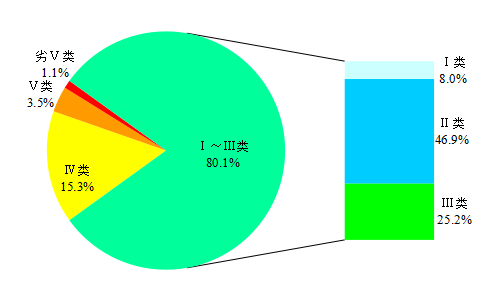
Figure 2 Proportion of surface water quality categories in China from January to June 2020
(2) Water quality of major rivers
In June, the proportion of I-III water quality sections in seven major river basins, such as the Yangtze River, the Yellow River, the Pearl River, the Songhua River, the Huaihe River, the Haihe River and the Liaohe River, and the rivers in the northwest, southwest and Zhejiang and Fujian provinces was 75.1%, up 1.4 percentage points year-on-year; The inferior V category was 1.9%, down 3.2 percentage points year-on-year. The main pollution indicators are chemical oxygen demand, permanganate index and total phosphorus. Among them, the water quality of northwest and southwest rivers is excellent, the water quality of Yangtze River basin, Zhejiang and Fujian rivers, Pearl River basin and Yellow River basin is good, and Songhua River, Liaohe River, Huaihe River and Haihe River basin are slightly polluted.
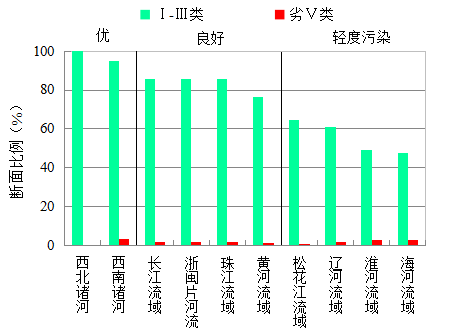
Fig. 3 Proportion of water quality categories in seven major river basins, southwest and northwest rivers and rivers in Zhejiang and Fujian in June 2020.
From January to June, the proportion of I-III water quality sections in seven major river basins, such as the Yangtze River, the Yellow River, the Pearl River, the Songhua River, the Huaihe River, the Haihe River and the Liaohe River, and rivers in the northwest, southwest and Zhejiang and Fujian provinces was 83.8%, up 5.9 percentage points year-on-year; The inferior V class was 0.7%, down 3.8 percentage points year-on-year. The main pollution indicators are chemical oxygen demand, permanganate index and five-day biochemical oxygen demand. Among them, the water quality of northwest rivers, Yangtze River basins, Zhejiang and Fujian rivers, southwest rivers and Pearl River basins is excellent, the water quality of Yellow River and Songhua River basins is good, and Huaihe River, Haihe River and Liaohe River basins are slightly polluted.
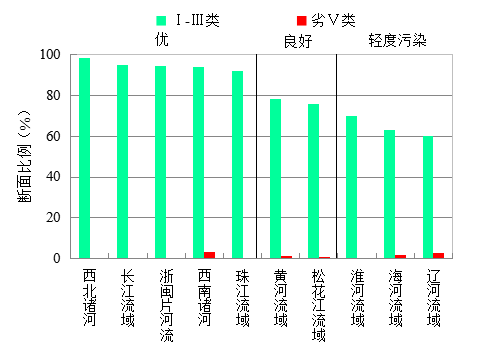
Fig. 4 Proportion of water quality categories in seven major river basins, southwest and northwest rivers and rivers in Zhejiang and Fujian from January to June, 2020.
(three) the water quality and nutritional status of important lakes (reservoirs)
In June, among the 112 key lakes (reservoirs) monitored, the number of lakes (reservoirs) with I-III water quality accounted for 71.4%, up 2.6 percentage points year-on-year; The proportion of lakes (reservoirs) with water quality worse than Grade V was 7.1%, down by 1.2 percentage points year-on-year. The main pollution indicators are total phosphorus, chemical oxygen demand and permanganate index. Among the 97 key lakes (reservoirs) monitoring eutrophication, 6 lakes (reservoirs) are moderately eutrophic, accounting for 6.2%; 19 lakes (reservoirs) were slightly eutrophic, accounting for 19.6%; The other lakes (reservoirs) are not eutrophic. Among them, Taihu Lake is slightly polluted and slightly eutrophic, and the main pollution index is total phosphorus; Chaohu Lake has good water quality and mild eutrophication; Dianchi Lake is heavily polluted and moderately eutrophic, and the main pollution indexes are chemical oxygen demand, total phosphorus and permanganate index. Erhai Lake has good water quality and moderate nutrition; The water quality of Danjiangkou reservoir is excellent and medium nutrition; Baiyangdian Lake is slightly polluted and slightly eutrophic. The main pollution indexes are chemical oxygen demand, permanganate index and total phosphorus. Compared with the same period of last year, the water quality of Chaohu Lake has improved, the water quality of Dianchi Lake has declined, and the water quality of Taihu Lake, Erhai Lake, Danjiangkou Reservoir and Baiyangdian Lake has not changed significantly. The nutritional status of Danjiangkou Reservoir has improved, but the nutritional status of Taihu Lake, Chaohu Lake, Dianchi Lake, Erhai Lake and Baiyangdian Lake has not changed significantly.
From January to June, among the 112 key lakes (reservoirs) monitored, the number of lakes (reservoirs) with I-III water quality accounted for 75.9%, up 9.8 percentage points year-on-year; The proportion of lakes (reservoirs) with water quality worse than Grade V was 5.4%, down by 1.9 percentage points year-on-year. The main pollution indicators are total phosphorus, chemical oxygen demand and permanganate index. Among the 109 key lakes (reservoirs) monitoring eutrophication, 5 lakes (reservoirs) are moderately eutrophic, accounting for 4.6%; 19 lakes (reservoirs) were slightly eutrophic, accounting for 17.4%; The other lakes (reservoirs) are not eutrophic. Among them, Taihu Lake is slightly polluted and slightly eutrophic, and the main pollution index is total phosphorus; Chaohu Lake has good water quality and mild eutrophication; Dianchi Lake is moderately polluted and moderately eutrophic, and the main pollution indicators are chemical oxygen demand and total phosphorus. The water quality of Erhai Lake and Danjiangkou Reservoir is excellent and medium nutrition; Baiyangdian Lake is slightly polluted and slightly eutrophic, and the main pollution index is chemical oxygen demand. Compared with the same period of last year, the water quality of Chaohu Lake and Erhai Lake has improved, the water quality of Dianchi Lake has declined, and the water quality of Taihu Lake, Danjiangkou Reservoir and Baiyangdian Lake has not changed significantly. The nutritional status of Dianchi Lake has declined, but there are no obvious changes in Taihu Lake, Chaohu Lake, Erhai Lake, Danjiangkou Reservoir and Baiyangdian Lake.
(four) the ranking of national surface water assessment sections in cities at or above the prefecture level
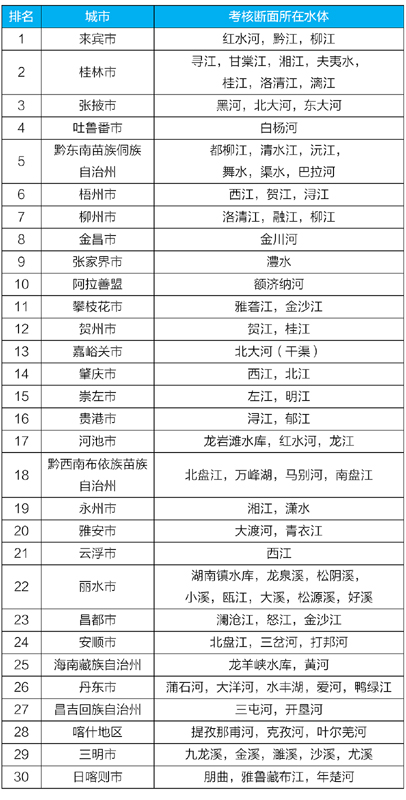
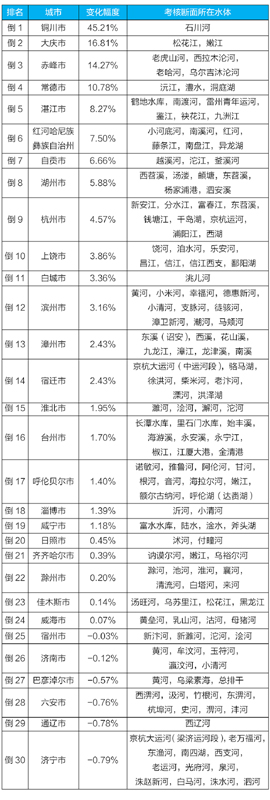
The cities at the prefecture level and above in the country participated in the ranking, covering 2050 national control sections (including 1940 national surface water assessment sections and 110 sea control sections). In June, among the cities at the prefecture level and above in China, the water environmental quality of national surface water assessment sections in 30 cities such as Laibin, Guilin and Zhangye was relatively good (from 1st to 30th), while the water environmental quality of national surface water assessment sections in 30 cities such as Cangzhou, Fuxin and Chifeng was relatively poor (from 1st to 30th). From January to June, among the cities at the prefecture level and above in China, the water environment quality of national surface water assessment sections in 30 cities such as Zhangye, Jinchang and Liuzhou was relatively good (from 1st to 30th), while the water environment quality of national surface water assessment sections in 30 cities such as Tongchuan, Cangzhou and Xingtai was relatively poor (from 1st to 30th). The changes of water environmental quality of national surface water assessment sections in 30 cities such as Yingkou, Lvliang and Liaoyuan are relatively good (from 1st to 30th), while the changes of water environmental quality of national surface water assessment sections in 30 cities such as Tongchuan, Daqing and Chifeng are relatively poor (from 1st to 30th). See Schedule 1 ~ Schedule 6 for details.
Second, the ambient air
In June, the average number of excellent days in 337 cities at or above the prefecture level was 85.1%, up 5.9 percentage points year-on-year; The concentration of PM2.5 was 19 μ g/m3, down 13.6% year-on-year; The concentration of PM10 was 40 μ g/m3, down by 7.0% year on year. O3 concentration was 143 μ g/m3, down 8.3% year-on-year; SO2 concentration was 8 μ g/m3, down 11.1% year-on-year; NO2 concentration was 18 μ g/m3, down 10.0% year-on-year; The CO concentration was 0.8 mg/m3, down 11.1% year-on-year.
From January to June, the average number of excellent days in 337 cities at or above the prefecture level was 85.0%, up 4.9 percentage points year-on-year; The concentration of PM2.5 was 36 μ g/m3, down 10.0% year-on-year; The concentration of PM10 was 59 μ g/m3, a year-on-year decrease of 14.5%. O3 concentration was 141 μ g/m3, down 1.4% year-on-year; SO2 concentration was 10 μ g/m3, down 16.7% year-on-year; NO2 concentration was 23 μ g/m3, down 14.8% year-on-year; The CO concentration was 1.3 mg/m3, down 13.3% year-on-year.
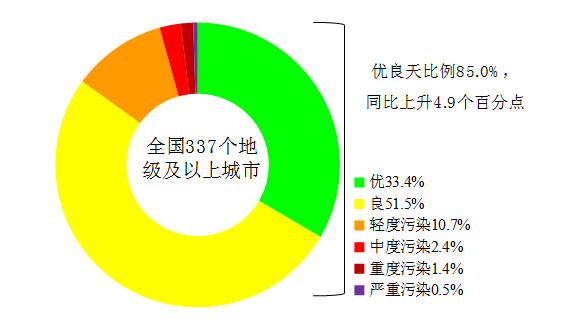
Figure 5 Proportion of days in 337 cities at prefecture level and above in China from January to June 2020.
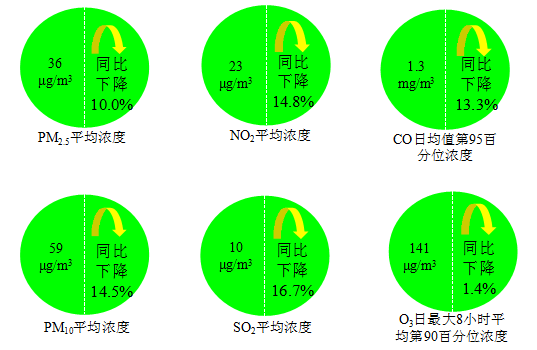
Fig. 6 Concentration and year-on-year changes of six indicators in 337 cities at prefecture level and above in China from January to June 2020.
In June, the average number of excellent days in "2+26" cities in Beijing, Tianjin and Hebei and its surrounding areas was 36.9%, up 16.2 percentage points year-on-year; The concentration of PM2.5 was 35 μ g/m3, down 2.8% year-on-year. From January to June, the average number of excellent days was 59.7%, up 12.6 percentage points year-on-year; The concentration of PM2.5 was 55 μ g/m3, a year-on-year decrease of 16.7%.
The proportion of excellent days in Beijing in June was 33.3%, down 3.4 percentage points year-on-year; The concentration of PM2.5 was 32 μ g/m3, a year-on-year decrease of 17.9%. From January to June, the proportion of excellent days was 71.4%, up 9.0 percentage points year-on-year; The concentration of PM2.5 was 43 μ g/m3, down 8.5% year-on-year.
The average number of excellent days in 41 cities in the Yangtze River Delta region in June was 84.2%, up 19.1 percentage points year-on-year; The concentration of PM2.5 was 20 μ g/m3, a year-on-year decrease of 25.9%. From January to June, the average number of excellent days was 84.1%, up 10.5 percentage points year-on-year; The concentration of PM2.5 was 37 μ g/m3, a year-on-year decrease of 21.3%.
The average number of excellent days in June in 11 cities in Fenwei Plain was 60.9%, up 9.7 percentage points year-on-year. The concentration of PM2.5 was 28 μ g/m3, which was flat year-on-year. From January to June, the average number of excellent days was 66.5%, up 12.1 percentage points year-on-year; The concentration of PM2.5 was 53 μ g/m3, down 18.5% year-on-year.
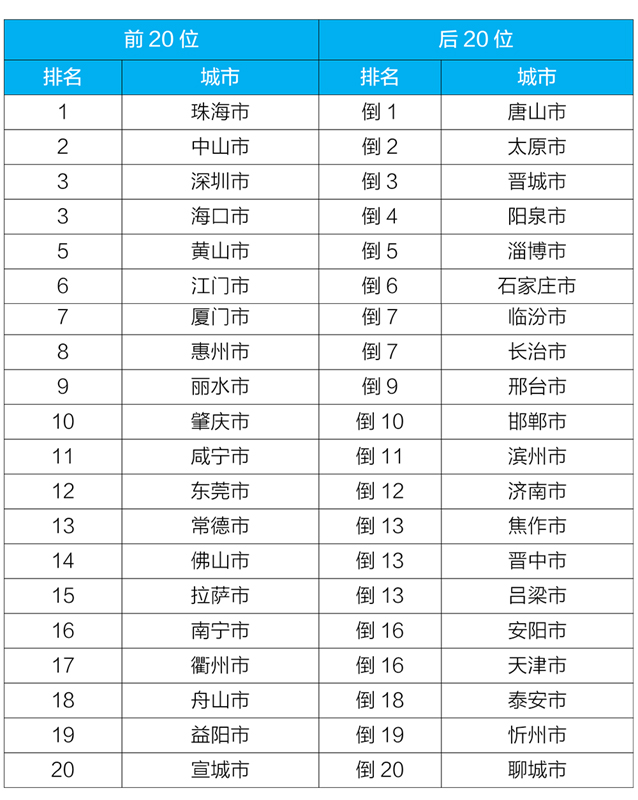
In June, among the 168 key cities, Tangshan, Taiyuan and Jincheng were relatively poor in air quality (from the last one to the last 20); Zhuhai, Zhongshan, Shenzhen and other cities have relatively good air quality (from 1st to 20th, see attached table 7).
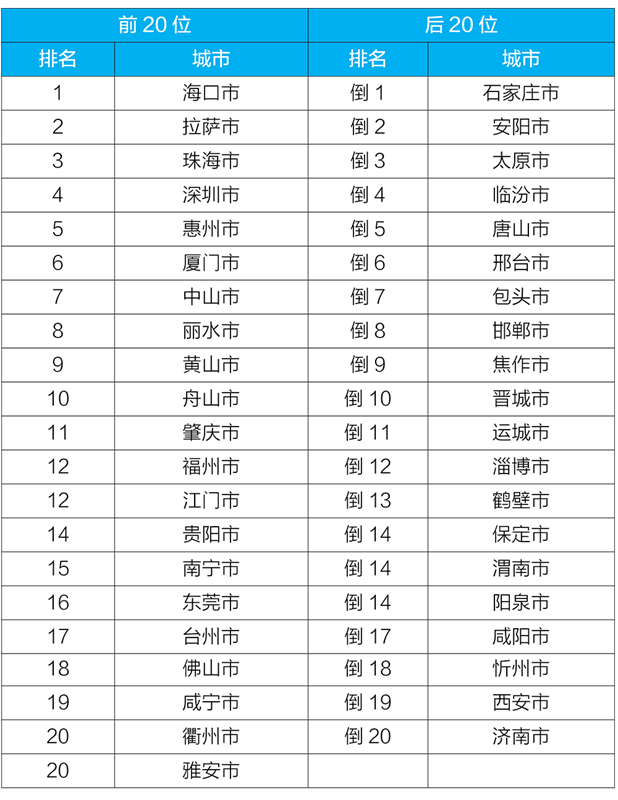
From January to June, among the 168 key cities, Shijiazhuang, Anyang and Taiyuan were relatively poor in air quality (from the last one to the last 20); The air quality in Haikou, Lhasa, Zhuhai and other cities is relatively good (from 1st to 20th, see attached table 8).
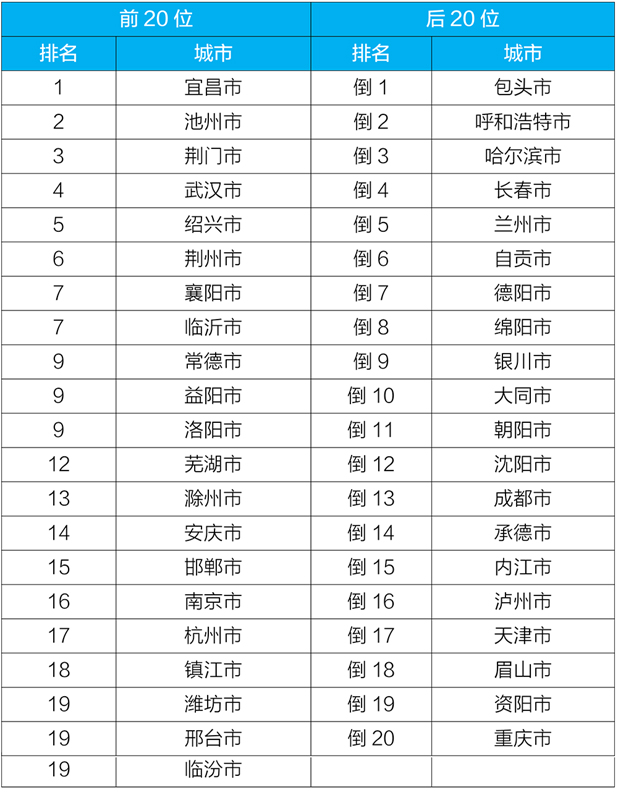
From January to June, among the 168 key cities, Baotou, Hohhot, Harbin and other cities improved their air quality relatively poorly (from the last one to the last 20); Yichang, Chizhou, Jingmen and other cities have improved their air quality relatively well (from the first place to the 19th place, see attached table 9).
Schedule 1 The top 30 cities and their water bodies in the national surface water assessment section in June 2020.
Schedule 2 The last 30 cities and their water bodies ranked by the national surface water assessment section in June 2020.
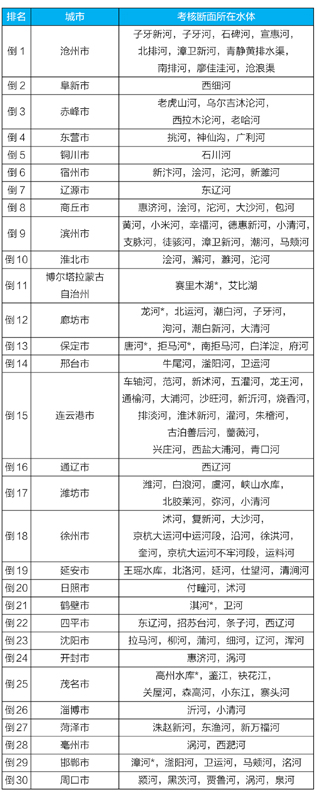
Note: The water quality of the water bodies marked with * in the table meets Class I or Class II of Environmental Quality Standard for Surface Water (GB3838-2002)Ⅰ).
Schedule 3 Top 30 Cities and Water Bodies in the National Surface Water Assessment Section from January to June, 2020.
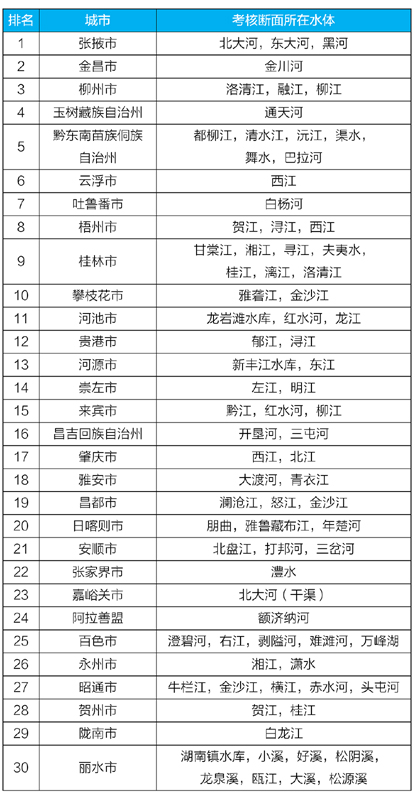
Attached Table 4 The last 30 cities and their water bodies in the national surface water assessment section from January to June, 2020.
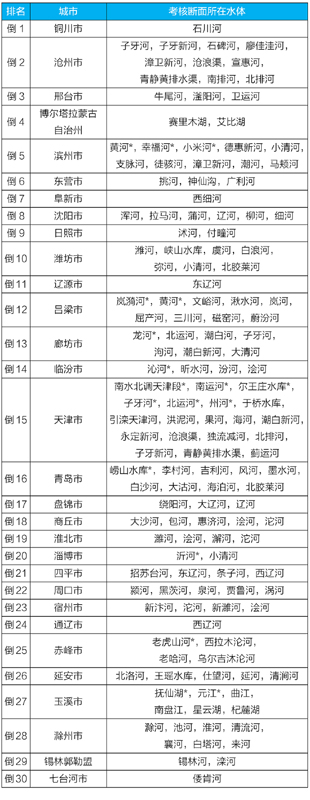
Note: The water quality of the water bodies marked with * in the table meets Class I or Class II of Environmental Quality Standard for Surface Water (GB3838-2002)Ⅰ).
Table 5 Changes of water environment quality of national surface water assessment section in January-June, 2020 ranked the top 30 cities and their water bodies.
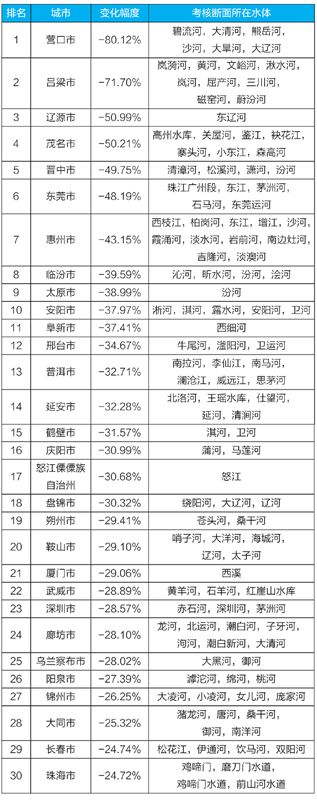
Table 6 Changes of water environment quality of national surface water assessment section from January to June, 2020 ranked the last 30 cities and their water bodies.
Schedule 7 List of Top 20 and Last 20 Cities in Ambient Air of 168 Key Cities in June 2020
Schedule 8 List of Top 20 and Bottom 20 Cities of 168 Key Cities from January to June, 2020
Attached Table 9 List of Top 20 and Bottom 20 Cities in Air Improvement of 168 Key Cities from January to June, 2020