United Nations expert: The unilateral sanctions against China are not in line with international law and should be lifted.
CCTV News:Du Han, Special Rapporteur of the United Nations Human Rights Council on the negative impact of unilateral coercive measures on human rights, visited China from May 6 to 17, during which she visited Beijing, Shenzhen, Xinjiang and other places to collect first-hand information and investigate the adverse effects of unilateral sanctions imposed by the United States and other western countries on the enjoyment of human rights by enterprises and people in China. On the afternoon of May 17th, Du Han held a press conference to introduce the preliminary findings of this visit, and made it clear that unilateral sanctions should not be used as a foreign policy tool and economic coercion against China.
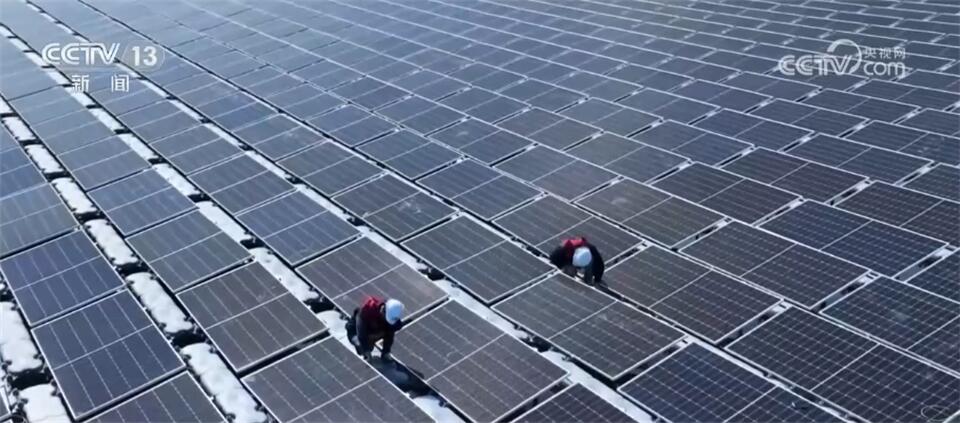
During the 12-day visit, Du Han met with relevant personnel of Chinese non-governmental organizations, associations, academic institutions and enterprises, and collected many reports on the adverse social and economic impact of unilateral sanctions on enterprise production and people’s lives. Among them, Xinjiang has been particularly affected. Agricultural products such as cotton and tomatoes, which account for a large proportion in the global market, as well as the photovoltaic industry, have suffered multiple impacts due to sanctions.

Du Han, Special Rapporteur of the United Nations Human Rights Council on the negative impact of unilateral coercive measures on human rights, said: "During my visit, I learned that many foreign enterprises stopped their business dealings because of the strict restrictions on business activities, fearing that they would be subject to secondary sanctions because of their association with China enterprises. This problem of excessive compliance also led to a decline in the turnover of China enterprises, and also lost overseas markets, especially those in the United States and Canada. As far as the specific situation in Xinjiang is concerned, many enterprises are hesitant to participate in the supply chain involving Xinjiang entities because of the risk of sanctions and seizure and the consequent reputation damage. "

Since 2017, the United States has imposed unilateral sanctions on China, implemented export controls, designated company officials and launched criminal investigations. Subsequently, the United States further expanded the sanctions to agriculture, trade, new and green technologies, energy, finance and other major sectors. Du Han pointed out that these sanctions not only harm China’s economy and people’s livelihood, but also have a negative impact on cultural exchanges and scientific cooperation.
Du Han said: "Some countries have put many universities and research centers in China on the sanctions list on the grounds of national security, and exchange programs, scholarships and joint research projects between China and foreign institutions have been interrupted. China students and scholars have lost many opportunities when they are studying or engaged in academic and professional work because of their China background, and even they will be refused entry or subjected to lengthy investigations on the grounds of national security when they enter the country. "
United Nations expert: Unilateral sanctions violate international law and sanctions against China should be lifted.
Du Han, special rapporteur of the UN Human Rights Council on the negative impact of unilateral coercive measures on human rights, pointed out that unilateral sanctions against companies or individuals in China and China are not in line with international law, and called for the cancellation and suspension of all unilateral sanctions imposed on China without the authorization of the UN Security Council.
For example, Du Han cited the sanctions imposed by the United States on Xinjiang on the grounds of forced labor, which seriously undermined the access to justice and the basic principles of international law.

Du Han said that the current situation is that any relationship with Xinjiang will be alleged to be related to "forced labor". The accused party needs to prove his innocence, which is completely the inversion of the burden of proof. According to international law, we generally do "presumption of innocence", that is, a person is innocent until he is proved guilty. Now the United States is completely the other way around, which violates the most basic content of international law.
Du Han pointed out that countries have the freedom to take measures to protect all kinds of security, and they also recognize the intention of countries to develop, acquire or maintain comparative advantages in any economic sector, including high-tech and new technology fields, but these cannot be the legal basis for implementing unilateral sanctions. On the contrary, any unilateral measures taken should first comply with international legal obligations.
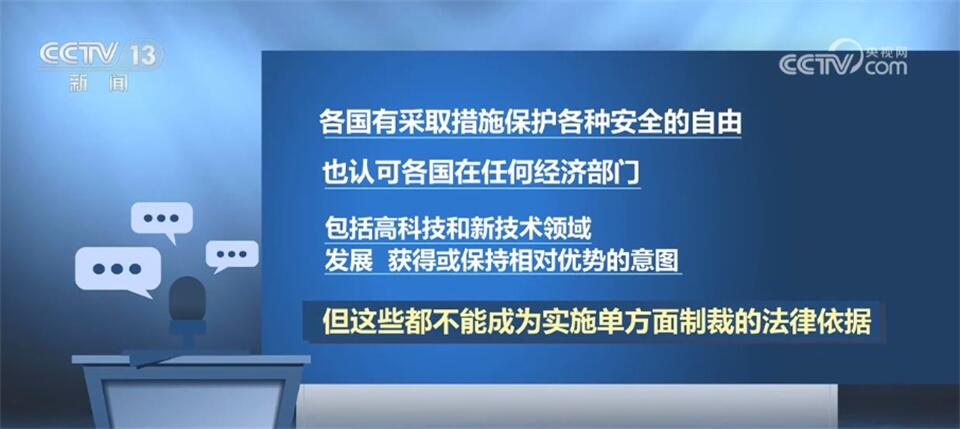
Du Han said: "I call on the sanctions parties to cancel and suspend all unilateral sanctions imposed on China, China citizens and China companies without the authorization of the UN Security Council. Any reference to goodwill or protection of national diplomatic, economic or technological interests cannot be used as a reason or basis for unilateral sanctions, because it violates international law and eventually leads to human rights violations. I welcome China’s adoption of its anti-sanctions and ‘ Block ’ Legislation, I think this is a further measure to minimize excessive compliance and protection of the rights of entities and individuals in China. "
Du Han believes that excessive compliance with unilateral sanctions is no less harmful than the sanctions themselves. It is illegal to impose unilateral sanctions extraterritorially. She called on the sanctioning countries to effectively solve the problem of excessive compliance with sanctions by enterprises and other entities within their territory, so as to alleviate or completely eliminate any adverse humanitarian impact.